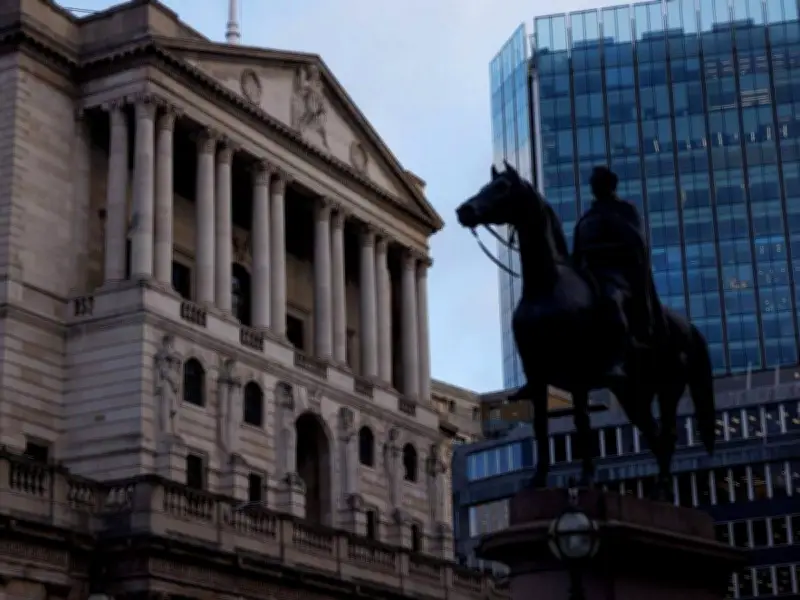
The Bank of England has held interest rates at 3.75% for the fifth consecutive time following its Monetary Policy Committee (MPC) meeting on July 30, 2026. Six members voted to keep the rate unchanged, while three called for a rise to 4%.
Inflation warnings from the Governor
Andrew Bailey, Governor of the Bank of England, said: "Inflation has fallen faster than we'd expected, but the conflict in the Middle East continues to mean high and volatile energy prices. That will cause inflation to rise again later this year. However the conflict unfolds, our job is to make sure any increase in inflation is temporary and that it comes back to our 2% target."
Economist predicts possible September rise
Economist Suren Thiru, chief economist at the Institute of Chartered Accountants in England and Wales, said a September rate rise is "on the table" after the Bank's decision. He noted: "The tighter vote split in favour of this outcome confirms a further hawkish shift within the committee with inflation worries outweighing concerns over the economy, keeping a September rate rise on the table. Interest rates remain on a knife edge. Policy could stay unchanged for the rest of the year, with rate-setters relying on tough talk rather than higher rates to contain inflation. But the longer the Iran conflict persists, the greater the risk that the committee's patience finally snaps."
Economic outlook and forecasts
In the first monetary policy report since Andy Burnham became Prime Minister, the Bank outlined a slightly more positive outlook. It suggested inflation is likely to peak marginally below previous forecasts, while growth could prove stronger. However, policymakers indicated that the Middle East conflict continues to cast considerable uncertainty over UK and global economic developments.
The Bank forecast that UK inflation will average approximately 3% this year, before dropping to 2.7% in 2027 and 1.8% in 2028. Consumer price inflation, recorded at 2.6% in June, is expected to peak at around 3.2% later this year, then gradually fall back towards the 2% target. Elevated oil prices tied to the Middle East conflict are anticipated to be the primary catalyst, driving up energy costs.
Energy bill forecast
The Bank has forecast that households will experience a slight increase in energy bills from October, owing to a revised energy price cap. In July, the cap climbed to £1,663 for the annual electricity bill of a typical household. This figure is anticipated to rise to £1,680 in October. The Bank noted this is roughly £45 less than it would have been without the Government's decision to temporarily scrap VAT on household electricity bills. The measure is projected to have reduced the inflation rate by 0.1 percentage points during the second half of this year.