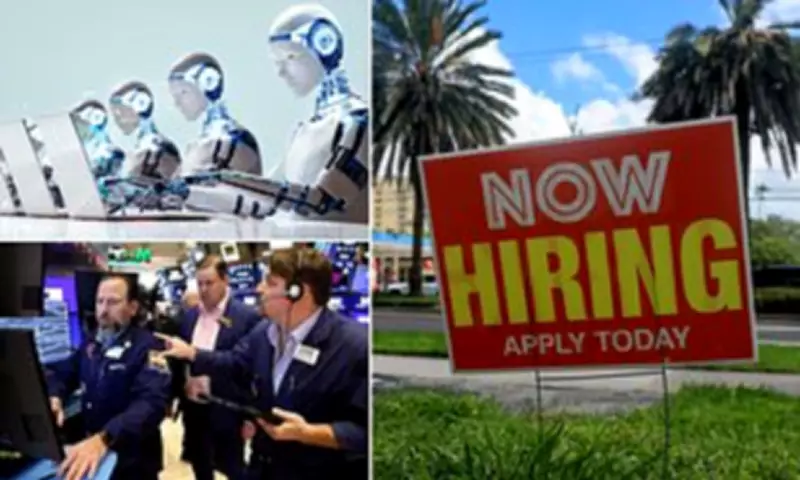
Corporate leaders across America are delivering a sobering message as they map out their strategic plans for 2026: hiring is either on indefinite hold or actively being reduced, with artificial intelligence emerging as the primary driver of workforce transformation.
The Data Behind the Downturn
Recent surveys reveal a consistent pattern of caution among business executives. At a gathering of chief executives hosted by the Yale School of Management in New York, a striking 66 percent of surveyed leaders indicated they plan either to reduce their workforce or maintain current headcount levels throughout 2026. Only one-third expressed intentions to expand their teams through new hiring.
Marketing Sector Leads the Trend
A separate November survey conducted by executive search firm Spencer Stuart provides further evidence of this emerging pattern. The research, which questioned 90 chief marketing officers about their AI implementation strategies, found that more than one in three anticipate laying off workers within the next 12 to 24 months as they deploy additional artificial intelligence tools.

The trend appears particularly pronounced among larger corporations. Among companies valued above $20 billion, nearly half reported planning significant workforce reductions. These findings collectively paint a clear picture of corporate America entering a period of hiring restraint while actively preparing for leaner operational structures.
Executive Perspectives on Workforce Strategy
Chris Layden, chief executive of staffing firm Kelly Services, captured the prevailing corporate sentiment: "You're going to see a lot of wait and see. The current uncertainty means companies are investing more heavily in capital and technology than in human resources."
Federal Reserve governor Christopher Waller offered similar observations, noting: "We're approaching zero job growth, which doesn't represent a healthy labor market. When I speak with chief executives, they consistently tell me they're postponing hiring decisions while they evaluate what aspects of their operations artificial intelligence can effectively replace."
Corporate Examples of Workforce Restructuring
Several major corporations have already begun implementing these strategies. Wells Fargo CEO Charlie Scharf revealed that the banking giant expects to enter 2026 with fewer employees than it maintained before the pandemic, with workforce numbers declining from approximately 275,000 in 2019 to around 210,000 currently.
Scharf acknowledged that AI's impact on staffing will prove "extremely significant," though many executives remain reluctant to publicly articulate these plans. "No corporate leader wants to stand before stakeholders and explicitly state they intend to operate with reduced headcount in the future," he explained.
Broader Economic Context
The hiring slowdown has been developing gradually over recent months. December's unemployment rate stood at 4.4 percent, representing a slight decrease from November's 4.6 percent figure, which marked the highest level recorded in four years. According to the Bureau of Labor Statistics' latest employment data, 7.5 million Americans currently remain unemployed.
Major employers including Amazon, Verizon, Target, and UPS have all reduced corporate positions during the past six months, contributing to growing anxiety among white-collar professionals. The parcel delivery service UPS alone plans to eliminate approximately 30,000 positions this year as it streamlines its delivery network and reduces operational costs.
Sector-Specific Variations
While healthcare and education continue to demonstrate employment growth, hiring in traditional office-based roles has decelerated sharply. According to hiring platform Indeed, job postings remain weakest in software development, data analytics, marketing, and entertainment sectors, while healthcare and construction maintain the strongest hiring momentum.
Indeed's economic research team predicts another year of modest job growth, particularly for white-collar positions. Laura Ullrich, Indeed's director of economic research, observed: "There's a natural limit to how long an economy can sustain both low hiring rates and low firing rates while continuing to grow. Eventually, some fundamental shift must occur."

Diverging Perspectives on AI's Impact
Some business leaders have adopted particularly direct language regarding artificial intelligence's workforce implications. JPMorgan Chase CEO Jamie Dimon has explicitly warned that AI "will eliminate certain positions," encouraging workers to develop skills in critical thinking, communication, and writing. Executives at Walmart, Ford, and Amazon have issued similar cautions about technological displacement.
Other voices suggest the immediate threat may be somewhat exaggerated. Abigail Wright, a senior advisor at the National Chamber of Commerce, offered a nuanced perspective: "The genuine transformation is occurring at the task level rather than the job level. Workers who learn to effectively direct and collaborate with artificial intelligence, rather than competing against it, will demonstrate the greatest resilience in this evolving landscape."
Changing Employee Behavior
Employee mobility patterns further reflect the shifting employment landscape. At IBM, voluntary departures have reached their lowest point in three decades, according to CEO Arvind Krishna. Nationwide, voluntary resignation rates have fallen below 2 percent, a substantial decline from the typical 7 percent historical average.
Krishna noted: "Employees are demonstrating reduced interest in changing positions, which naturally leads to diminished hiring activity across industries." This sentiment has been echoed by executives at several prominent companies, including Shopify's chief financial officer, who confirmed the company doesn't anticipate increasing headcount next year, and Chime Financial, which has committed to maintaining current staffing levels.
Looking Toward 2026
Economists at Indeed anticipate limited improvement throughout the coming year, forecasting unemployment to remain around 4.6 percent in 2026. Some companies acknowledge they continue to correct for pandemic-era over-hiring, while others emphasize strategic repositioning for technological integration.
For the present moment, corporations appear content to maintain their cautious posture, while employees demonstrate increased determination to retain their current positions. This dynamic creates a unique labor market equilibrium where both hiring and firing remain restrained, yet technological transformation continues to reshape workforce planning at the highest corporate levels.