A Teen's 26 Moves: The Hidden Toll of America's Housing Crisis on Children
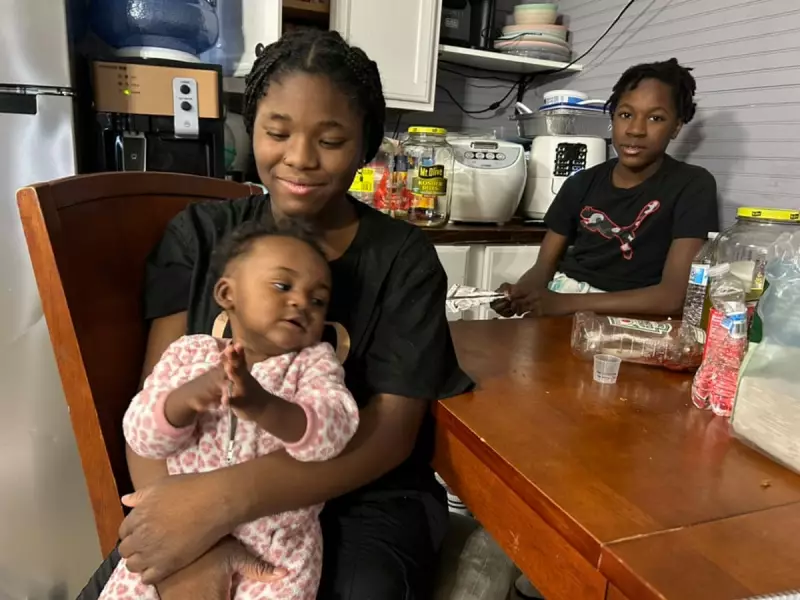
Na'Kaya Godfrey, a 14-year-old from Stone Mountain, Georgia, cradles her toddler sister, Kylie, in their latest temporary home, as her brother Junior watches. The teenager spends her days playing with the baby and experimenting with makeup, but the constant upheaval has left her deeply anxious. She often stays awake at night, unable to eat until her mother, Jaimie, returns from work. This family's story is a stark illustration of the US housing crisis, where evictions and job losses trap families in a cycle of instability, with profound implications for children's well-being.
The Cycle of Instability
At the end of a school day, Na'Kaya and 12-year-old Junior come home to a dark, unheated house in Stone Mountain, outside Atlanta. They rely on space heaters for warmth, a far cry from the comfort suggested by an inspirational "Home, Sweet Home" sign on Na'Kaya's dresser. When asked how many places she has lived, Na'Kaya estimates at least 25. Her mother, Jaimie, 35, adds that including a homeless shelter stay when Na'Kaya was a toddler brings the total to 26 moves.
The Godfrey family has experienced a relentless series of displacements. They have been forced to vacate houses quickly, faced evictions, couch-surfed with acquaintances, and lived in basements and extended-stay hotels along the interstate. Their belongings have been dumped on curbs, and they have lost the contents of three storage units. At one point, they slept in their car before it was repossessed, washing up at a local gas station. Jaimie, a single parent without family support, struggles to find jobs and side hustles that cover rising living costs, rent, and childcare, compounding the economic strain.

Impact on Children's Health and Education
The instability has taken a heavy toll on Na'Kaya, Junior, and baby Kylie. Na'Kaya often retreats to her room, decorated with pink unicorn sheets, using headphones to listen to music or watch TikTok videos to calm her nerves. She suffers from separation anxiety, frequently calling her mother every 15 minutes when Jaimie is at work. Unable to eat without her mother present, she often goes to bed hungry. Junior, meanwhile, exhibits behavioral issues, disrupting classes and getting into fights at school, where he feels disliked and unsafe.
Both children have been chronically absent from school, with their grades dropping as instability increases. Jaimie worries about Na'Kaya's slow reading pace and Junior's hours in in-school suspension. Research shows that housing insecurity can lead to high absenteeism, lower cognitive scores, and developmental delays in young children like Kylie. The stress of eviction can cause depression and anxiety, even in children under nine, threatening their future prospects.
The Broader Housing Crisis Context
Children like the Godfreys are often missing from headlines about the US housing affordability crisis, yet they are uniquely vulnerable. Eviction rates have spiked in cities like Atlanta, with rents and housing prices rising sharply while wages lag. Although not counted in official homelessness tallies, which reached a record high in 2024, families with unstable housing face chaotic and traumatic lives with long-lasting consequences.
Programs like Standing With Our Neighbors in Atlanta, which embeds lawyers and social workers in schools to prevent evictions, have shown promise. For example, at Tuskegee Airmen Global Academy, the program helped keep 123 students housed, leading to improved attendance and academic performance. However, such initiatives face funding cuts under current federal policies, which focus on mental health and addiction as root causes of homelessness, a stance disputed by housing experts.
Running in Place Against Systemic Barriers
Jaimie Godfrey has worked tirelessly in various jobs, from managing a mobile phone store to baking sweet potato pies, but she faces impossible catch-22s. To qualify for childcare subsidies in Georgia, parents must prove they work 30 hours a week, a challenge without childcare. A church friend, Sherri McCoy, helps with rent and food, but the system often seems designed to hold families down. Black families, particularly single mothers like Jaimie, face higher eviction risks, with nearly half of eviction court cases involving single-mother households.

As the family's lease in Stone Mountain nears its end in March, with Jaimie recently losing her childcare job, they have no idea where they will go next. Na'Kaya, who dreams of becoming a doctor or entrepreneur, finds it hard to concentrate on schoolwork with so much uncertainty. She writes her thoughts on paper, only to ball them up and throw them away, expressing disappointment that Atlanta has not been the good place she imagined.
This story underscores the urgent need for comprehensive housing assistance and eviction-prevention programs that address the real root causes: income disparities, lack of affordable childcare, and systemic racism. Without such support, families like the Godfreys will continue running in place, with children bearing the brunt of the crisis.