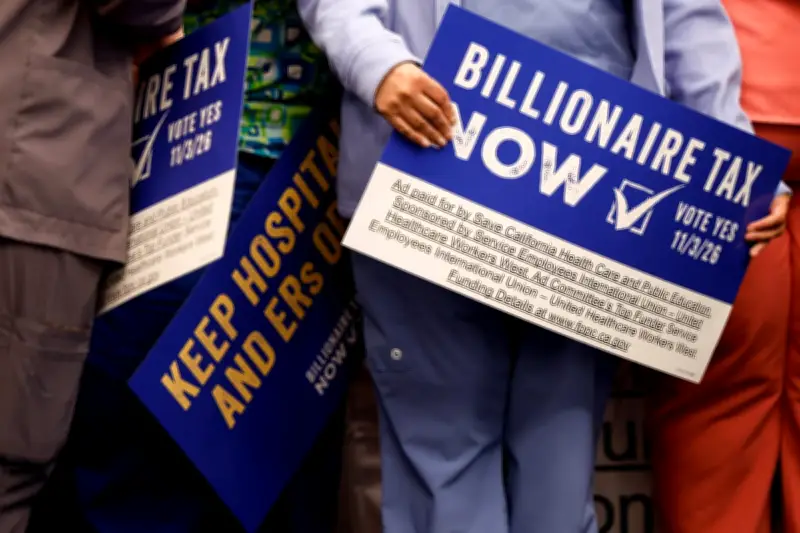
California voters will decide in November whether to impose a one-time 5% tax on fortunes over $1bn, as the push to tax billionaires gains momentum. However, analysis suggests that such a wealth tax may not raise substantial revenue unless existing tax loopholes are addressed.
Wealth Tax Proposals and Their Challenges
According to Eduardo Porter, a journalist covering economics, the case for a direct tax on billionaires appears strong given how easily the super-rich avoid income taxes. Yet, wealth taxes have largely been abandoned across industrialized nations. In 2024, only three OECD countries—Norway, Spain, and Switzerland—collected revenue from recurrent wealth taxes, down from 12 in 1990. Of these, only Switzerland raised more than 1% of GDP.
Practical problems include valuing non-liquid assets like privately held businesses, encouraging capital flight, and discouraging entrepreneurship. An OECD study concluded that "from both an efficiency and equity perspective, there are limited arguments for having a net wealth tax in addition to broad-based personal capital income taxes and well-designed inheritance and gift taxes."
Alternative Tax Reforms
Porter argues that raising more money can be achieved by closing loopholes in the current tax system. In 2024, the richest 1% of Americans paid about 31.5% of their income in federal taxes and 7.2% in state and local taxes—over eight percentage points less than at the turn of the century. With the top 1% reporting over $3tn in adjusted gross income, closing this gap could yield nearly $300bn in additional annual revenue.
Specific reforms include restoring the estate tax, which has been eviscerated: in 1972, 6.5% of decedents paid estate taxes; by 2021, that share fell to less than 0.1%. Revenue dropped from 0.4% to 0.08% of GDP. Converting it to an inheritance tax, as in most OECD countries, would address double taxation concerns.
Other fixes include raising capital gains taxes from the current top rate of 20% closer to the 37% top rate on labor income, and increasing the corporate tax rate from 21% toward its pre-Trump level of 35%. Additionally, ensuring all taxes due are paid could yield $7.5tn over a decade, according to an IRS-based study.
Political and Economic Context
Porter notes that achieving these changes is politically difficult, given one major party's commitment to tax cuts and the other's wavering support for redistribution. However, tweaking the system to close loopholes and broaden the tax base is more efficient than a new wealth tax. "Ambitious proposals to sharply raise marginal income tax rates won’t raise much money unless many of the exceptions, loopholes and so forth are dealt with," he writes.
The broader point is that the US can raise needed revenue without reinventing the wheel, by restoring fairness to a system that currently allows vast discrepancies in how different forms of income are taxed.