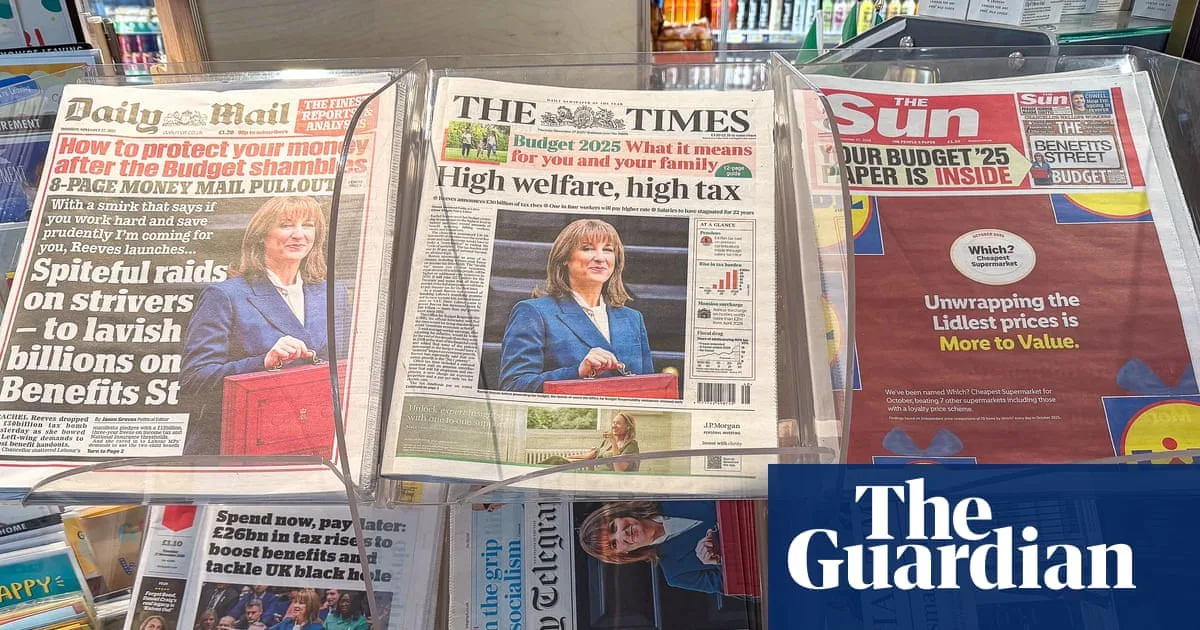
‘Meh Budget’ Disappoints Voters as 57% Fear Endless Cost Crisis
Voters feel let down by 'tinkering' autumn budget

Across the United Kingdom, households are grappling with the potential consequences of the government's recently announced autumn budget. New research reveals deep-seated concerns among voters who feel let down by what they describe as mere 'tinkering' at the edges of Britain's economic challenges.

Frustration Among Former Tory Voters

A revealing focus group conducted by research organisation More in Common in Aldershot has uncovered significant disappointment among voters who recently switched from Conservative to Labour. These individuals, who should represent Labour's core support base, expressed profound frustration with the government's approach.

The research shows a record 57% of Britons now believe the cost of living crisis may never properly end, reflecting widespread economic pessimism across the nation.

What made the Aldershot focus group particularly striking was the profile of participants. These were not traditionally struggling voters - they held relatively well-paid positions, owned their own homes, and should have been feeling financially secure. As Martin, a product manager in the automotive industry, noted: "On paper, we should be feeling really well-off."

The Reality of Modern Financial Insecurity

Instead of financial confidence, group members described a troubling reality where good wages and savings no longer guarantee stability. Annette, an executive assistant, captured the sentiment perfectly: "The goalposts seem to move all the time. Doing the right thing, being sensible just isn't enough anymore."

Many participants described feeling caught in a "double squeeze" - supporting ageing parents while their adult children in their thirties still lived at home. Retirement felt increasingly distant for several, despite their professional success.

Aldershot represents an archetypal 'blue wall' constituency that had returned Conservative MPs for over a century until Labour's victory in last year's general election. The voters speaking to researchers had been part of that political shift, backing Keir Starmer's party in hopes of meaningful change.

Budget Fallout and Government Competence Questions

Eighteen months into the new government, disappointment runs deep. Rebecca, a lecturer, expressed the group's collective frustration: "I think actually the thing that makes me most angry about this Labour government is that I was really hopeful for them."

The budget process itself drew particular criticism, with the extensive pre-announcement briefings and policy U-turns colouring perceptions before Chancellor Rachel Reeves even stood up to speak. Rebecca described the lead-up as "quite chaotic" despite Labour's campaign promise to end governmental disorder.

Martin characterised the final budget as a "damp squib", while others used the word "meh" to summarise their underwhelmed response. Specific measures attracted criticism, including the reduction of tax-free cash ISA allowances and new road taxes for electric vehicles.

The decision to freeze income tax bands left a particularly bitter taste, with Hayley, an assistant headteacher, calling it "sneaky" and "a little bit underhanded". Many saw this as a breach of Labour's manifesto commitment not to increase taxes on working people.

While some participants expressed sympathy for the difficult decisions facing the Chancellor, there was clear impatience with what Annette described as "playing safe, not rocking the boat, just doing the bare minimum rather than really tackling some of the really big issues".

The lasting impact may be on perceptions of governmental competence, with the chaotic budget process reinforcing views that this administration might be no less disorderly than its predecessor, despite promises of a more measured approach to politics.