

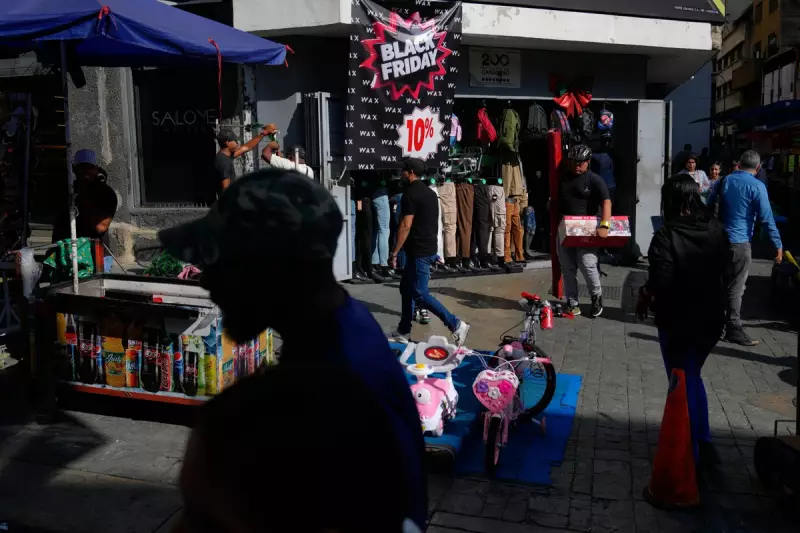
Black Friday, typically a day of frenzied shopping and deep discounts, was a subdued affair in Venezuela's capital as the country's profound economic crisis forced citizens to prioritise basic survival over bargain hunting.
A Mall Unusually Quiet
Window displays in a popular Caracas shopping centre advertised tempting offers, including 30% discounts and shoes for just $20. Yet, these promotions failed to attract the usual crowds. Even the novelty of a newly opened H&M store could not draw a significant number of shoppers, with the shop remaining virtually empty throughout the morning.
The stark contrast to previous years was not, according to Venezuelans, due to threats of US military action, but a direct result of the nation's suffocating economic situation. Years of navigating a complex national crisis have reshaped priorities, compelling people to focus on immediate individual needs like food and medicine rather than long-term collective concerns.

The Daily Struggle to Survive
Venezuela's annual inflation rate reached a staggering 270% last month, as reported by the International Monetary Fund. The financial reality for most is dire. While families require more than $500 to cover monthly basics, the national minimum wage has been frozen since 2022 at just 130 bolivars, equivalent to a mere $0.52. This places it far below the UN's extreme poverty threshold of $2.15 per day.
Many public sector workers survive on approximately $160 per month, with the average private sector employee earning about $237, according to the independent Venezuelan Observatory of Finances. This economic backdrop has redefined what constitutes a necessity.
Physician Luisa Torrealba encapsulated the prevailing sentiment, stating, "The country’s economy is based on day-to-day survival. What do I do to survive today and live tomorrow? We don’t have the luxury of stopping because there’s going to be a war... because the government says one thing or the United States says another."
Geopolitical Tensions Loom in the Background
The economic distress unfolds against a backdrop of heightened international pressure. A day before Black Friday, US President Donald Trump suggested in a Thanksgiving address that the military could "very soon" begin strikes on alleged drug-trafficking targets within Venezuela.
This follows a months-long US military operation that has already resulted in 80 fatalities from strikes on vessels in international waters. The US government has doubled the reward for information leading to the arrest of President Nicolás Maduro on narcoterrorism charges to $50 million. Maduro denies all accusations and maintains that the US operation is a pretext for forcing a change in government.
However, for shoppers like Marian García, these geopolitical struggles are a distant concern. She arrived at a Caracas mall expecting a crowd at a shoe store but found herself first in line. The store offered shoes for $20, an unbeatable deal for boots that normally cost between $60 and $80—a sum representing over 10% of her combined monthly income with her partner.
"It’s difficult to indulge in luxuries," the 26-year-old explained. "Due to the current economic situation, people are cutting back and only spending on the essentials, such as food."
Another shopper, Yarbelis Revilla, who works three jobs, also found the Black Friday discounts underwhelming. She explained that in the current climate, looking for shoes might seem like "vanity," but she focuses on meeting her present needs without dwelling on an uncertain future, a philosophy she attributes to her Christian faith.
Ultimately, the empty malls of Caracas tell a story not of disinterest, but of a population making difficult choices in the face of relentless economic pressure.






