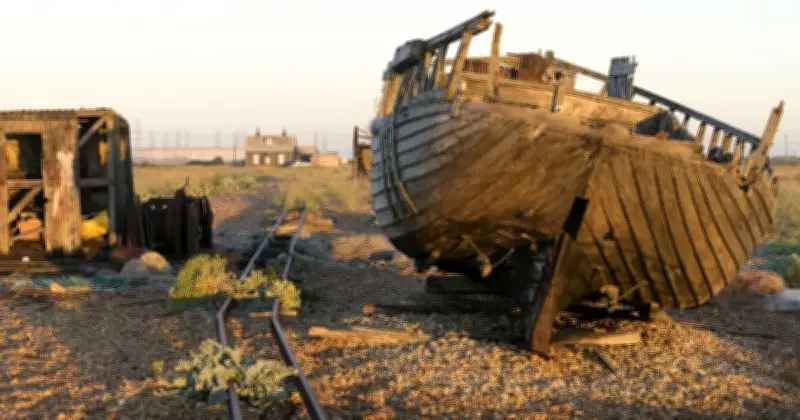
Dungeness, located on the Kent coastline, is the UK's only desert and presents a landscape that resembles a post-apocalyptic movie set. This unique destination features a disused power station, abandoned huts and fishing boats, expansive gravel pits, and an old lighthouse.
A Nature Reserve Amidst Desolation
Despite its desolate appearance, Dungeness is a nature reserve and a popular spot for birdwatchers and horticulturalists. It is home to 600 species of plants, which accounts for a third of all plant species found in the UK. Uncommon insects and spiders can also be observed among its sands.
Protected Status and Wildlife
The unique plant and animal species have led to Dungeness being designated as a Special Protection Area (SPA) and a Special Area of Conservation (SAC). It is also an RSPB reserve, attracting birdwatchers, especially during spring and autumn when migratory birds are present.
Explore Kent writes: "The appeal of Dungeness lies just as much in its human history as its natural riches, however. On the beach you’ll find remnants of bygone fishing methods, military installations dating from WWII and the Napoleonic wars, sound mirrors and radio research stations – all dotted incongruously about the landscape as a result of the fact that the shingle beach continues to expand as the tides deposit ever more material in its shores."
Historic Lighthouse
The Dungeness Lighthouse, originally built in 1615, was reportedly swallowed by shingle, with a new one constructed in 1901. Standing at 43 metres tall, its striking black-and-white striped exterior makes it a favourite among photographers. While general entry is not permitted, guided tours are occasionally available.
Nuclear Power Stations
Another unique aspect of Dungeness is the presence of two nuclear power stations. Dungeness A opened in 1965 but has since been decommissioned, while Dungeness B has not supplied electricity to the National Grid since 2018 and is currently being defuelled.