The United Kingdom is bracing for a four-day dry spell with temperatures soaring to 24 degrees Celsius, prompting homeowners to embark on what is being dubbed 'operation garden spruce-up' across the nation. As summer approaches, the patio emerges as a focal point for outdoor living, from morning coffee to evening dining.
However, installing a new patio can be costly, with premium slabs often costing double figures. Many homeowners consider laying their own stones or painting weathered ones as a cost-effective alternative. But one exteriors design expert urges caution, warning that quick fixes can backfire and accelerate the need for a complete replacement.
Expert Insights on Patio Choices
Jordana Ashkenazi, Design Director and Founder of Element One House, advises following professional guidance. 'Traditional garden designers tend to favour stone, gravel and greenery to make patios shine because they age more naturally,' she notes. 'Huge expanses of decking, for example, can make a garden feel more like a pub terrace than a luxury outdoor space.'

Adding potted palms, bougainvillea, or lavender troughs can enhance a makeover, but Ashkenazi emphasizes choosing wisely: 'You will likely step out onto that patio for years to come. Go too bold or too trends-led, and you might find yourself hating it before autumn arrives.'
Cheap and Cheerful: Concrete Squares on Pebbles
DIY patios often look unfinished, according to Ashkenazi. 'Concrete slabs scattered over pebbles always feel a bit temporary to me, like someone started a patio project halfway through a bank holiday weekend and never fully committed.' She suggests larger-format slabs with appropriate pebble sizes for a modern look.
The Middle Class Favourite: Resin Patios
Resin patios, popular in affluent neighbourhoods, are described as the 'Range Rover Sport of the garden world.' Ashkenazi warns they can lack character: 'They are sleek, practical, expensive, and very new-build aspirational. But choosing the right colour is critical; warmer tones can date a property and make the garden feel like a commercial driveway.'
Grey Slate: Moody in Rain, Glum in Dry
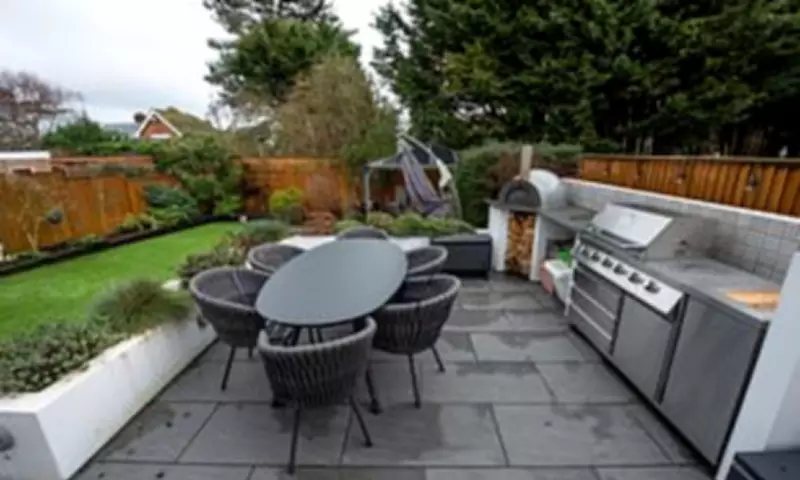
The grey trend from the late 90s lingers, but Ashkenazi advises caution. 'Grey slate patios feel like the outdoor version of the grey-everything interiors trend we are all still trying to recover from. They often look best when it rains because the stone darkens.' She recommends balanced planting and careful consideration.
Crazy Paving: For Country Homes Only
Crazy paving, with mismatched natural stone, works beautifully in rural settings like Cotswolds villages. 'In a modern suburban garden, it can quickly veer into 1970s bungalow patio territory,' Ashkenazi warns. 'Context is everything.'
Porcelain Patios: Seamless but Slippery
Porcelain tiles in creamy shades offer a seamless indoor-outdoor look, popular among millennials. 'Beige porcelain paving instantly makes a garden feel brighter, cleaner, and more expensive,' Ashkenazi says. However, she highlights practical pitfalls: 'People massively underestimate how slippery porcelain can be, especially in winter. Lighter porcelain can also go green quickly in damp British gardens.'
Painted Patios: A Temporary Fix
Painting patio slabs is often a short-lived solution. 'Painted patio slabs chip, fade, stain, and almost always end up looking like a temporary cover-up,' Ashkenazi explains. 'You are usually far better off pressure washing old slabs or replacing sections entirely.'
Geometric Tiles: Bold but Dated
Geometric outdoor tiles photograph beautifully but can quickly become overwhelming. 'They are already starting to date,' Ashkenazi notes. 'Once they go out of fashion, you are stuck with them unless you have the budget to retile.'
Decking and Fake Grass: High Maintenance
Decking, once popular, can warp, fade, and attract rodents. 'After a few British winters, it can become one of the highest-maintenance parts of the garden,' Ashkenazi warns. 'I have seen clients end up with rodents nesting underneath raised decking.'
Ultimately, Ashkenazi advises balancing aesthetics with practicality to create a patio that stands the test of time.