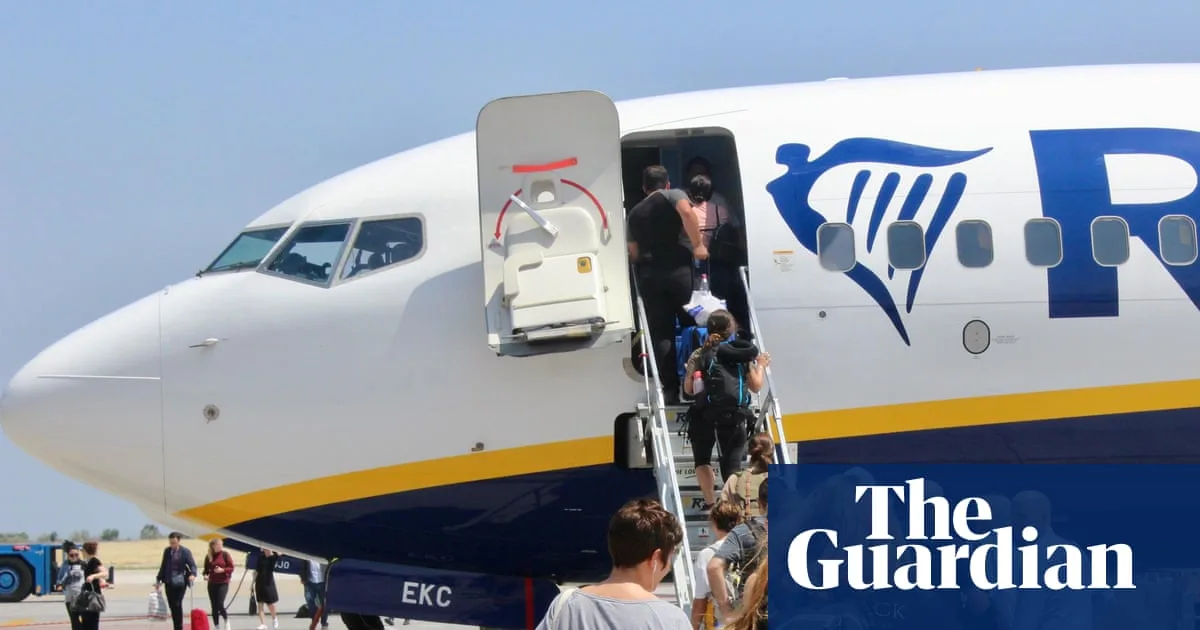
As the jet fuel crisis continues to disrupt global aviation, many airlines have faced significant challenges, including rising ticket prices and widespread flight cancellations. Some carriers have even been forced to cease operations entirely. However, Ryanair has consistently expressed confidence in its fuel supply, with CEO Michael O'Leary and his team maintaining an optimistic outlook.
Neil Sorahan, Ryanair's chief financial officer, recently took aim at weaker competitors during an interview with City AM. He stated, "The recent spike in fuel is putting a lot of weaker carriers into a very precarious situation. We've seen in the US Spirit go out of business in the recent past. I wouldn't be surprised to see some failures over this winter as the high fuel costs hit our unhedged and unprofitable competitors in Europe."
The crisis stems from the blockage of the Strait of Hormuz following the start of the Iran war, which has forced countries to seek alternative suppliers. Ryanair has consistently insisted it is well-positioned to weather the storm, but questions remain about whether such confidence is warranted.
Hedged Fuel Supplies
In April, O'Leary highlighted that Ryanair was "reasonably well-hedged" on 80 per cent of its jet fuel. Fuel hedging allows airlines to lock in future prices in advance, a tactic that becomes crucial when oil prices surge. O'Leary noted that while the airline was paying $150 (£112) per barrel for around 20 per cent of its fuel, the more immediate concern was ensuring sufficient jet fuel supply to keep planes flying.
Jet fuel prices doubled from roughly $100 (£73) per barrel in late February to around $200 (£146) per barrel in early April due to the Middle East conflict. According to Holiday Extras' airline fuel hedge tracker, 75 per cent of Ryanair's fuel is pre-purchased at locked-in prices by the end of this year. However, the outlook for 2027 is less certain, with only 20 per cent hedged in Q1 and dropping to 10 per cent by year-end. Holiday Extras noted, "Ryanair is holding off locking in summer 2027 hedges, waiting for oil prices closer to $70/barrel before committing."
A Daily Mail investigation ranked major carriers used by UK travellers, with Jet2 topping the resilience list followed by Ryanair. The research, conducted with My Flight Path, gave Ryanair a score of 89 out of 100, with approximately 82 per cent of its 2026 fuel hedged at £49 per barrel—among the cheapest locked-in rates globally.
Outlook for the Summer
O'Leary has stressed that the summer season depends on the reopening of the Strait of Hormuz. The company does not expect to increase prices for the summer, with pricing "trending broadly flat." He stated, "The conflict in the Middle East has created economic uncertainty and we still don't know when the Strait of Hormuz will reopen. Despite this, Europe remains relatively well supplied with jet-fuel, with significant volumes sourced from West Africa, the Americas and Norway."
Ryanair's conservative hedging strategy aims to insulate the airline's earnings. O'Leary added, "Pricing in recent weeks has eased somewhat in response to economic uncertainty caused by higher oil prices, the fear of fuel shortages and the risk of inflation adversely impacting consumer spending. As always, Ryanair will pursue its 'load-active/yield passive' strategy to drive traffic growth, ancillary revenue and lower unit costs."
However, 20 per cent of the airline's fuel remains unhedged and has spiked in price due to the conflict. O'Leary assured customers, "We can guarantee people there'll be no price increases, no fuel hedging, no fuel surge levy surcharges, regardless of what happens to summer supply."
Other Airlines and Travel Companies
Jet2 has also expressed confidence in its fuel supply. CEO Steve Heapy said, "We are in regular dialogue with our fuel suppliers, and the current picture is one of increased production and imports, meaning we continue to look ahead with confidence. We have already been very clear about our plans to operate our schedule as normal this summer, and our message to holidaymakers is that summer is on."
Online travel agent loveholidays announced it will not introduce surcharges this summer, protecting customers from surcharges applied by any of its 140 airline partners for flights departing up to 30 September 2026. Tui also assured customers that their holiday price is fixed with no fuel surcharges added. EasyJet confirmed that customers will not pay any surcharges after booking, with prices locked in.