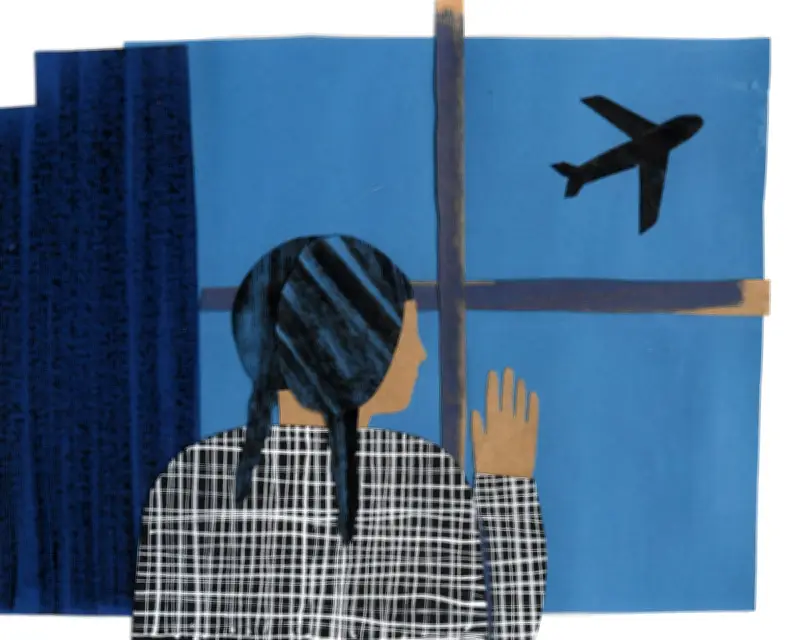
Maria, an 11-year-old from Târgoviște, starts her day ensuring her grandmother takes morning pills, then after school helps with cooking and cleaning, and accompanies her grandmother to medical appointments — sometimes a two-hour bus ride to Bucharest. She listens to doctors, notes medication names and dosages, and misses school without complaint. “I don’t mind taking care of my grandma,” she says. “It’s an activity like any other. I’m used to it.”
Maria has lived with her grandparents since she was three months old. Her parents left Romania for work in Spain, then Germany. They separated; her mother moved to London as a cleaner, while her father remains in Târgoviște but is largely absent.
Scale of the Phenomenon
Maria is one of more than 53,000 Romanian children with at least one parent working abroad, according to Romanian social services. Over 10,000 have both parents or the sole breadwinner abroad. However, the true number is likely far higher. A 2022 study estimates over 530,000 children, with 184,000 having both parents away, compared to the official figure of 76,000 for the same period. Many parents, fearing state intervention, leave without registering a legal guardian, which can hinder children’s school enrollment and medical access.
Anca Stamin, programme manager at Save the Children, notes that schools collect data showing figures two to three times higher than social services. “There has been a wave of disinformation in disadvantaged communities that the state will take their children away,” she says. “Combined with low trust in authorities and little guidance from the state, it pushes many parents not to formally transfer parental rights to the grandparents or relatives raising their children.”
Economic Drivers
Romania joined the EU in 2007 and now has the largest diaspora in the bloc, with over 3 million people officially living elsewhere. Despite economic growth, wages remain among the lowest in the EU. A parent working as a cleaner in London or Frankfurt can earn in a week what they might earn in a month at home. “If I could find a job in Romania that paid enough to live without fear of tomorrow, I would come back tomorrow,” says Diana Sabu, whose eight-year-old son Edi is cared for by his grandmother while she works as a cleaner in France.
Emotional and Psychological Impact
Research shows severe emotional impact on children: guilt, withdrawal, anxiety, or aggression are common, yet psychological support is scarce. A recent survey found over three-quarters of parents abroad struggle to maintain emotional bonds with their children. Nearly half did not return home for Easter this year, mostly due to costs. Children often feel guilt because parents say the sacrifice is for their good. “Parents make various promises they don’t keep, and if they fail to do so, the emotional burden falls heavily on the child’s shoulders,” says Stamin. “Against this backdrop of emotional instability, they are more prone to behavioural problems and at risk of dropping out of school.”
Save the Children runs after-school programmes in 50 Romanian schools, including two in Târgoviște, offering activities, trips, homework support, and a warm meal. “These children mature so quickly,” says Dana Zoe, the Târgoviște programme manager. “But they’re also more sensitive than others. It’s a trauma and you can see it manifest.”
Stories of Separation
Eight-year-old Edi’s mother left for Corsica in April. He lives with his grandmother Roxana. His father has worked in Denmark for five years, visiting every few months. “It’s clear he misses her a lot,” says Roxana. “They left to give the children a better future, but it’s different from how I grew up, with my parents next to me.” Sabu earns about €1,600 a month as a cleaner with accommodation and meals covered — far better than any job near Târgoviște. “The longing is what hurts most,” she says. “But I’m at peace knowing he’ll have what he needs.” Every evening, she falls asleep on a video call with Edi.
Darius Gavriș, now 17, grew up with his grandparents while his parents worked in Spain and later Italy. Until age five, he saw little of them; then every two years until 11. During the pandemic, four years passed without a visit. “I wanted that too,” he says of seeing classmates dropped off by parents. But he adds: “It made me stronger, in a way, more ambitious, because I wanted to make my parents proud.” He recalls the first time his mother visited: he didn’t recognize her and asked his grandmother, “Who is this lady?”
Maria has never faced that. Her grandmother is the most constant presence, and Maria sees her as her mother. She refuses to move to London, even though her brother joined their mother there. She stays to care for her grandmother. Some nights, if her grandmother is unwell, Maria stays awake beside her. “I always fall asleep after my grandma, I need to make sure she’s OK and then I can sleep,” she says.