RBA Governor's Stark Warning on Recession Risks to Tame Inflation
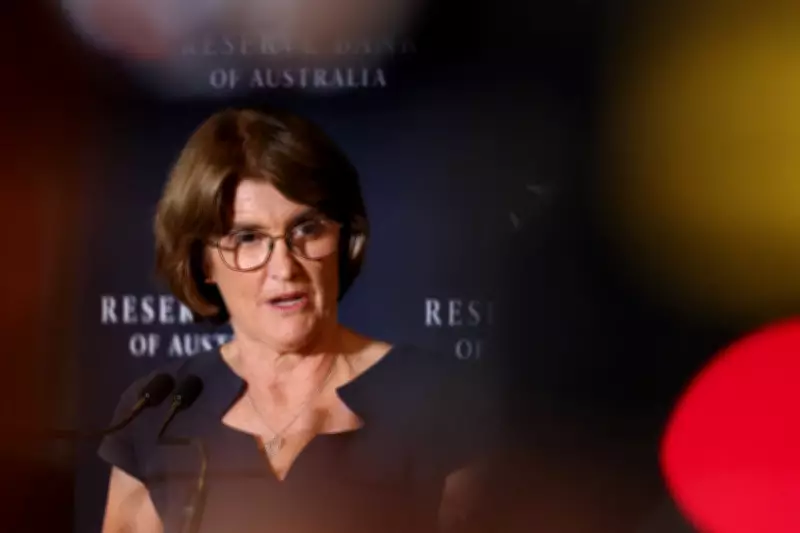
The Governor of the Reserve Bank of Australia, Michele Bullock, has faced intense scrutiny after being questioned on whether she would be prepared to push Australia into a recession if necessary to bring inflation under control. Her response, described as not altogether comforting by economist Greg Jericho, has ignited fresh debates about the nation's economic trajectory and the central bank's aggressive stance.
Historical Context and Current Jitters
Concerns over a potential recession have surged in recent weeks, driven by geopolitical tensions and fears of stagflation—a phenomenon from the 1970s where inflation rises alongside economic stagnation and unemployment. While former US President Donald Trump's de-escalation of threats against Iran temporarily eased oil market volatility, with prices plummeting 13% in an hour, the underlying economic anxieties persist.
Historical data reveals that past recessions, such as those in the early 1980s and 1990s, were often precipitated by sharp interest rate hikes by central banks. For instance, official rates soared from 9.8% to 15.4% between November 1980 and July 1981, leading to a severe downturn. Similarly, the 1990s recession followed peak rates of 18.2% in late 1989. These precedents underscore why Bullock's remarks have amplified worries, especially as inflation remains stubbornly high, partly due to oil price shocks and corporate pricing strategies reminiscent of the 2022 aftermath of Russia's invasion of Ukraine.

Market Expectations and RBA's Stance
Financial markets continue to anticipate further interest rate increases by the RBA, with predictions of a rise in May and another by December, despite Trump's diplomatic backdown. Bullock's statement, "We don't want to have a recession, but if it's hard to get inflation down, then you know we're going to have to deal with that possibly," highlights the bank's readiness to employ drastic measures. This approach raises alarms about the potential human cost, as recessions historically lead to prolonged unemployment and economic scarring, with male full-time employment, for example, never fully recovering from past downturns.
Measuring Recession: Beyond GDP Figures
Economist Claudia Sahm advocates for a more nuanced measure of recession, focusing on a 0.5 percentage point increase in unemployment within a year rather than traditional GDP declines. By this metric, Australia currently fares reasonably well, but the threat looms large. The COVID-19 recession, often viewed as an anomaly due to lockdowns, contrasts sharply with genuine recessions where employment drops linger for years, even decades, devastating livelihoods and communities.
As the RBA balances inflation control with economic stability, Bullock's seemingly cavalier attitude towards triggering a recession has drawn criticism. Recessions, as Jericho emphasises, destroy lives, and the central bank's historical tendency to recognise policy missteps only after the fact offers little reassurance. While geopolitical tensions may have momentarily subsided, the RBA's unwavering commitment to reducing inflation, even at the risk of a downturn, remains a pressing concern for Australia's economic future.