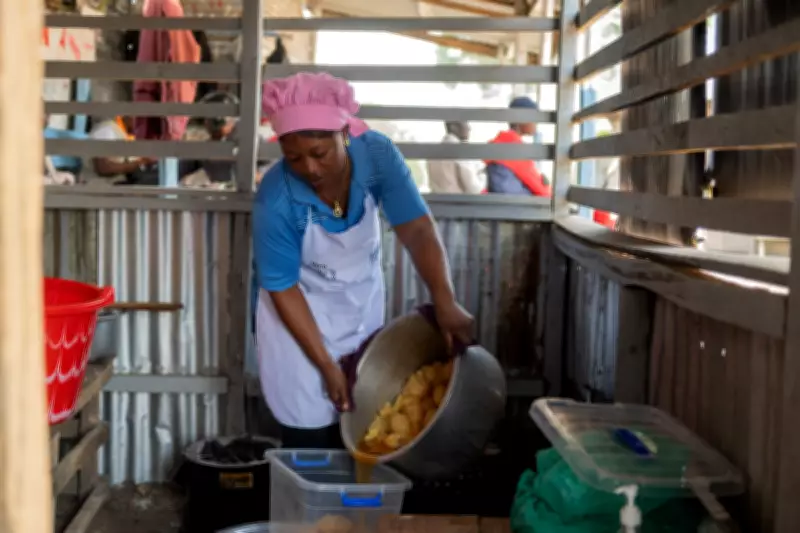
As the Democratic Republic of Congo battles an outbreak of the rare Bundibugyo Ebola virus, volunteers are stepping up to provide cooked meals for patients and health workers, with assistance from the United Nations World Food Program (WFP).
Volunteer Efforts in Bunia
Arlette Basekawike, a volunteer for the WFP in Bunia, the epicenter of the outbreak, spends her days in a small shed outside a health facility preparing meals. Wearing a pink bonnet, she cooks porridge, omelets, and bread for breakfast for patients at the Evangelical Medical Center. Lunch and dinner often include fresh fish with fufu, a starchy staple made from mashed plantains, followed by fruit.
“Even though the patients have this disease, they still feel better when they eat, and the doctors have the energy to treat the sick and give them medication,” Basekawike told The Associated Press on Monday as she prepared vegetables and potatoes with goat meat. “I’m here for them like a parent, preparing food so they feel comfortable.”

Critical Support Amid Crisis
Her work, though seemingly simple, has become a vital component of the region's response to the rapidly spreading virus, which was confirmed in eastern Congo in May. Before the outbreak, the area was already facing one of the world's most severe food crises due to ongoing conflict that has displaced millions. The addition of Ebola has compounded the challenges, with the UN warning that food insecurity could hinder efforts to contain the virus among a wary population.
“We are in a region where we already have large segments of the population suffering from acute food insecurity linked to either war or displacement,” said Olivier Nkakudulu, head of the WFP in Ituri province. “So there are already needs and Ebola is an additional crisis on top of a crisis.”
Funding Shortfalls
The resource-strapped WFP faces critical choices as aid cuts from the U.S. and other major partners disrupt operations. Efforts to contain the disease, declared a global health emergency by the World Health Organization (WHO), have been hampered by a lack of funds as global partners withdraw or reduce pledges. Additionally, attacks by suspicious residents on health workers and slow aid delivery due to conflict have made it difficult to slow the spread.
Despite these challenges, the agency and health workers have ensured patients' nutritional needs are met so far. “Today we need to increase the amount because the number of patients has gone up,” said Esther Bao, a nurse and volunteer. Some patients, due to their health condition, “don't eat just any meal,” she added.
Outbreak Statistics
Since last month, at least 282 cases of Ebola and 42 deaths have been confirmed, with suspected cases exceeding 1,000 in the eastern provinces of Ituri, North Kivu, and South Kivu. The virus has also spread to neighboring Uganda, with nine cases prompting Uganda to close its border with Congo. The Bundibugyo virus has no approved vaccine or treatment, though symptomatic treatment has led to five recoveries.
The outbreak has expanded from three health zones to 22 as of this weekend, according to Congo's Ministry of Health. On Sunday, 120 meals were served across four health facilities, bringing the total to 404 since food assistance began on May 28, said Nkakudulu. However, he warned, “Without more funding, we might not be able to prioritize every suspected case. We might have to focus on some and not have food to give to others.”