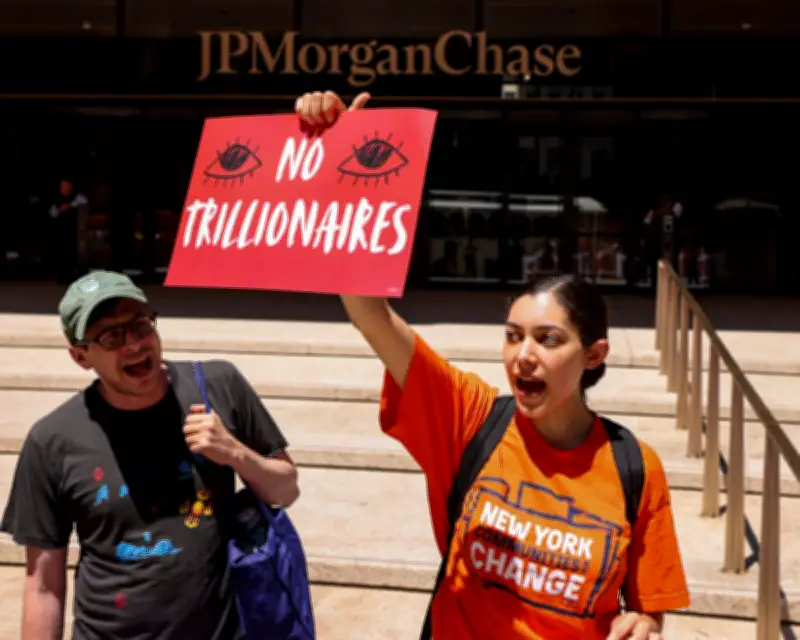
Elon Musk is on track to become the world's first trillionaire following the public offering of SpaceX, highlighting America's lopsided prosperity and the nation's limited appetite for redistribution. Just a decade ago, under Barack Obama, the government boasted of significant strides in curbing income inequality, but those gains have since eroded.
Obama's Anti-Inequality Efforts Fade
By the end of 2016, taxes and transfers cut the share of income accruing to the richest 1% of households by just over a fifth, according to the Congressional Budget Office (CBO). They raised the slice of income going to the poorest fifth from 3.9% to 7.9%, the highest share since at least 1979. However, under Donald Trump, the share of income for the top 1% after taxes and transfers rose to 13.2% from 12.5% when Obama left office. The $2.2tn Cares Act temporarily boosted the poorest fifth's share to 8.2% in 2020, but by 2022 it had dipped to 7.4% under Joe Biden.
Trump's Tax Policies Worsen Inequality
Trump's Tax Cuts and Jobs Act of 2017 provided massive tax cuts to the upper percentiles, and his One Big Beautiful Bill Act slashed spending on Medicaid, food stamps, and health insurance subsidies to pay for corporate tax cuts. According to the CBO, the legislation reduced the annual income of the poorest tenth of households by 3.1% on average (about $1,200) while boosting the top decile's income by 2.6% ($13,600). Tariffs further disproportionately hurt the working class.
Deep-Rooted American Aversion to Taxes
US inequality is not solely Trump's fault but a persistent feature of American society. Research by economists at UC Berkeley found that the 400 richest Americans pay a smaller share of their income in taxes than the average person, largely due to tax avoidance strategies. Over the past half-century, taxes and transfers have never reduced the top 1%'s income share by much more than a fifth. The US Gini index is among the highest in the OECD, and redistribution does less to reduce inequality than in almost any other member country.
Musk's Tax Avoidance
Musk's wealth is likely to remain largely untouched by redistributive efforts. The wealthiest 1% hold nearly 32% of US net worth, passed down generations tax-free. Unrealized capital gains account for 55% of the largest estates. According to ProPublica, Musk's wealth increased by $13.9bn between 2014 and 2018, but he paid only $455m in taxes on reported income of $1.52bn. In 2015, he paid $68,000 in federal income tax; in 2017, $65,000; and in 2018, none.
AI May Deepen Inequality
As artificial intelligence displaces labor and rewards capital owners, it is expected to further shrink workers' share of national income. Eduardo Porter, a journalist focused on economics and politics, notes that Obama's anti-inequality efforts—the most strenuous since Lyndon Johnson's Great Society—appear as minor blips in the long arc of American indifference toward massive disparities.