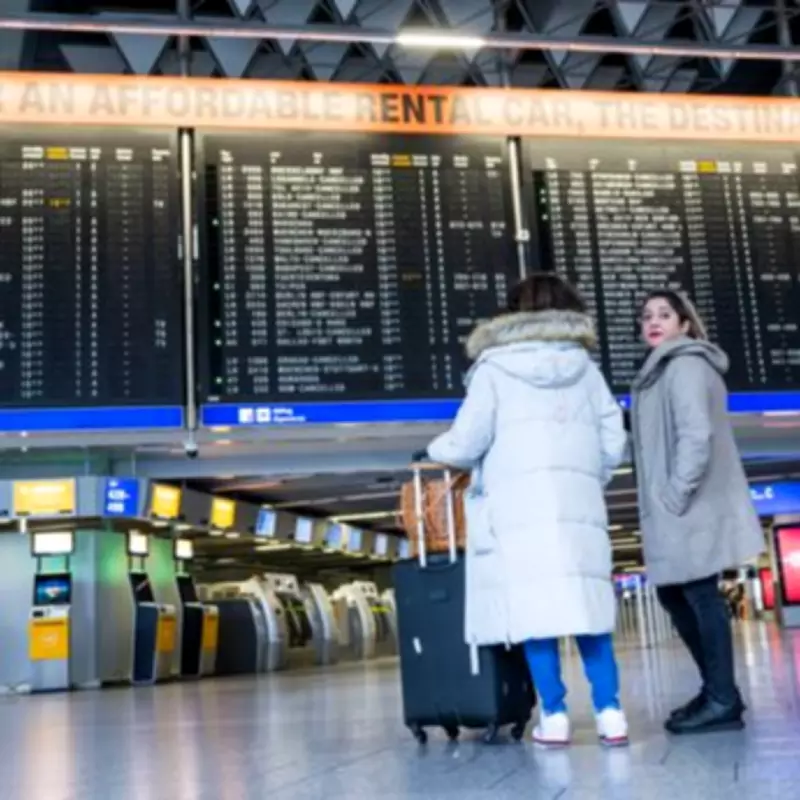
German airline Lufthansa has announced the cancellation of 20,000 summer flights due to soaring jet fuel costs, as the European Union scrambles to prevent shortages. The move comes amid a wave of airlines scaling back operations in response to rocketing fuel bills triggered by the ongoing Iran conflict.
Lufthansa's Cost-Cutting Measures
Lufthansa confirmed it is grounding 20,000 short-haul flights from its schedule through October, aiming to save approximately 40,000 metric tons of jet fuel. The price of jet fuel has doubled since the outbreak of the Iran war. The cancellations target unprofitable routes and affect its six hubs in Frankfurt, Munich, Zurich, Vienna, Brussels, and Rome. The first 120 daily flight cancellations took place earlier this week.
Lufthansa is the largest airline so far to announce mass cancellations due to jet fuel prices, joining around two dozen other carriers that have trimmed operations.

Broader Airline Industry Impact
British Airways is reducing flights to the Middle East, permanently dropping Jeddah as a destination while adding capacity to India and Africa. From July 1, it will reduce services to Dubai, Doha, and Tel Aviv to one daily flight, and cut Riyadh services from two daily flights to one from mid-May. These changes apply through the summer season ending October 24, with one Dubai service restarting on October 16.
Sister airline Iberia Express has cancelled flights to Tel Aviv through May 31. A spokesperson for IAG, owner of British Airways and Iberia, stated, “We are not seeing disruption to jet fuel supply in our main airports, but our airlines are already facing rising fuel costs.”
Ryanair boss Michael O’Leary warned earlier this month that his airline may be forced to cancel 10% of its flights this summer. He told ITV News, “We’re all facing an unknown scenario. And we are certainly looking at maybe having to cancel 5% to 10% of flights through May, June and July.”
Economist Thomas Pugh of RSM UK noted that some smaller airlines had already cancelled routes and added fuel surcharges. “It won’t be long before larger ones follow suit, as they have in Asia,” he said, adding, “that’s demand destruction in action.”
Virgin Atlantic has imposed a £50 levy on economy fares, £180 on premium, and £360 on first class to offset rising fuel costs.
EU Response and Potential Shortages
The European Union says it will provide guidance to airlines on handling airport slots and passenger rights in the event of jet fuel shortages due to the Iran war. EU Transport Commissioner Apostolos Tzitzikostas stated there were no shortages “as of today” but warned a prolonged blockage of the Strait of Hormuz would be “catastrophic” for Europe and the global economy.
About one-fifth of the world’s oil and liquefied natural gas transited Hormuz before the U.S. and Israel began bombing Iran on February 28. The EU imports 30% to 40% of its jet fuel needs, with about half coming from the Middle East. The European Commission is due to present a broader package of energy and transport measures on Wednesday.
Tzitzikostas added, “If real supply issues arise, our emergency stocks must be put to best use. Any national release of fuel must be done in full transparency to avoid market distortions.” He noted no signs of “widespread cancellations” in the coming weeks or months. The International Energy Agency warned last week that physical shortages could start as soon as June, but European airlines currently report only higher prices.
Brittany Ferries Criticizes Airline Surcharges
Christophe Mathieu, chief executive of cross-Channel operator Brittany Ferries, launched an extraordinary attack on airlines for imposing fuel surcharges, branding it “the unacceptable face of capitalism” and “profiteering.” He stated, “Today we make a clear promise to customers. Firstly, if you have booked with us, or are considering doing so, we will get you to a beautiful and safe holiday destination this year. Period. Secondly, we will play no part in profiteering or seeking to recover losses from a gamble gone wrong, as some appear to be doing.”

Mathieu emphasized that the cost of their holidays rose by inflation alone earlier this year, with no further rises planned. “Conflict or other global uncertainty should not be used as the basis for knee-jerk price hikes: it is absolutely the unacceptable face of capitalism.”
Brittany Ferries insisted there was “no chance” that summer holidays would be ruined by maritime fuel shortages, as its suppliers guaranteed the free flow of all maritime fuels for its services from Portsmouth, Poole, or Plymouth to five destinations in France, two in northern Spain, and Guernsey. The firm has seen a 37% increase in reservations for July and August travel in the past fortnight.
Impact on UK Staycations
Package holiday giant Tui has cut its full-year profit forecast due to uncertainty caused by the Iran war. Tui, which operates its own aircraft fleet, joined airlines from easyJet to Wizz Air in warning of negative impacts on profit margins. European airlines are set to report first-quarter results starting next week, with analysts expecting broad capacity cuts and further profit warnings.
Meanwhile, there are signs of foreign travel fears boosting UK staycations. Dan Yates, founder of outdoor accommodation website Pitchup.com, said, “While it’s too early to know whether current fuel supply concerns will have a direct impact on flight availability, we are already seeing clear signs that holidaymakers are planning flexibly, with a focus on fuel-free UK-based breaks, especially as rising fuel costs make car travel more expensive this spring and summer.”