Ireland's Fuel Crisis Deepens as Protests Escalate and Military Stands By
Ireland's Defence Forces have been placed on "standby" as nationwide fuel protests, now entering their fourth consecutive day, continue to cause significant disruption and threaten critical supplies across the country. The military's potential involvement comes as blockades outside major fuel depots intensify, prompting a government shift towards an "enforcement" phase in response to the escalating crisis that has gripped the nation.
Root Causes of the Widespread Demonstrations
The protests stem from soaring petrol and diesel prices, which have reached approximately 193.9 cents and 218.9 cents respectively at filling stations throughout Ireland. Demonstrators, primarily professional drivers, farmers, and hauliers, attribute the sharp price hikes to the ongoing conflict in the Middle East and its substantial impact on supplies from the strategically vital Strait of Hormuz. They argue that without immediate government intervention, their businesses and livelihoods are at severe and imminent risk of collapse.
Organised largely through social media channels and messaging applications, the movement has proven remarkably difficult to attribute to specific leaders or organising bodies. A prominent Facebook page with almost 60,000 followers claims to represent professional drivers, farmers, hauliers, as well as taxi and bus operators across Ireland. Participants have often been reluctant to identify "organisers," though several spokespeople have emerged, frequently under the proviso that they hold little influence over the actions of their fellow demonstrators in Dublin or other locations.

Justice Minister Jim O'Callaghan, however, suggested on Thursday that "outside actors" seeking political gain or aiming to "damage our country" might be manipulating protesters. Notably, government-recognised bodies like the Irish Road Haulage Association and the Irish Farmers' Association are not officially involved in the protest action, creating a leadership vacuum that complicates resolution efforts.
Key Demands and Proposed Solutions
Protesters are demanding significant reductions in fuel costs, proposing various solutions including substantial cuts to excise duty, carbon tax, or VAT. Others advocate for a temporary cap on fuel prices specifically for the duration of the Middle East conflict. A key demand is also for senior government figures to meet directly with representatives to hear their concerns, often presented as a non-negotiable prerequisite for lifting any blockade or ending protest actions.
The Irish government acknowledges the severe cost-of-living pressures linked directly to the Middle East conflict and insists protesters' concerns have been heard and considered. Two-and-a-half weeks ago, a €250 million emergency package was approved, including a temporary excise duty reduction of 17 cent for petrol, 22 cent for diesel, and five cent for green diesel, alongside an expansion of the diesel rebate scheme. However, these savings were largely negated as the war continued to rage, with prices continuing their upward trajectory.
Widespread Disruption and Critical Consequences
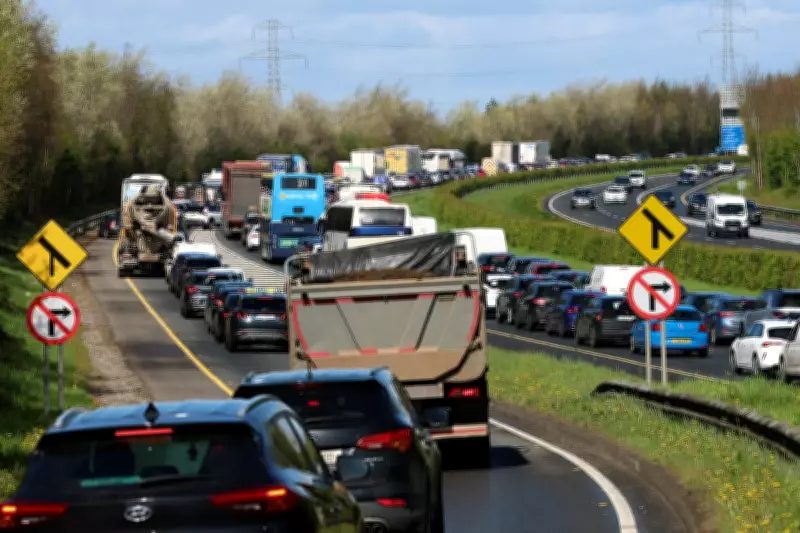
The widespread protest action has led to significant disruption across Ireland with severe consequences for daily life and essential services. Major motorways have experienced slow-moving convoys and outright stoppages, while Dublin's city centre has endured multiple gridlocks, with tractors blocking the busiest routes around the capital's main thoroughfare, O'Connell Street.
Most critically, blockades have targeted the country's only oil refinery at Whitegate, Co Cork, and fuel depots in Galway City and Foynes, Co Limerick – sites collectively responsible for supplying roughly half of Ireland's fuel according to industry experts. Additional protests have occurred near Rosslare Europort in Co Wexford, creating a nationwide network of disruption.
The consequences have been severe and far-reaching:

- Numerous filling stations have run completely dry across multiple regions
- Serious concerns have mounted over fuel availability for emergency services including ambulances and fire brigades
- Members of the public have missed scheduled medical appointments and treatments
- Worries persist about the timely delivery of essential medicines, water-treatment chemicals, and vital farm supplies such as animal feed
- Traffic chaos on Dublin's M50 ring road, which provides access to the country's largest airport, forced some passengers to walk with luggage on the hard shoulder
Government Response and Enforcement Measures
Senior government officials have appealed for an immediate end to the protests, stating they have gone "too far" and are causing substantial damage to the wider public and national infrastructure. An Garda Siochana, the Irish police service, has been closely monitoring the situation and has announced a formal "enforcement" phase to address the escalating crisis.
Taoiseach Micheál Martin described the Whitegate blockade specifically as an "act of national sabotage," leading directly to the Defence Forces being put on standby to assist in removing heavy vehicles from critical infrastructure if necessary. Government leaders have so far declined direct meetings with protesters, preferring engagement with recognised representative bodies, a stance Justice Minister O'Callaghan defended to avoid setting a dangerous precedent that anyone who blockades critical infrastructure could expect a meeting with government ministers.
Future Developments and Continuing Tensions
Organising groups have pledged to continue protests on Friday, with clear intentions to resume action when Ireland's parliament, the Dáil, reconvenes on Tuesday, should the blockades not extend through the weekend. An industry expert warns that the number of filling stations running dry is certain to increase dramatically if longer blockades of the major fuel suppliers continue, thereby increasing pressure on government and State authorities to respond decisively.
While ministers and An Garda Siochana have urged protesters to end blockades or "face the full rigours of the law," demonstrators insist they will not move until their concerns are properly addressed, or they are forcibly dispersed. Gardai have already instructed demonstrators to disperse from a protest near Rosslare Europort late on Thursday, indicating the enforcement phase is underway. Representative organisations are scheduled to have a formal meeting with the government on Friday, with the possibility of protesters also attending if they are brought by official groups, though this remains uncertain as tensions continue to mount across the nation.