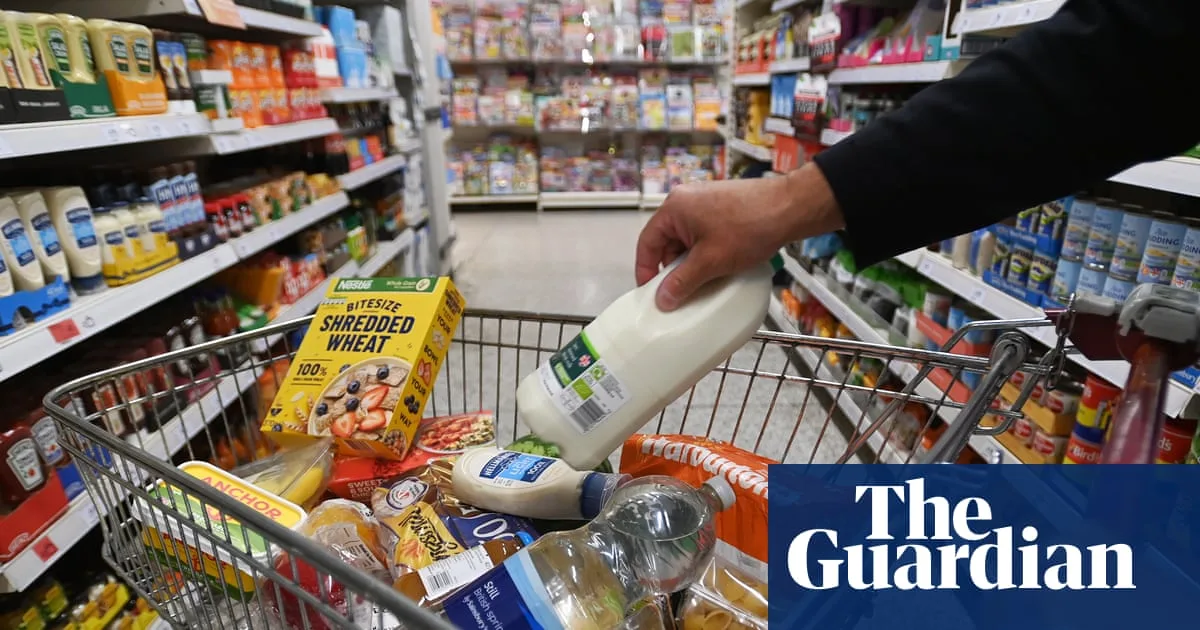
Among all the soaring bills families are feeling the pressure from, food is one of the biggest. A surge in the cost of the weekly shop in recent years has, for many, hit home the hardest. And just when there were hopes that food inflation, and the wider cost of living, was easing, the outbreak of war in the Middle East has led to warnings that grocery bills could spiral once again. It is against this backdrop that reports have emerged that the Treasury has asked supermarkets to introduce voluntary price caps on key essentials.
Government Talks and Industry Reaction
Supermarket bosses have rubbished the idea but, while ruling out a mandatory price cap, Treasury secretary Dam Tomlinson confirmed talks with the sector had taken place. Despite those against the idea, experts point out that tens of millions of households are benefiting from Ofgem's existing price cap on energy bills. So how could a voluntary system work, is it justified, and how likely is it to happen?
Context of Rising Food Costs
Just about every household has come away from doing the weekly shop wondering just why it has cost so much more. The hikes have built up over several years, with supermarkets blaming higher costs from everything from the war in Ukraine to wage and national insurance increases. Food inflation peaked at more than 19% in March 2023, since when it has been gradually coming down. But the economic fallout from the Middle East conflict, which has triggered higher oil and fertiliser prices, has led to predictions from the Food and Drink Federation (FDF) that food price inflation could surge back up to 9% or 10% by Christmas. The other context is political, given the government has delayed a planned fuel duty rise and is possibly indicating help to offset an expected energy bill hike. With the taxpayer shouldering the cost, ministers will want to get the message out that industry has to take on some of the burden too.
How Could a Supermarket Price Cap Work?
There are precious few details at the moment, especially as the Treasury has downplayed the idea. However, reports have suggested it would be a voluntary system and apply to frequently bought items such as milk, eggs, bread and cheese. By agreeing to limit the price of such products, businesses would get the benefit of having certain regulatory costs removed.
International Examples
Some countries have price caps on food, and it seems the trigger for this latest speculation has been the Scottish National Party's proposals for mandatory price caps on up to 50 essential items north of the border. Supermarkets would be required to cap the cost of at least one variation of an item in a category, such as a particular loaf of bread. However, it is unclear how it would be policed in practice. There is also the potentially major obstacle of whether the Scottish government can press ahead with the plan or whether it requires approval from Westminster. The proposed Scottish system is similar to one already operating in Croatia, where there is a maximum price on 100 essential food and hygiene products. Retailers are required to offer at least one product at the capped price within certain categories. Hungary has also had a cap, but on the price margin—the mark-up—retailers can make on certain items. The maximum margin allowed on 30 basics is 10%. However, the European Commission has ordered Hungary to scrap it. Other countries have tried price caps in the past. France, for instance, agreed price caps with 75 top food producers in 2023, though that was more about them passing on lower raw material costs.
Should Supermarkets Limit Prices on Essentials?
When you look at the numbers, most supermarkets seem to be making a packet. Take Tesco, the UK's biggest grocer, which raked in profits of £2.4 billion last year. But the industry says these big numbers mask relatively thin profit margins of around 3% to 5%. That is across the board, so grocers will be making much more money on certain products. On the other hand, the essentials on which price controls are being mooted are among the ones where supermarkets are competing the hardest. Stuart Machin, boss of Marks & Spencer, said its price for a pint of milk had remained at 85p for the past couple of years. "We don't make money on milk," he said. "It is about minus 7%." He said its 75p loaf of bread was also sold at a loss. Why? Because it knows how price-sensitive shoppers are, and when they pick up milk and bread, they will also buy other products on which the chain makes a profit.
But economist James Meadway, co-director of the independent think tank Verdant, said: "Price controls are a necessary step in addressing the crisis and controls are being successfully applied in a growing number of developed countries like Greece's 'household basket' for essential foods. Major supermarkets like Tesco are already making higher profits and have the capacity to manage prices of essentials in the public interest. If they will not do this voluntarily, then the government should of course use legal measures as needed."
Devika Dutt, economist at the University of King's College London, said: "Price caps are effective tools to control the rise in price of essentials. It will have a bigger, and more consistent impact on cost of living than what is captured in inflation data. We already have an energy price cap in practice in this country that has moderated the impact of rising energy prices on households. This will provide the most relief to the poorest households that spend a larger proportion of their incomes on food, which would be quite welcome."
Conor O'Shea, campaign coordinator at Cost of Living Action, said: "The government is right to be looking at price caps on food, and noises that they were investigating similar on rent is also welcome. We are living through an unprecedented cost of living crisis where bills are crippling families. Implementing fairer pricing must be a key pillar of the government response to this. Our research showed that four in five people think the government is doing badly at tackling the cost of living. It is crystal clear that the government needs to change its approach and address the structural drivers of this crisis, as well as providing immediate support."
How Likely Are Price Limits on Food?
The food industry seems universally against the idea, with various bigwigs calling it "nonsense" and "idiotic." But then the industry was never likely to embrace the idea of the state encroaching even further into how they do business. So given any system was supposed to be voluntary anyway, it seems unlikely it will happen. However, the government is desperate to send out a message that it is on the side of cost-of-living-ravaged families and that it will take on anyone—including the might of the supermarkets—as it desperately tries to shore up support in the wake of the disastrous local election results.