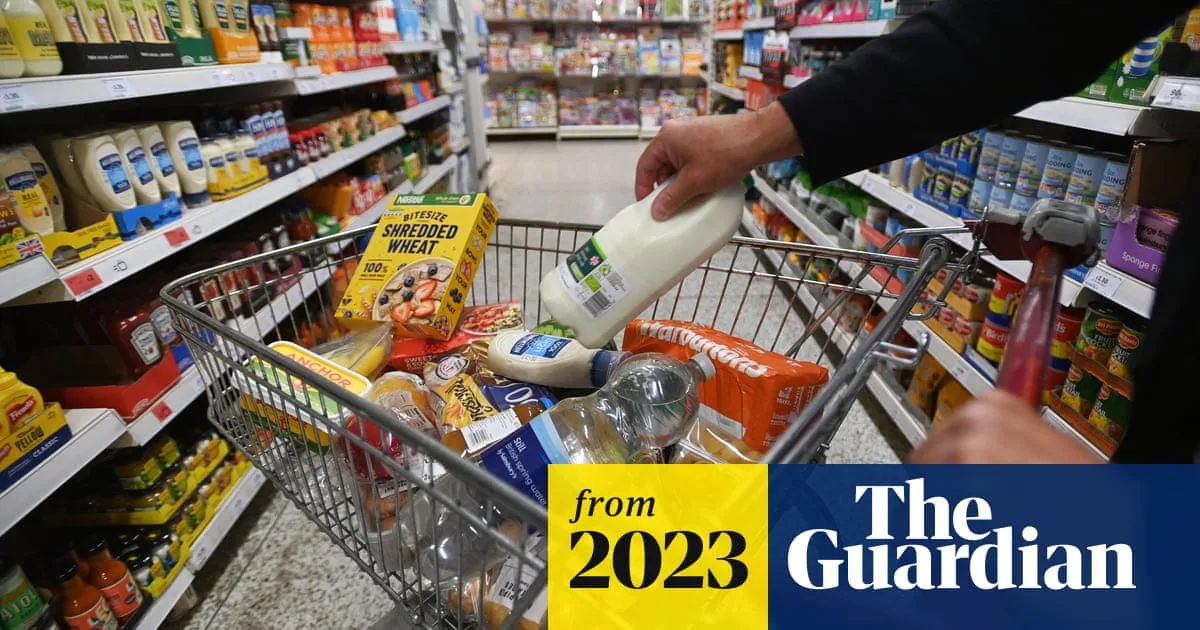
Grocery price inflation has fallen to single digits for the first time in a year and a half, offering some respite to consumers amid the cost of living crisis. According to data from Kantar, inflation slowed to 9.7% in the four weeks to 29 October, down from double-digit figures seen since July 2022.
Fraser McKevitt, head of retail and consumer insight at Kantar, described the drop as a “big milestone” but cautioned that prices are still rising, with year-on-year falls limited to categories such as butter, dried pasta, and milk. Retailers have increased promotional activity, with spending on deals reaching 27.2% of total grocery sales, the highest since Christmas last year.
Shoppers continue to trade down to own-label products to save money, with own-label sales up 8% compared with 6.7% for branded goods. However, the gap is expected to narrow closer to the festive period when branded purchases typically increase. The average price of a standard bottle of sparkling wine fell 8% from £7.46 to £6.86, while low-alcohol beer sales rose 16% aided by Sober October.
Among retailers, Lidl was the fastest-growing with sales up 14.7% over 12 weeks. Aldi attracted 207,000 more customers and, along with Waitrose, saw year-on-year shopper growth. Sainsbury’s led traditional supermarkets with a 10.1% sales increase. Primark also reported 8.5% like-for-like sales growth, with CEO George Weston expecting further expansion next year.