Economist Condemns $2.5 Billion Fuel Excise Cuts as 'Nonsense' Policy
One of Australia's foremost economists has launched a scathing critique of the federal government's decision to halve the fuel excise, labelling it a $2.5 billion mistake that will have negative long-term consequences. Prime Minister Anthony Albanese's administration reduced the excise on petrol and diesel by 26.3 cents per litre for three months, aiming to provide cost-of-living relief to households.
Immediate Savings Versus Long-Term Costs
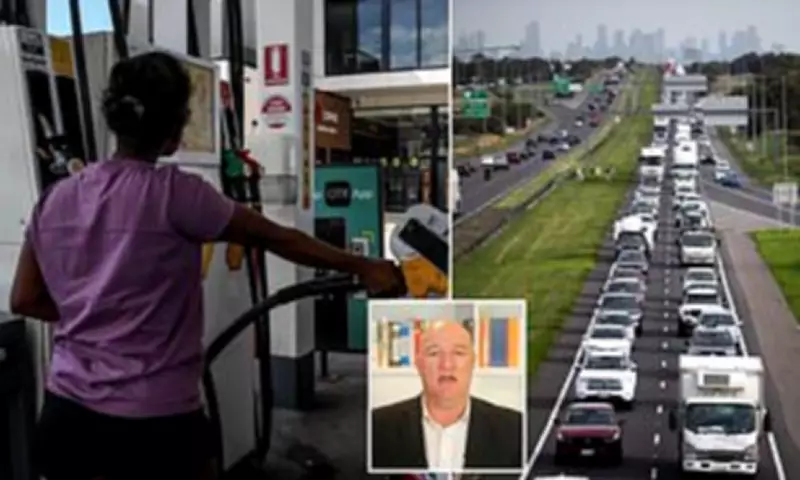
Motorists have seen immediate benefits, with fuel prices dropping in capital cities just in time for the Easter long weekend. The savings were further boosted by an additional 5.7 cents per litre after states and territories resolved a dispute over GST windfalls. However, Scott Phillips, Chief Investment Officer at The Motley Fool, argues that these short-term gains mask significant economic risks.
"I am yet to speak to an economist who thinks that the fuel excise cuts are a good idea," Mr Phillips stated. While acknowledging that many Australian families are struggling financially, he insists that both the federal government and the Opposition, which lobbied for the cuts, are "dead wrong" in their approach.

Three Critical Flaws in the Policy
Mr Phillips outlined three primary concerns during an interview on the Seven News podcast The Issue:
- Increased Demand for Constrained Supply: "Fuel is a supply-constrained good. If you lower a price, you increase demand, you just do. So, we will use more fuel—more constrained fuel—because of a lower price."
- Addition to Government Debt: The excise cuts will add approximately $2.5 billion to the deficit and national debt. "That has got to be paid back at some point. It's not huge and it's worth doing in an emergency, but there will be consequences."
- Inflationary Pressures: "The government is adding $2.5 billion of stimulus to the economy so that the fuel we're buying is cheaper. It feels good now, but every serious economist knows and believes that the saving you get today you'll pay later in inflation." He warned that when the excise reverts in three months, built-in inflation could leave consumers worse off than before the cuts.
Broader Economic Warnings
Mr Phillips also cautioned that the ongoing conflict in the Middle East heightens the risk of a recession. "We cannot escape a recession globally or locally if this drags on for months. If we can't keep employment and spending at a business level on an even keel, we probably don't have a lot of safety nets to fall back on economically over the next six or 12 months."
Despite these concerns, current fuel supply data shows some resilience. Energy Minister Chris Bowen reported that Australia maintains 39 days' worth of petrol, 29 days of diesel, and 30 days of jet fuel, with demand remaining strong. The number of service stations experiencing diesel shortages has decreased over the Easter break, with 312 out of approximately 8,000 stations affected nationwide.
Bowen reiterated the government's advice for families to continue with holiday plans but to purchase fuel prudently—buying only what is needed and opting for city stations to help maintain regional supplies. He noted that more than 50 ships are en route to Australia, with new orders replacing cancelled ones, and fuel companies express confidence in the supply of 3.7 billion litres booked for April and May.
Nevertheless, Mr Phillips' critique underscores a growing debate over the efficacy of temporary fiscal measures in addressing complex economic challenges, highlighting the tension between immediate relief and sustainable policy-making.