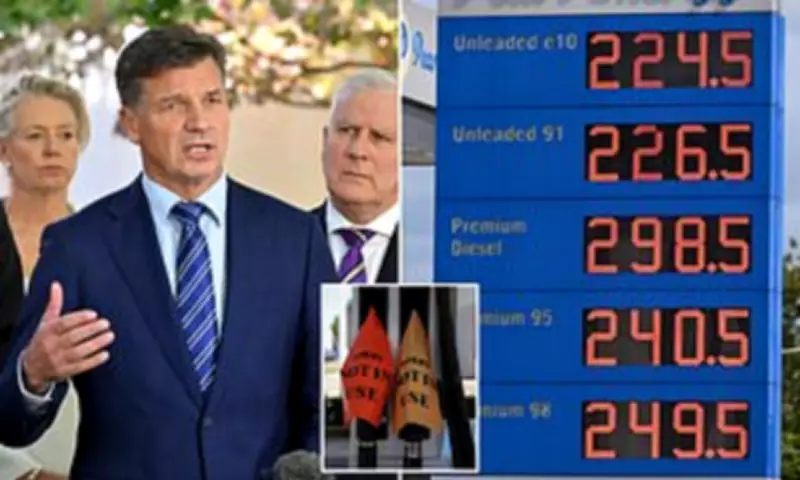
The Coalition has issued a strong demand for increased transparency from the Albanese Government regarding Australia's fuel security, asserting that the public remains largely uninformed about local fuel availability. Opposition Leader Angus Taylor is spearheading calls for a real-time, publicly accessible dashboard to provide households and businesses with clear, ongoing updates on national fuel and energy supplies.
Current Fuel Reserves and Government Reporting
Energy Minister Chris Bowen disclosed to reporters on Wednesday that Australia currently holds approximately 39 days' worth of petrol, along with about 30 days of diesel and jet fuel. Despite this, the Coalition argues that current reporting methods are insufficient. Presently, the Government primarily offers fuel market updates through media conferences, with Minister Bowen delivering weekly summaries in person.
Proposed Real-Time Dashboard Features
Taylor's proposed fuel dashboard would revolutionise public information by publishing daily, nationwide data. This would include detailed breakdowns showing how many service stations in each state and territory are experiencing shortages, categorised by those without diesel, unleaded petrol, or completely out of fuel. Additionally, the dashboard would provide rolling updates on national bulk fuel reserves, encompassing volumes held at major terminals, by distributors, and wholesalers, as well as daily rates of stock depletion.

The Coalition insists these figures should be reported every day, particularly the estimated number of days of diesel, jet fuel, and petrol remaining. They argue that more frequent reporting is crucial during periods of global instability to ensure Australians have access to basic information about fuel stocks, reserve levels, and the likely duration of supply pressures.
Senate Scrutiny and Bipartisan Efforts
Beyond the dashboard, the Coalition is actively pursuing bipartisan support for a Senate Select Committee. This committee would scrutinise how the ongoing conflict in Iran is impacting global supply chains and exerting renewed pressure on Australia's fuel stocks. Although a ceasefire in the Middle East has temporarily paused fighting, it has starkly highlighted Australia's vulnerability to shocks in global fuel markets.
Global Market Disruptions and Economic Impact
Major shipping routes, including the critical Strait of Hormuz, may currently be open, but the Opposition warns that disruptions are far from over. The effects of recent turmoil are yet to fully filter through to domestic markets, with the six weeks of instability expected to continue weighing on fuel distribution and the broader economy for months to come. Large segments of oil infrastructure in the Gulf have been severely damaged or destroyed, potentially requiring years to rebuild.
Market analysts predict that supply conditions will remain tight in Australia, leaving consumers vulnerable in the near-term. National Australia Bank chief economist Sally Auld cautioned that even if the Middle East conflict concludes swiftly, economic pain will persist for months. 'The longer the conflict drags on, the larger the impact on the local economy,' she stated. 'Even if the conflict is resolved quickly, the impact will linger for a number of months. A return to pre-conflict oil volumes and prices will not happen rapidly, meaning the conflict is likely to have a long tail in terms of its impact on the domestic economy.'
Enhanced Tracking and Storage Monitoring
Taylor's plan extends to real-time tracking of fuel imports, incorporating details on inbound shipments and issuing alerts when deliveries risk being diverted to overseas markets as other nations prioritise their own supplies. Available storage capacity would also be updated daily, identifying where additional imports could be accommodated or where smaller suppliers might gain access to storage facilities.

Strengthening National Resilience
The Coalition maintains that greater visibility through such measures would empower businesses, industry stakeholders, and ordinary Australians to better plan for supply chain shocks. This enhanced transparency is seen as vital for strengthening national resilience as global uncertainty persists. While prices at the bowser have already increased, public reporting on the risk of deeper shortages remains scarce, underscoring the urgent need for the proposed dashboard and comprehensive data dissemination.
Impacts from the Middle East conflict will continue to be felt domestically despite the two-week ceasefire, with fuel shipments and prices expected to remain volatile for months. The Coalition's push for a fuel transparency dashboard represents a significant step toward mitigating these challenges and ensuring Australians are adequately informed during this period of heightened economic and security concern.