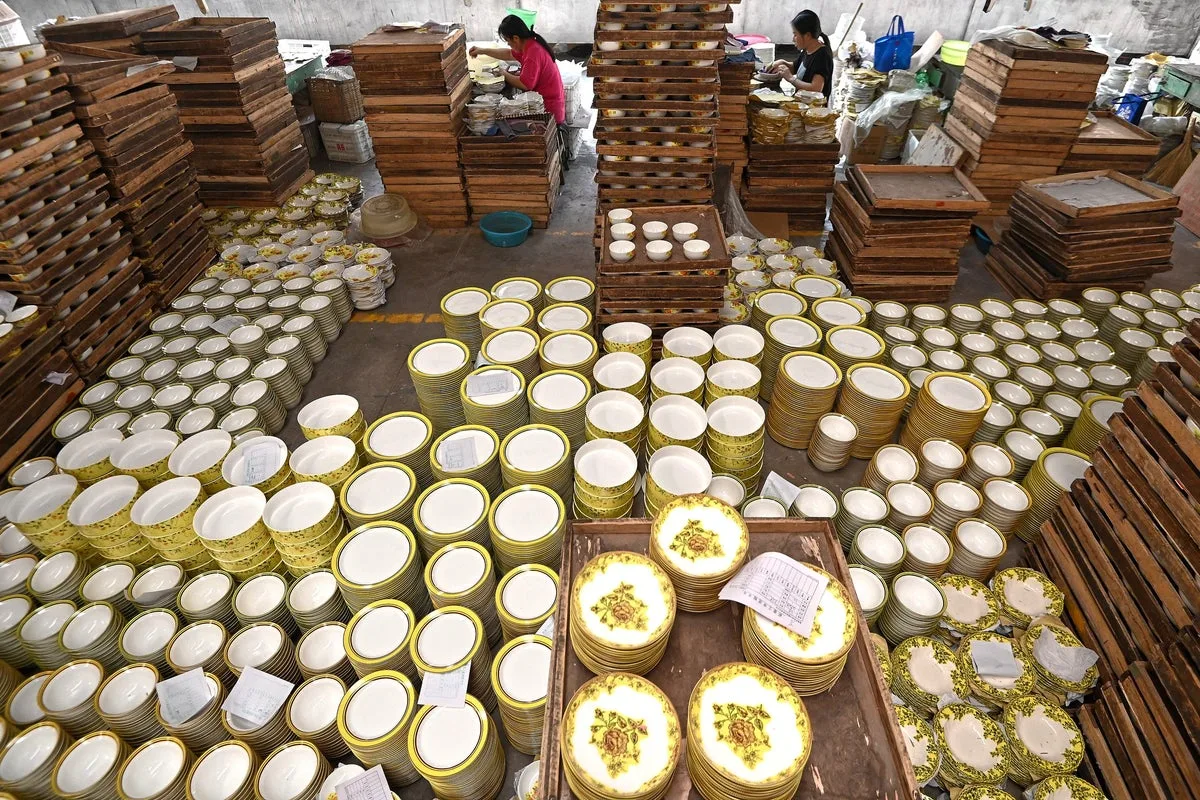
China’s factory activity shrank for a second month in February, according to official data released on Wednesday. The manufacturing purchasing managers index (PMI) slipped to 49 from 49.3 in January, a four-month low, the National Bureau of Statistics reported. A reading below 50 indicates contraction.
The decline was attributed to seasonal factors including the nine-day Lunar New Year holiday in mid-February, said Huo Lihui, a chief statistician at the bureau. However, weak domestic consumption and demand also weighed on the manufacturing sector, which had only briefly returned to expansion in December after eight consecutive months of contraction.
In contrast, a private sector PMI survey by RatingDog showed a February reading of 52.1, up from 50.3 in January, signalling expansion and the sharpest growth since December 2020. The private survey tends to reflect conditions among smaller, export-focused firms, and overseas demand rebounded strongly in February, according to RatingDog founder Yao Yu.
“The mixed bag of manufacturing PMI data suggests a similar trajectory to what we observed in 2025,” said Lynn Song, chief economist for Greater China at ING Bank. “Resilient external demand (is) continuing to drive growth, while domestic demand has been disappointingly soft.”
Analysts noted that a recent US Supreme Court ruling reducing tariffs, including those on China, could provide a small boost to exports and manufacturing activity in the coming months. Additionally, a planned meeting between US President Donald Trump and Chinese leader Xi Jinping in April may lead to an extended trade truce. However, China's prolonged real estate downturn is expected to continue dragging on consumption and investment.
China is set to announce its economic growth target at the annual national congress beginning Thursday, with economists expecting a target of 4.5% or above. The congress will also approve the five-year policy blueprint for 2026–2030, likely focusing on technological advancement and self-reliance.