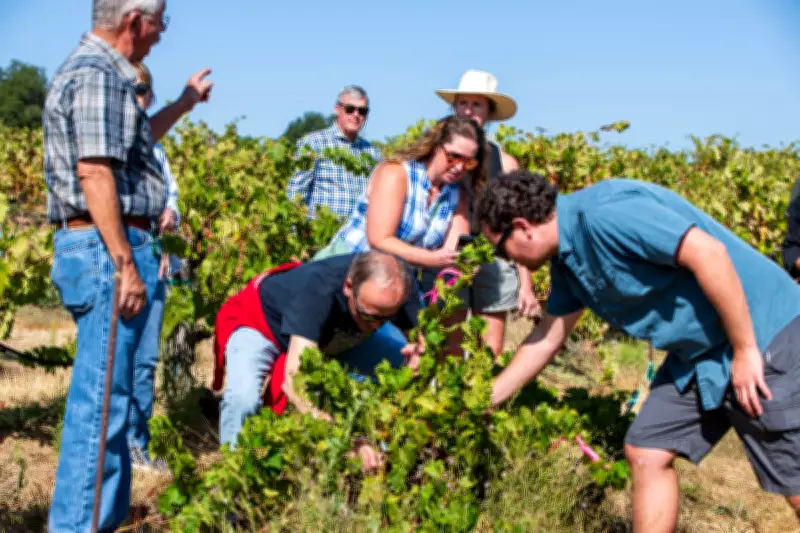
California's Wine Crisis: Napa and Sonoma Face 'Perfect Storm' of Closures
Across the sun-drenched hills and picturesque valleys of California's world-renowned wine country, a severe economic crisis is unfolding. While supermarket shelves may still display abundant selections, the reality behind the scenes reveals a struggling industry facing unprecedented challenges. From Napa to Sonoma, winemakers of all sizes are confronting a devastating downturn that has forced facility closures and significant layoffs.
The Visible Signs of Distress
The evidence of this crisis is scattered throughout California's premier wine-growing regions. Piles of uprooted grapevines await destruction, massive production plants stand eerily quiet, and once-bustling tasting rooms display "closed" signs with relocation notices. Natalie Collins, president of the California Association of Winegrape Growers, describes the situation as "probably the worst downturn the industry in California has ever seen."
At its core, this represents a fundamental mismatch between supply and demand. The pandemic-driven surge in alcohol consumption prompted wineries to expand production and invest heavily in additional facilities. Now, with consumption patterns normalizing, many companies find themselves with excess inventory they cannot sell.
Multiple Factors Converge
The reasons behind declining wine consumption are complex and multifaceted. Demographic shifts play a significant role, as health-conscious Generation Z replaces the wine-loving baby boomer generation. Increased awareness about alcohol's long-term health effects has further contributed to changing drinking habits.
External pressures have compounded these challenges. Former President Donald Trump's tariffs triggered foreign boycotts, particularly in Canada—the American wine industry's largest export market. Climate change impacts and devastating wildfires have added to the industry's struggles, creating what Collins describes as "a perfect storm" of simultaneous challenges.
Major Players Feel the Impact
Since the beginning of this year, five industry giants have announced facility closures or workforce reductions. Gallo, the world's largest wine producer by volume, will permanently close its Ranch Winery production facility in Napa Valley, resulting in 93 layoffs. The company cited "evolving consumer demand" as the reason for this difficult decision.
Jackson Family Wines has shuttered its Carneros Hills Winery production plant in Sonoma County, affecting thirteen positions. Foley Family Wines & Spirits closed a production facility in Monterey County, laying off all winemaking staff. Constellation Brands is reportedly closing its Mission Bell Winery plant near Fresno, with approximately 200 job losses expected.
The Boisset Collection, known for its luxury tasting experiences, has closed two parlors in Napa and Yountville. These high-profile closures represent only part of the picture, as smaller vineyards and artisanal producers—exempt from state reporting requirements—may be experiencing even greater difficulties.
Structural Changes in Consumption
U.S. wine sales declined by 1.6 percent in dollar terms during 2025 compared to the previous year, according to Silicon Valley Bank data. Sonoma County Winegrowers estimates that approximately 30 percent of the county's grapes went unsold last year. This problem extends beyond California, affecting wine regions from New York's Finger Lakes to Virginia.
Jessie Vallery, executive director of the Alexander Valley Winegrowers Association and a 25-year industry veteran, notes that younger generations approach alcohol differently. "Gen Z value inclusivity and prefer to frequent places that offer alcohol-free options for their sober friends," she explains. The broader cultural shift toward healthier lifestyles has further reduced wine consumption.
Historical Context and Overexpansion
The current crisis follows decades of remarkable growth. The famous 1976 "Judgement of Paris," where Napa wines triumphed over French competitors in a blind tasting, sparked a gold rush that transformed California's wine regions. Land prices soared, with Napa County acreage reaching up to half a million dollars at the premium end.
As Kendall Hoxsey-Onysko, president of Yount Mill Vineyards, recalls, the pandemic created an "explosion" of new market entrants and expansion. However, this growth proved unsustainable as underlying demographic and consumption trends reemerged.
Community Impacts and Adaptation
The crisis extends beyond wineries to affect entire communities. Stephanie, a 23-year-old massage therapist living in Sonoma County, describes how "jobs have been really low" and sales have declined across the board. Her father, a winery foreman, has reduced hiring by half while facing cuts to his own hours.
Some vineyards have resorted to tearing out vines—a normal part of the farming cycle that typically occurs every few decades, but the simultaneous scale of this activity indicates deeper problems. Collins reports that more than 100,000 acres of vines have been removed over the past two years.
Global Parallels and Future Outlook
This crisis is not unique to California. Collins notes that European governments are paying wineries to dump wine or convert alcohol into hand sanitizer to reduce surplus inventory. Despite the challenges, some industry veterans remain optimistic about wine's enduring appeal.
"Wine has been around for 8,000 years; it's not gonna go anywhere," says Hoxsey-Onysko. "We've had 30-plus years of amazing growth in the wine industry. Everything has to go through cycles."
Innovation offers potential pathways forward. At former Boisset tasting rooms now occupied by Flora Springs Wine Lounge, operations director Madeline Nossiter reports success with lower-alcohol drinks and wine-based cocktails designed to attract younger consumers. "People are loving what we're doing," she says.
However, Collins expresses concern about potential permanent losses. "It's not just the job loss," she explains. "It's the contributions back to that county's general plan. It's the local taxes... There's a lot to lose right now, and a lot that, once lost, might not come back."
The California wine industry now faces the difficult task of adapting to fundamental changes in consumer behavior while preserving the cultural and economic heritage that has made Napa and Sonoma globally celebrated destinations.