Australia's National Debt Set to Exceed $1 Trillion Amid Budget Battle
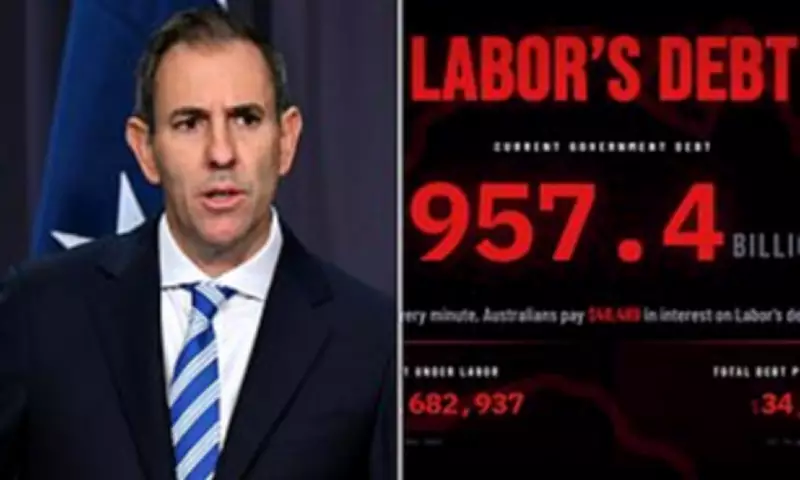
Australia's national debt is poised to surpass $1 trillion, igniting a fierce political confrontation as the Albanese government prepares to deliver the federal budget. The Coalition has intensified the debate by launching a 'National Debt Clock', a live tracker designed to display Commonwealth debt increasing in real-time. This move underscores the escalating tensions over fiscal management and economic priorities.
Coalition's Debt Clock Highlights Soaring Interest Costs
The Coalition claims that Australia's interest bill is rising at an alarming rate of $48,489 per minute, a figure they argue illustrates the mounting burden of government borrowing. They contend that the tracker provides Australians with a transparent view of the debt's scale and its implications for future budgets, as borrowing continues to climb unchecked.
Treasury forecasts indicate that gross Commonwealth debt is expected to exceed $1 trillion in the upcoming financial year and continue its upward trajectory through the forward estimates, reaching approximately $1.2 trillion later this decade. As debt accumulates, interest costs are accelerating rapidly, consuming an increasingly larger portion of government revenue.

Interest Payments Become a Major Budget Expense
Debt interest payments alone are projected to total $25.5 billion this year, positioning interest as one of the fastest-growing expenses in the federal budget. The Coalition warns that these rising interest costs are diverting funds away from essential services and potential tax relief, limiting fiscal flexibility.
To contextualise the impact, the Coalition asserts that the $25.5 billion could alternatively employ over 200,000 nurses, fund about 400,000 high-needs aged-care packages, upgrade roughly 1,000 kilometres of major regional highways, or deliver tax relief of around $1,600 annually to every taxpayer. This comparison aims to highlight the opportunity costs associated with high debt levels.
Labor Defends Fiscal Record and Inherited Debt
Labor maintains that a significant portion of the current debt was inherited from previous administrations. When the Albanese government took office in 2022, gross Commonwealth debt stood just under $900 billion, with net debt estimated at around $517 billion, following years of deficits and extensive pandemic-era spending.
Treasurer Jim Chalmers has robustly rejected claims that Labor has mismanaged the budget, arguing that the government has made substantial progress on fiscal repair. Speaking in Melbourne, Chalmers highlighted that Labor has delivered $114 billion in savings and reprioritisations across seven budgets and mid-year updates since taking power.
Chalmers Points to Fiscal Discipline and Savings
Chalmers noted that Labor has identified approximately $16 billion in savings at each update, roughly equivalent to the annual cost of the childcare subsidy. In contrast, he stated that savings under the previous government were closer to $3 billion per update. He emphasised that the government has banked about seven in every ten dollars of upward revenue revisions, strengthening the budget rather than locking in higher spending during revenue improvements.
Further defending his record, Chalmers pointed to real spending growth averaging 1.7 per cent, compared with a pre-Covid average of 3.2 per cent. He also highlighted that government spending as a share of the economy has fallen from almost one-third at the pandemic's peak to a quarter. "As a result, the budget is more than $233 billion better than when we came to office," Chalmers asserted.
Opposition Warns of Stagflation and Economic Mismanagement
The Coalition disputes this assessment, with Opposition Leader Angus Taylor warning that Australia is heading towards stagflation—a damaging combination of weak growth, rising unemployment, and stubbornly high inflation. Taylor blamed what he described as poor economic decisions by the Albanese government, accusing Labor of squandering earlier revenue windfalls driven by high commodity prices, particularly iron ore.

"This is a government that hasn't used taxpayers' funding effectively and the way it should be used," Taylor stated. "That money should be used properly, and instead we've got raging and rising inflation, interest rates that were going up before the Middle East crisis, and the Treasurer's only solution is to blame everybody else."
Budget Delivery Amidst Mounting Tensions
Chalmers is scheduled to hand down the budget at 7:30 pm on Tuesday, May 12, against this backdrop of heightened political strife. The debate over debt, interest costs, and fiscal responsibility is expected to dominate discussions, with both sides presenting contrasting narratives on economic management and future priorities.