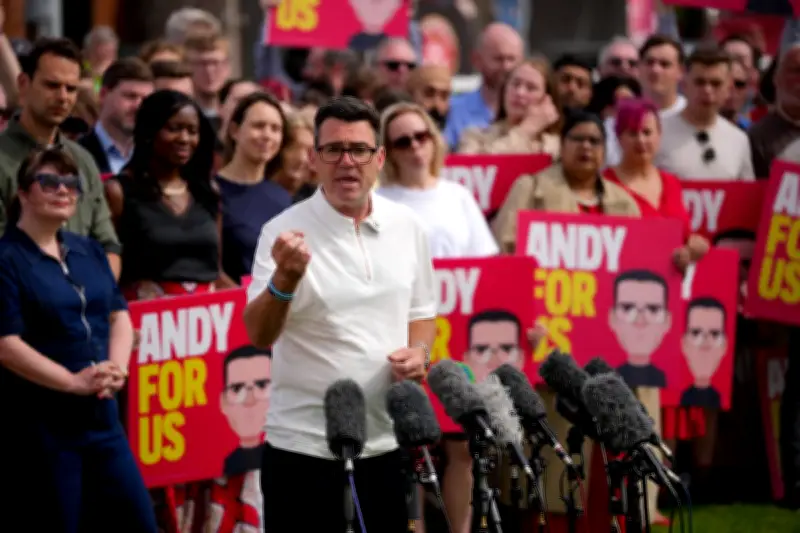
Sir Keir Starmer's resignation has paved the way for a new Labour leader following Andy Burnham's landslide victory in the Makefield by-election. Sir Keir expects a new prime minister before parliament returns in September, with Burnham widely considered the frontrunner. The City's biggest concerns revolve around Burnham's economic agenda, particularly taxes, borrowing, spending, and his choice for chancellor.
Burnham's Economic Stance
Burnham has said he would stick to fiscal rules set by Chancellor Rachel Reeves and agreed the UK needs a plan to reduce debts. This suggests he does not want to spook bond markets by signaling a substantial increase in government borrowing in the short term. He also committed to the Labour manifesto pledge not to raise income tax or national insurance for working people.
However, after his by-election win, Burnham spoke of a "final chance to change" and outlined his vision, including bringing down water, energy, and rail fares. He has previously advocated for greater public control of key utilities and the "re-industrialisation" of northern England.
Market Reactions and Concerns
Financial markets had already priced in a Makefield victory, so there was no immediate reaction to Starmer's resignation. But political upheaval could create unease, as markets favour stability. A key concern is who will become chancellor under Burnham.
Dan Coatsworth, head of markets at AJ Bell, said: "Burnham's choice of chancellor if he becomes prime minister could have a major impact on bond markets. Bond investors like boring and dull – they want someone who has a plan where the maths stacks up and they stick to it." He noted that former transport secretary Louise Haigh is seen as a close ally but a fraud conviction could bar her, while Ed Miliband is also touted for the role.
Economists' Predictions
Some economists suggest Burnham may lean left on economic policy. Rob Wood and Elliott Jordan-Doak of Pantheon Macroeconomics said he could "pitch to Labour MPs' left-leaning instincts for more spending, funded by higher taxes and moderately looser fiscal rules, as well as additional regulation." But they added: "We think Mr Burnham would be wary of a big bang fiscal change, because he needs to avoid a repeat of the gilt market meltdown that torched the previous Conservative government's reputation for economic competence. But risks clearly lean to more spending."
The City wants certainty over the next leader and their plans, and will be nervous about any unfunded spending. Kathleen Brooks, research director at XTB, said Burnham would have to "work to persuade financial markets that he is the right man for the job to grow the UK economy and get debt back under control."