

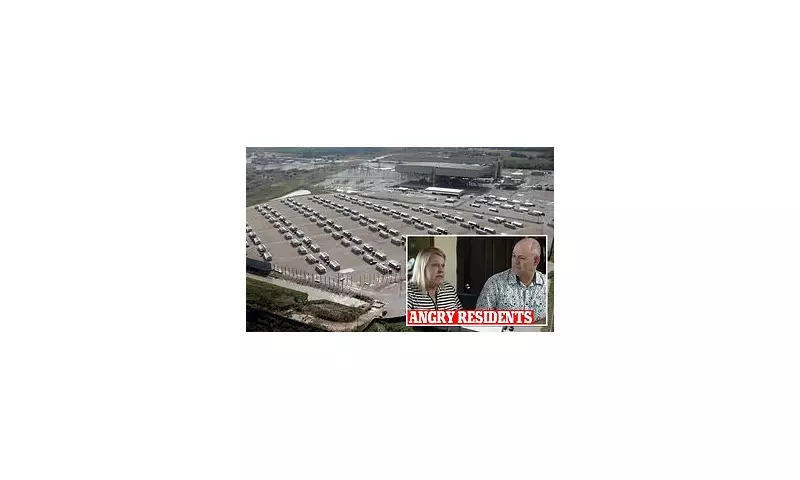
Residents of a small Texas town are embroiled in a bitter legal dispute with a neighbouring cryptocurrency mining operation, alleging that the facility's relentless noise is ruining their health and shattering their peace. Locals in Granbury, Hood County, have filed a blistering lawsuit against the data centre's owner, MARA Holdings, comparing the incessant din to living on a runway with jets taking off around the clock.
A Community Plagued by 'Penetrating' Noise
The lawsuit, filed last year, contends that the constant noise from the facility, which houses between 60,000 to 80,000 computer rigs dedicated to Bitcoin mining, is responsible for a host of ailments among the population. These include headaches, vertigo, and even hearing loss. "It is incredibly intrusive. It is incredibly annoying," said Rodrigo Cantu, the lawyer representing the resident group. "It's a type of noise that penetrates the walls, that can wake you up or can keep you from falling asleep."
Plaintiff Cheryl Shadden echoed this, stating the Bitcoin mine "sounds like you’re being on a runway with jets taking off 24/7, nonstop. You hear it in your home, it penetrates the walls, it shakes your windows." The facility has been operating since 2022, and residents like Daniel Lakey and his wife claim they have been enduring the disturbance since its installation.

Company Defence and a Failed Bid for Control
MARA Holdings strongly disputes the allegations, pointing to an official sound study conducted by Hood County in November 2024. Texas law deems noise above 85 decibels—similar to a lawnmower at close range—as unreasonable, with prolonged exposure risking hearing loss. The county's tests at 38 locations around the site recorded levels between 35 to 62 decibels, well within legal limits.
The company also says it has invested in sound mitigation, including replacing 67 percent of its fans with a quieter liquid-cooling system and building a 2,000-foot-long, 24-foot-tall soundproof wall. Some residents remain unconvinced. In a bid to gain local control, Daniel Lakey spearheaded an effort to incorporate a new town, Mitchell Bend, which could have enacted stricter noise rules. However, the measure failed in a November vote, with 62 percent of the 138 voters rejecting the plan.
Legal Stalemate and AI Expansion
The legal battle continues, with residents now seeking to compel MARA to disclose more details about its operations. Cantu accuses the company of stonewalling requests for information on equipment and potential further mitigation efforts. Meanwhile, MARA's CEO, Fred Thiel, revealed in a November earnings call that the company had installed its first ten 'AI inference racks' at the Granbury site. These racks use louder, air-based cooling rather than the quieter liquid immersion system.
Given the scale of the existing operation, it is considered unlikely these few new racks have significantly increased noise recently. MARA declined to comment on its AI expansion plans. The company operates nine data centres across four states, and its facility in Hopedale, Ohio, acquired in November, has also faced noise complaints, though opinions there are divided.
The standoff in Granbury highlights the growing clashes between the energy-intensive cryptocurrency mining industry and the communities where it sets up operations, as the pursuit of digital assets like Bitcoin, currently trading around $88,000, collides with the right to peaceful enjoyment of one's home.






