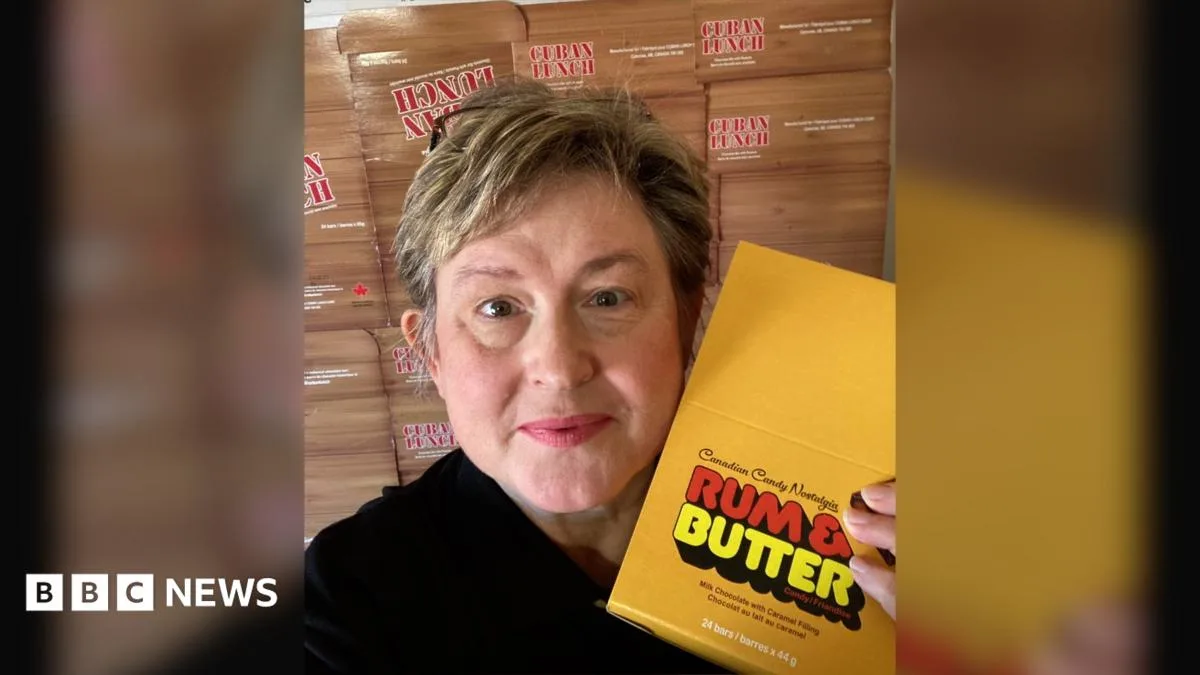
A Canadian woman who revived a discontinued chocolate bar found herself with 133,000 surplus bars after a production mishap. Crystal Regehr Westergard, owner of Canadian Candy Nostalgia, had resurrected the Rum & Butter bar, a Cadbury-made treat popular in the 1980s. A single-day production in June 2022 resulted in 333,000 bars all with the same expiry date, leaving her with a massive surplus when retailers stopped buying due to the approaching best-before date.
Unable to sell the bars, Ms Regehr Westergard turned to giving them away. However, logistical challenges arose: the bars were stored on heavy pallets in a Calgary warehouse, making individual distribution difficult. Local food banks had a no-candy policy, further complicating efforts.
After her story was covered by the Globe and Mail, offers of help poured in. The chocolate bars have since been distributed to a Ukrainian church aiding refugees, a drop-in centre for the homeless, a fire department, and some food banks that made exceptions. A local charity is using the bars to fund summer camps for underprivileged children.
Ms Regehr Westergard expressed relief that all the candy has been accounted for, calling it a 'sweet ending' to her predicament.