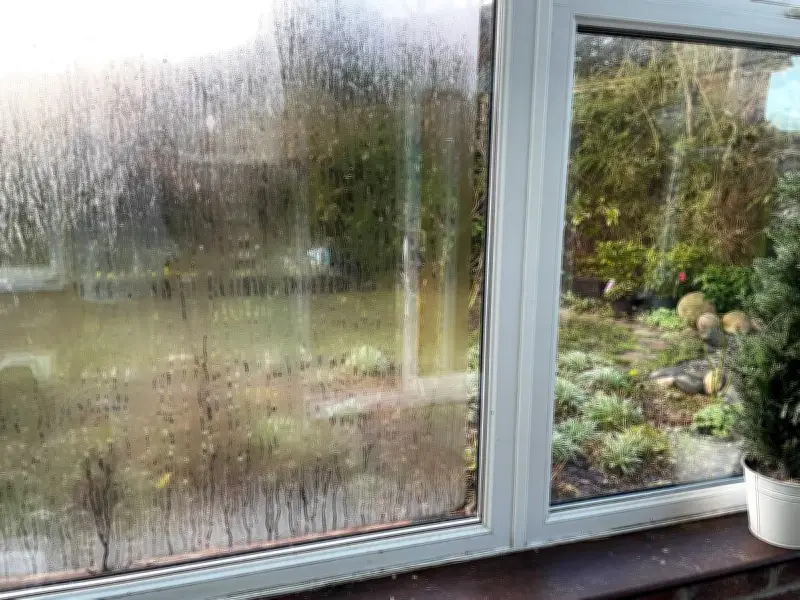
A Which? dehumidifier specialist has identified three costly mistakes shoppers make when buying an appliance to tackle condensation, damp or mould. Alison Potter, from Which?, shared the advice in a TikTok video, warning that many Brits purchase the incorrect device for their needs.
Condensation occurs when warm, moisture-filled air meets a cool surface such as glass, and the temperature change causes the moisture to condense into water droplets, according to home experts Velfac. Colder outdoor temperatures between October and April, combined with warmer indoor temperatures, lead to greater amounts of condensation.
Choosing the wrong dehumidifier
Alison said many people make the mistake of buying an appliance that does not suit their situation. "Don't just buy any dehumidifier to remove moisture from your home," she instructed. "Refrigerant models are generally better suited for tackling condensation, mould and damp in warmer rooms, while desiccant models are more effective in colder spaces like garages and conservatories."
Ignoring running costs
She also highlighted that buyers should consider more than the purchase price. "We have tested 85 dehumidifiers and found a big difference in how much they cost to run - the most efficient ones cost around 14p per hour to run," she said. By contrast, some of the least efficient models can cost as much as £1.45 per hour to run. "So check the running costs before you buy," Alison advised.
Overlooking features
Her final piece of advice is to "avoid overlooking" the dehumidifier's features. An accurate humidistat can automatically regulate humidity levels, and a "continuous drain" option means users do not have to repeatedly empty the tank. "A night mode can make a noisy machine much easier to cope with," she added. "So, before you buy, think about where you will use it, how much it costs to run and which features you will actually need."
Dealing with internal condensation damage
If condensation is suspected inside windows, a professional may need to assess the damage. A failed seal around the window can be replaced, and windows can also be re-gassed to help prevent condensation. The only permanent remedy is to replace the glass, though not the entire window, according to specialists at Grabex.
"In many cases, this is a fault which is covered by manufacturers' guarantees, usually up to 10 years," they said. "New units are gas-filled and warm-edge sealed to restore full insulation. Installation is quick, clean, and far cheaper than replacing the entire window system."