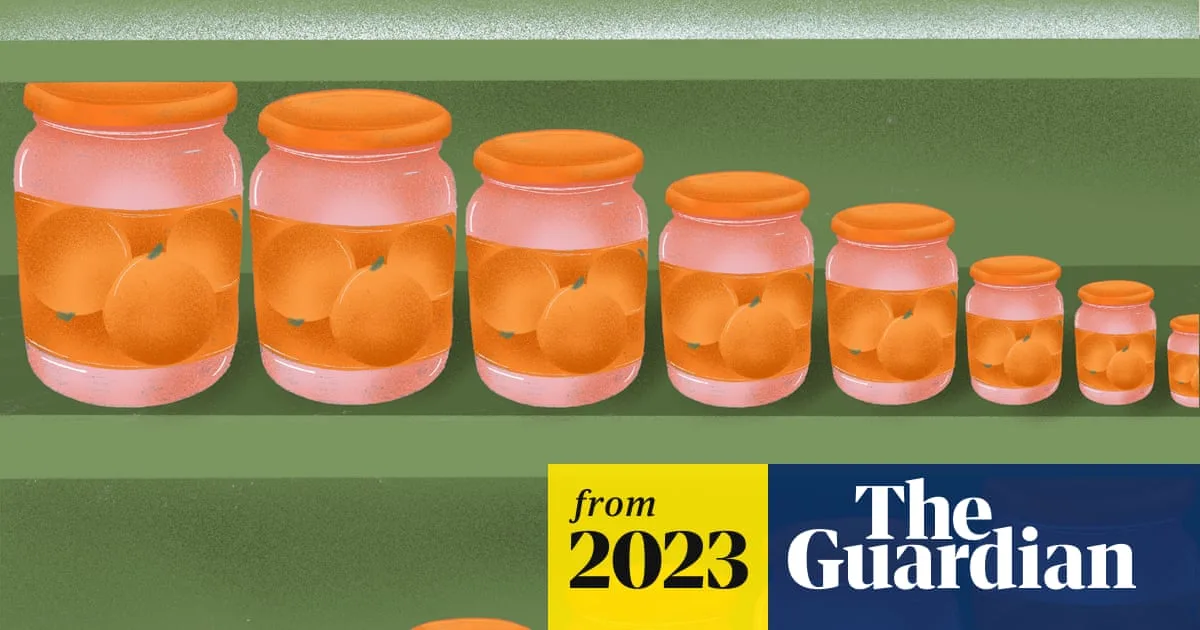
Hundreds of readers have reported instances of so-called “shrinkflation”, where food manufacturers reduce product sizes while keeping prices unchanged. This strategy avoids the customer backlash associated with direct price hikes, but readers have expressed dissatisfaction with the downsizing.
Among the most cited examples are jam jars from Cottee’s and Rose’s, which shrank from 500g to 375g without a proportional price cut. One reader, who had bought Rose’s marmalade for 50 years, described the practice as “dishonest and disappointing”. Pears soap packs also drew criticism for containing three bars that are now 20% smaller.
While shrinkflation is not new, the current inflationary period has accelerated the trend as companies seek to protect profits amid rising costs. The Australian Bureau of Statistics treats undersized products as a price rise in inflation indicators, noting an increase in such occurrences, though exact figures are unavailable.
Other products affected include Dairy Farmers cream (reduced from 600ml to 500ml), Bulla choc bars (from 10 to eight), and various items from Ritz crackers to Cadbury chocolate. Bulla’s chief executive said efforts were made to avoid misleading customers, while Mondelēz International, owner of Ritz, blamed supply chain challenges.
Readers have expressed anger, particularly towards long-standing brands, feeling that companies are exploiting their loyalty. One shopper noted the “audacity” of a supermarket placing a downsized marmalade jar in low-price promotions despite it being more expensive than its predecessor. The social compact between shoppers and food companies appears to be unravelling as household budgets tighten.