Federal and state lawmakers across the US have proposed dozens of 'right-to-repair' bills that would make it easier for individuals to fix cars, phones, wheelchairs, and other items. Supporters say these laws are needed because corporations have monopolized control over repairs, forcing customers to pay high prices or buy new products.
Farmers Seek Control Over Equipment
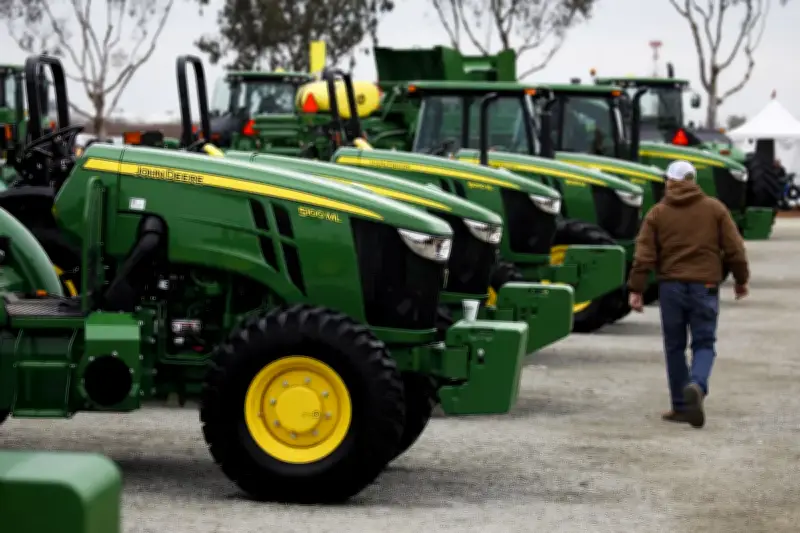
Aaron Lehman, a fifth-generation farmer in central Iowa, uses six tractors to grow corn, soybeans, oats, and hay on 500 acres. He enjoys farming because 'the time you put in, the money you put in, the things you learn can be put to immediate use to benefit your farm and benefit your family,' Lehman, 58, said. However, he has been reluctant to upgrade to more fuel-efficient tractors that collect data on fertilizer application because manufacturers make it difficult for farmers to repair the machines themselves.
'Farmers have been fixing their own equipment as long as they have been farming, and it's essential to the sustainability of our farms that we be able to have that control over the equipment,' said Lehman, who is also president of the Iowa Farmers Union. He hopes farmers can gain more agency through bipartisan state legislation that would require manufacturers to make documents, parts, software, firmware, and tools available to independent repair facilities and consumers at 'fair and reasonable terms and costs'.
Legislative Momentum Builds
The right-to-repair movement originated in the 1920s when automotive companies like General Motors intentionally made vehicle repairs difficult to encourage new purchases, according to a report from EBSCO. In 2012, Massachusetts became the first state to approve an automotive right-to-repair bill, and auto manufacturers reached an agreement in 2014 to provide independent repair shops the information, data, and tools needed to fix cars.
This year, legislators have introduced more than 50 bills across 22 states, according to PIRG, including ones in Florida concerning wheelchairs, in Missouri about motorcycles, and in Ohio applying to a variety of products. At the federal level, House Democrats and Republicans want to pass the Repair Act, which states that 'a motor vehicle manufacturer may not employ any technological barrier or specified legal barrier that impairs the ability of a motor vehicle owner' to 'access vehicle-generated data'.
Opposition and Support
Critics and some industry leaders argue that such bills create environmental risks and allow people to steal intellectual property. Ike Brannon, a senior fellow at the Jack Kemp Foundation, argues that right-to-repair advocates have 'greatly exaggerated the problem'. He claims the primary reason farmers want to tinker with their tractors is to make them go faster, bypassing EPA regulations, and that consumers might replicate software code, reducing companies' profits and innovation incentives.
Supporters counter that trade secret laws would still protect legitimate innovations. Nathan Proctor, senior director of the right-to-repair campaign for PIRG, said, 'Companies have extended what intellectual property means to things that are not actually protected by intellectual property law. Our intellectual property laws were not meant to prevent people from understanding how your product works.'
Impact on Repair Shops
The Iowa house approved the right-to-repair legislation in April. A John Deere representative told Wired that the proposed law would 'go far beyond enabling self-repair and mandate government interference dictating how manufacturers and dealers make certain digital tools available'. Lehman said the chances of it passing 'are really good. The momentum is building.'
Travis Bruce, who works at the Fix Hut in Portland, Oregon, offering repair services for phones, computers, and video game systems, said the right-to-repair movement has made it 'substantially easier to get access to' the parts they need. The Hut's revenue has increased 15% this year compared with the same time last year. 'We are unfortunately in a culture where we don't really own anything any more,' Bruce said. 'I think it's really important that we are able to preserve the stuff that we do own and make it last as long as we possibly can.'