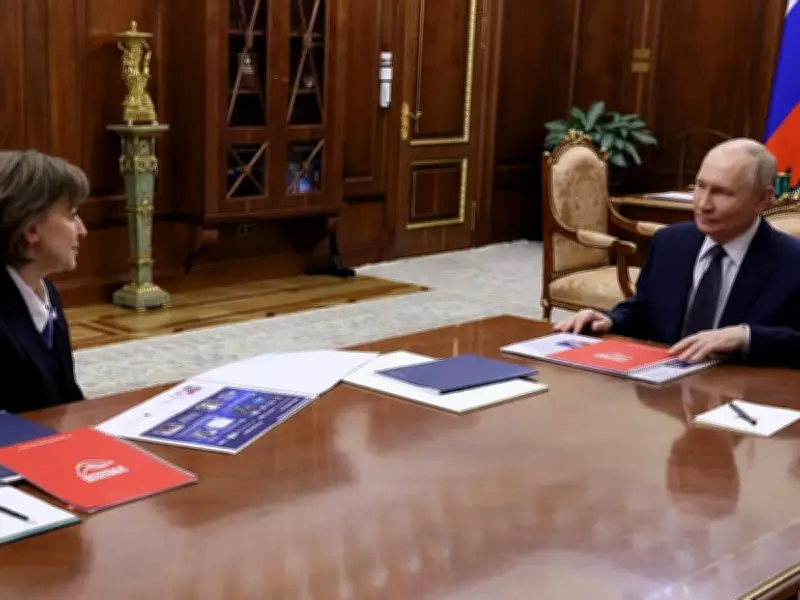
Vladimir Putin expressed visible frustration during a meeting with Veronika Nikishina, Director General of the Russian Export Centre, upon learning that 'Made in Russia' products are not being purchased on Russian-owned e-commerce platforms. The discussion, focused on export strategies, revealed that the programme's online presence relies heavily on international marketplaces rather than domestic ones.
Putin Queries Domestic Platform Usage
During the meeting, Putin asked about the development of stable partnerships with friendly countries, likely referring to nations such as Belarus, China, and North Korea. Nikishina detailed the 'Made in Russia' programme, which includes establishing a permanent presence in foreign markets through wholesale channels, export agreements, and a retail network, most extensively developed in China. She also noted the launch of 50 online stores on 21 major international e-commerce platforms.
Putin then inquired whether these sales were conducted primarily through Russian-owned online platforms. Nikishina responded that they were not, because domestic e-commerce sites lack sufficient consumer traffic. According to Nikishina, more than half of Russian exporters attribute their success abroad to strong demand for their products, a demand that is not mirrored within Russia.

Programme Relies on Foreign Channels
The 'Made in Russia' programme also includes festivals and fairs held on foreign markets, which Nikishina described as instruments to foster a positive perception of Russian products and promote a favourable image of Russia through culture, sports, and tourism. These events are designed to facilitate export contracts, but their focus remains outside Russia.
The exchange highlights a disconnect between the Kremlin's push for self-reliance and the actual consumer behaviour within Russia. Despite sanctions and isolation from many European nations, Russian exporters are finding success abroad, particularly in China, but domestic interest in 'Made in Russia' goods remains low.
Implications for Russian Economic Strategy
Putin's irritation underscores a broader challenge for Russia's economy: while the country seeks to pivot towards friendly nations, internal demand for domestically branded products is weak. The reliance on foreign e-commerce platforms, such as those in China, suggests that Russian consumers prefer imported goods or are not engaged with the 'Made in Russia' branding.
Nikishina's comments also reveal that the programme's success abroad is driven by wholesale distribution and local blogger promotions on international platforms, rather than home-grown digital marketplaces. This reality contradicts the narrative of a self-sufficient Russian economy and may force policymakers to reconsider their domestic e-commerce strategies.