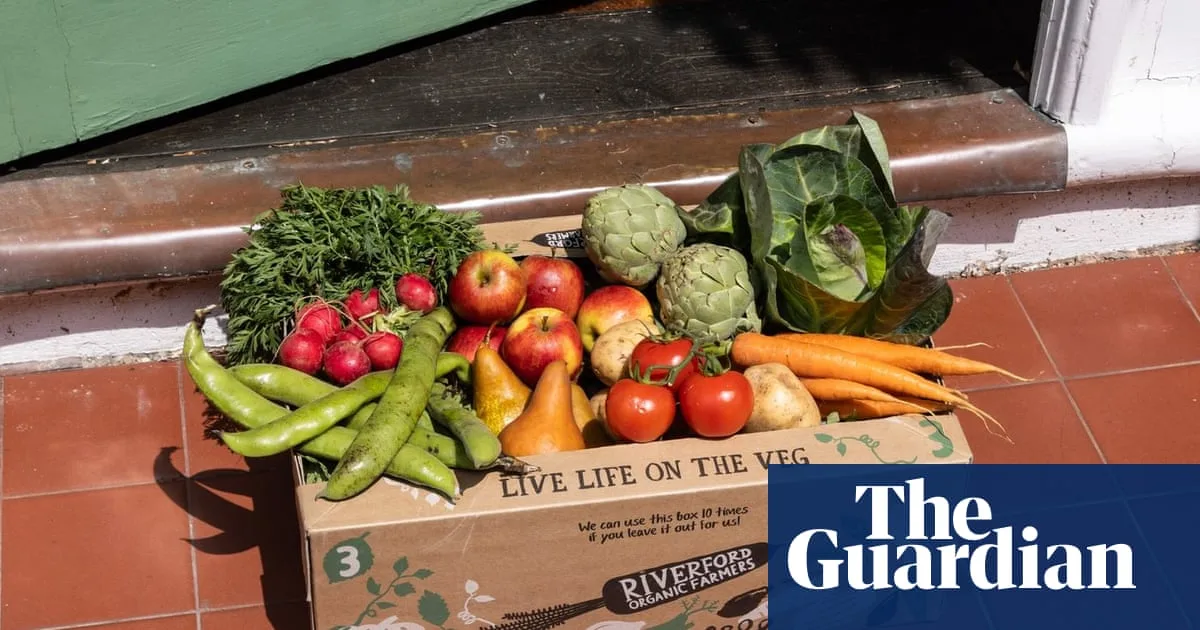
The UK organic food and drink market has experienced its strongest growth in 20 years, driven by consumers seeking healthy food from trusted sources, according to vegetable box delivery company Riverford. The employee-owned business reported a 6% increase in sales to £117m in the year to May 2025, while the wider organic market grew by almost 9% in the same period, according to the Soil Association.
Rob Haward, chief executive of the Devon-based company, said the growth significantly outpaced the wider food market, with new customers and increased spending from existing clients. “We haven’t seen the market grow as much as this for 20 years,” he said. The strong performance enabled Riverford to distribute a £1.1m bonus to its workforce.
Haward attributed the boom to greater awareness of healthy diets and “increased concerns about where you can go to get food you can trust”. The sector has rebounded after a difficult period following the credit crunch and a slowdown during the pandemic. Organic meat sales were particularly strong, accounting for a tenth of Riverford’s revenue, as shoppers sought trusted sources of higher welfare meat.
Despite the sales growth, Riverford’s operating profit fell to £3.4m from £4.7m the previous year, as the company absorbed rising costs rather than passing them on to customers. Prices rose 3% during the financial year, with the company and its suppliers facing higher wages, energy costs, and Brexit-related paperwork for imports from France and Spain.
Haward noted that growth dipped last summer during a prolonged hot spell but recovered over Christmas and into the new year. He expects sales to continue rising as the organic market expands, though organic food still accounts for only 2% of UK food sales, lagging behind European markets such as Denmark and Germany. “We have got a bit of ground to make up,” he said.
Looking ahead, Haward said trading conditions remain challenging due to inflation affecting suppliers, but customers continue to care deeply about food provenance. He welcomed the relaunch of the government’s sustainable farming incentive (SFI) in June but warned of a potential supply gap due to uncertainty over support for organic farming. “The real challenge for farmers is uncertainty,” he said, urging the government to provide clear and stable policies.