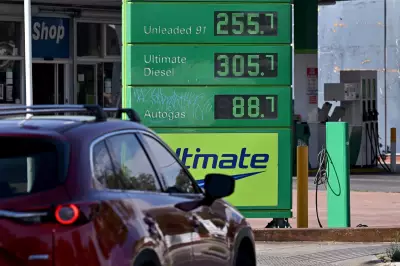
Economic anxieties are casting a shadow over the festive season in the United States, with a clear majority of Americans now planning to tighten their belts on holiday gift purchases.
Poll Reveals Widespread Spending Caution
A new poll from NBC News, published on Friday 19 December 2025, reveals the stark financial caution gripping consumers. Fifty-five percent of respondents stated they intend to spend less on Christmas presents this year compared to 2024. Only 9 percent plan to spend more, while 36 percent expect their outlay to remain about the same.
The trend is most pronounced among lower-income households. The survey found that two-thirds of Americans earning under $50,000 annually will spend less. The caution extends up the income ladder, with 54 percent of those earning between $50,000 and $100,000 also planning cutbacks.

Economic Uncertainty Drives Consumer Pullback
This sentiment is corroborated by other recent surveys, pointing to a broad-based retreat in consumer confidence. The 2025 Economic Impact Survey, commissioned by Nationwide insurance, found that 42 percent of U.S. consumers intend to reduce their holiday spending.
Furthermore, a poll from The Associated Press-NORC Center for Public Affairs Research indicated that a vast majority of adults have noticed unusually high prices for essentials in recent months, including groceries, electricity, and holiday gifts.
Political Fallout Over Economic Management
The grim economic mood appears to be translating into political discontent. A separate NPR/PBS News/Marist survey this week found that 57 percent of Americans disapprove of President Donald Trump's handling of the economy, with only 36 percent approving. This marks his lowest rating on the issue across both terms in office.
This weakened confidence is likely a factor in President Trump's sagging overall approval rating, which stands at 38 percent—his worst since leaving the White House in 2021. Roughly one in three survey respondents said their personal finances had worsened in 2025, with a similar share pessimistic about 2026.
"When affordability is so front and center in people’s minds, that’s going to be laid at the doorstep of a chief executive," Lee Miringoff, director of the Marist Institute for Public Opinion, told PBS News.
The findings present a challenge to the president's narrative. During a national address on Wednesday, 17 December, President Trump asserted that grocery prices were "falling rapidly" and promised an "economic boom" in the coming year.