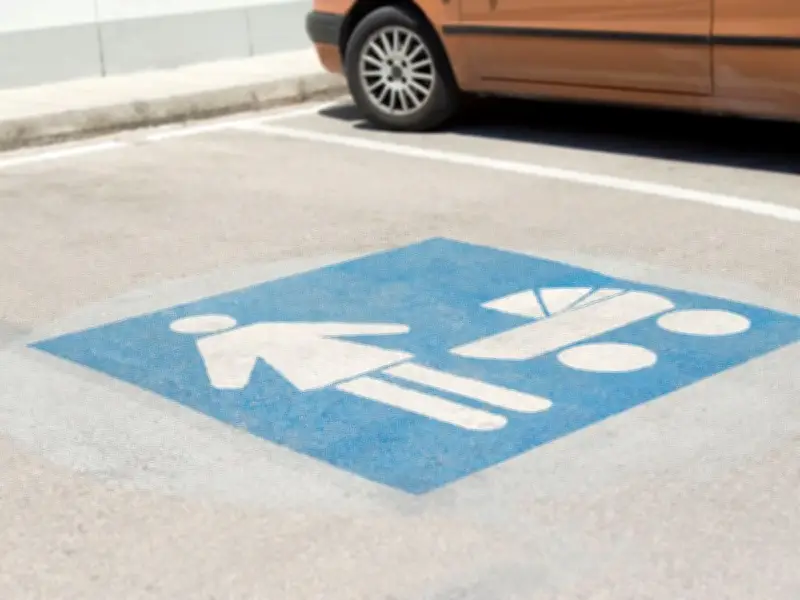
More than half of Britons believe drivers who misuse parent and child parking spaces should face fines, new research has revealed. A survey of 1,000 UK motorists by Tiger.co.uk found that 51% support car park operators issuing penalties to drivers who wrongly use the designated bays.
Widespread misuse reported
The researchers said the findings highlighted what has become a major bone of contention for many frustrated drivers who struggle to find a free parent and child spot at their local supermarket or shopping centre. While these reserved bays provide extra space to allow parents or guardians to get their children in and out of a vehicle safely, almost two-thirds (63%) of those surveyed said they have seen a driver without a child using them.
Despite this, only 18% of respondents said they would feel comfortable confronting someone over their misuse of a parent and child bay. Car insurance experts have warned that drivers who abuse these designated spaces are forcing parents to use narrower bays, which can not only be dangerous with small children, but can see unintended damage caused to vehicles as parents attempt to remove bulky and heavy pushchairs or car seats – potentially leading to costly and avoidable insurance claims.
Enforcement and legal gaps
Some major supermarkets have begun clamping down on improper use of these special spaces, with signs warning motorists they could face parking charges of up to £100. The apparent misuse of parent and child spaces has sparked widespread debate online, with disagreements over who should qualify to use them - including whether heavily pregnant women and parents with older children should be permitted to park in these spots.
Unlike disabled parking bays, there is currently no national law governing the use of parent and child spaces. Because the bays are usually located on private land, such as supermarket car parks, the rules are set by individual retailers and parking operators - meaning policies can varies from site to site.
Varied rules and calls for change
While many operators allow parents with children aged up to 12 to use the spaces, others restrict access to those travelling with babies or toddlers. Rules around expectant mothers also differ, with some car parks permitting heavily pregnant women to use the bays while others do not. It is important for drivers to always check the management signage in each car park to avoid being caught out. Campaigners have called for government intervention, with numerous petitions urging ministers to introduce a permit-style system similar to the Blue Badge scheme for disabled parking.
Ian Wilson, car insurance expert and Managing Director at Tiger.co.uk, said: “Our research suggests many motorists are growing increasingly frustrated by drivers who ignore the rules when it comes to parent and child spaces and there is strong support for more car park operators to take tougher measures to discourage motorists from abusing these reserved bays.
“Parent and child parking spaces exist to help families get young children in and out of vehicles safely, giving them extra room to lift out bulky pushchairs or car seats. They are also typically located close to the store entrance, meaning parents don’t have to walk their kids through a busy car park.
“When other drivers misuse these spaces, it not only inconveniences parents who genuinely need them by forcing them into narrower bays, it can also lead to unintentional and unnecessary damage to vehicles.
“Parents could damage their own vehicles trying to remove a car seat, or accidentally scratch or dent a neighbouring car, leading to costly repairs.
“Car parks, especially those at busy supermarkets, are one of the most common places for minor bumps and scrapes, accounting for 20% of car insurance claims each year.
“Even minor incidents can lead to claims, ultimately contributing to higher insurance costs across the board. Respecting designated parking spaces can help improve safety for everyone, reduce unnecessary accidents and lower insurance premiums.”