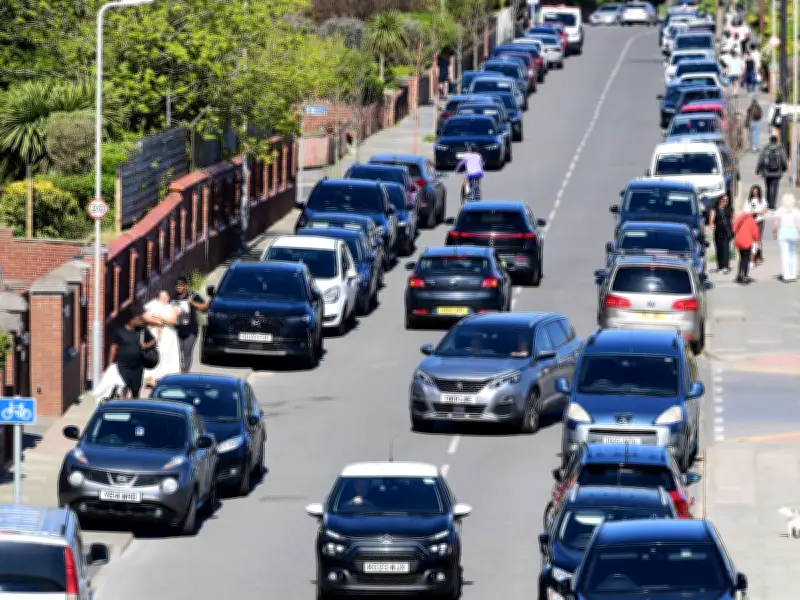
A lawyer has settled the debate over whether homeowners can legally use signs and traffic cones to stop motorists leaving their cars outside their homes. Dean Dunham KC was answering a reader's question in the Daily Mail after they explained they live on a private road next to a popular beach.
The reader said that when the nearby car park is full, visitors often try to park outside residents' homes, leaving them arguing with drivers if they are expecting guests. They asked whether they could legally put up a no parking sign and place traffic cones outside their house to stop tourists using the space.
Who owns the road and land?
Dean explained that the answer depends on one crucial detail: who owns the road and the land outside the house. He said: "The answer depends on one crucial fact: who owns the road and the land outside your house?"
Private roads "are those not controlled or maintained by the local council but instead by the people who live there", meaning residents generally have greater control over how they are used. However, ownership of the land outside the property is key.
Dean said: "Some homeowners own the land outside their property, while in other cases it belongs to another individual, a management company or all the residents jointly. Details are set out in the homes' title deeds or in Land Registry records."
Signs and cones: what's allowed?
If the land belongs to the homeowner, putting up a sign is usually allowed. Dean said: "If you alone own the land outside your home, you can usually erect a sign stating that parking is not permitted or that the area is private. The sign doesn't create your legal rights, but it makes motorists aware that parking without permission may amount to trespass and often deters would-be parkers without confrontation."
He added that traffic cones can also be used, but only in certain circumstances. "Traffic cones require a little more caution," Dean explained. "You can generally place cones on land you own to discourage parking, provided they do not obstruct anyone else's legal right of way or interfere with access. However, you should not place cones on land you don't own or on any public highway."
What not to do
He also warned homeowners not to take matters into their own hands if someone ignores the signs and parks anyway. Dean said: "You should never block the vehicle in, clamp it or arrange for it to be towed away yourself, as this could expose you to legal liability."
He added: "In practice, a polite sign and, where possible, a co-ordinated approach with neighbours or any residents' management company is often the most effective solution."
Advice on driveway parking
The advice comes after Paul Britton, chief executive of Britton and Time law firm in London and Brighton, explained what homeowners can do if someone parks on their driveway. He said: "If someone actually parks on your drive it's trespass, a civil matter, not usually a crime. That means police often won't attend unless there's aggravation (threats, damage, breach of the peace)."
Paul said homeowners should leave a note asking the driver to move the vehicle or speak to them directly if possible before considering a solicitor's warning letter and civil action if the problem continues.
He also warned: "You can't clamp them. Private clamping is generally unlawful. If someone dumps a car on your drive the law gives you civil remedies but no quick DIY removal route. Don't damage it, push it into the road, block it in, clamp it or tow it. Don't get into a confrontation - especially if you're filming or they are."
Finally, he added that if your own vehicle is blocked in on your driveway, homeowners should start by contacting the council if the obstruction is on the road, with police generally only becoming involved where there are threats, danger or serious obstruction.