Crisp Packet Investigation Uncovers Shrinkflation Concerns Across Major Brands
In an era defined by the ongoing cost-of-living crisis, consumers across the United Kingdom are scrutinising their grocery purchases with unprecedented vigilance. The pervasive practice of shrinkflation—where manufacturers subtly reduce product sizes or weights while maintaining or even increasing prices—has become increasingly commonplace. This trend has prompted Which?, the nation's leading independent consumer advocacy group, to document numerous instances where everyday essentials from toothpaste to chocolate have diminished in quantity.
Motivated by these widespread concerns and a personal encounter with a disappointingly half-empty crisp packet, journalist Millie Bull embarked on a meticulous investigation to quantify exactly what consumers receive in popular branded crisp packets. The comprehensive study examined products from Walkers, Quavers, Hula Hoops, Skips, NikNaks, Wotsits, Monster Munch, and several other prominent brands.
Methodology and Regulatory Context
For this investigation, Bull purchased 'grab bag' sized packets from Sainsbury's rather than smaller multipack portions to ensure consistency. Each packet was carefully analysed using a dual approach: first, counting individual crisps by considering whole crisps as single units and reconstructing broken pieces to form complete equivalents; second, weighing the contents on a digital kitchen scale to verify compliance with stated net weights.
The Office for Product Safety and Standards (OPSS) mandates that pre-packed foods must display accurate net quantities in metric measurements, with imperial equivalents permitted only as supplementary information. These regulations require that quantity details be precise, transparent, easily understandable, and presented in the same field of vision as the product name. The net weight specifically refers to the product's weight excluding all packaging materials.
Bull acknowledges potential limitations in her methodology, noting that minor weight discrepancies of a gram or so could stem from scale accuracy, and that the extremely light nature of Skips prevented precise weight measurement. Nevertheless, the investigation provides valuable consumer insights into contemporary packaging practices.
Detailed Findings Across Brands
The investigation revealed substantial variations in both crisp counts and weight accuracy across different brands:
- Cheetos Twisted Sweet & Spicy (38g): This packet contained the lowest crisp count at just 14 pieces, with a net weight measuring 37g—1g below the stated amount. The packet contained significant flavouring dust that likely affected both count and weight measurements.
- Pickled Onion Monster Munch (40g): Despite containing only 17 crisps due to their substantial size, the packet met its stated weight exactly at 40g, with most crisps remaining intact.
- Doritos Cool Original (48g): With just 21 crisps despite their 48g specification, this packet actually weighed 50g—2g above the declared weight, though the crisp count proved disappointing.
- Walkers Oven-Baked Seasalt (37.5g): This variety contained merely 19 crisps, weighing 38g (marginally above specification), leaving the investigator feeling shortchanged.
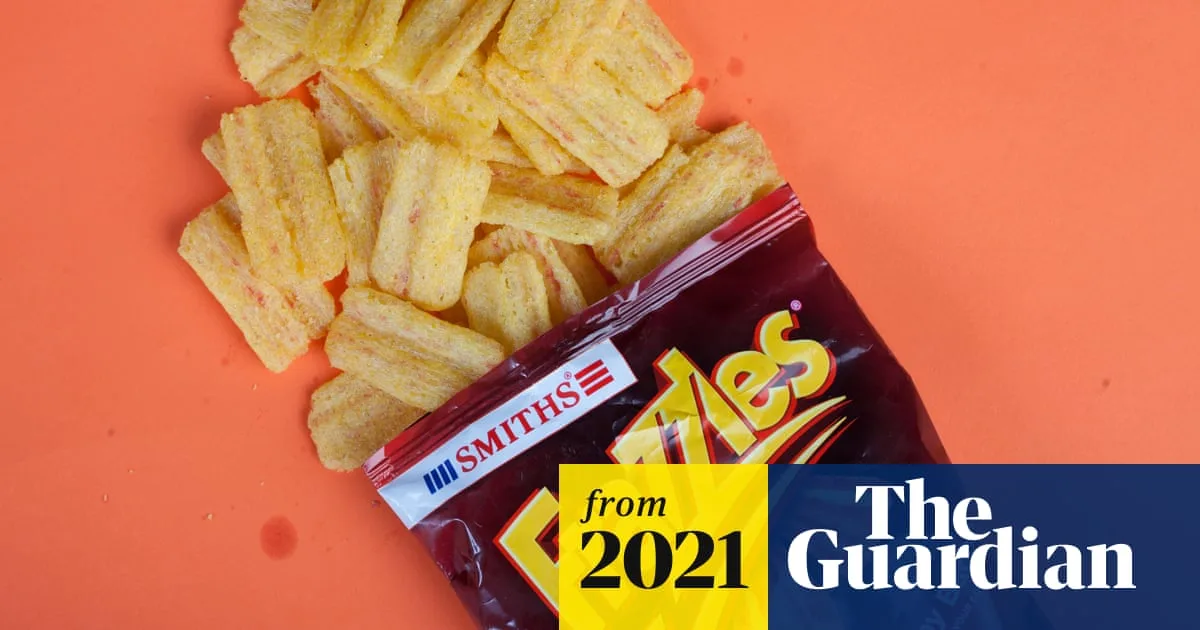
- Skips (35g): While weight measurement proved impossible due to their extreme lightness, Skips delivered an impressive 106 crisps—the highest count recorded in the study.
- NikNaks Nice 'N' Spicy (45g): These irregularly shaped crisps provided 91 pieces but weighed 44g—1g below the stated specification.
- Wotsits (36g): Despite appearing generously full with 63 crisps, the contents weighed only 34g—2g below the declared weight.
- Quavers (34g): This packet contained 43 mostly fragmented crisps but matched its stated weight exactly.
- Hula Hoops Original (45g): A personal favourite delivering 32 crisps that precisely matched the 45g specification.
- Walkers Ready Salted (45g): The classic variety contained 28 often-broken crisps weighing 44g—1g below specification.
- Pipers Anglesey Sea Salt Crisps (40g): As the most expensive packet at £1.45, these contained only 23 mostly broken crisps weighing 38g—2g below specification.
Broader Implications and Consumer Advice
The investigation highlights several important considerations for consumers. First, the substantial air content in crisp packets—necessary to prevent crushing during transportation—creates misleading impressions of fullness. Second, while most brands met or closely approached their stated weights, several fell short by 1-2 grams, which manufacturers might attribute to scale variations but consumers perceive as diminishing value.
Bull's findings suggest that shrinkflation manifests not only through reduced packet sizes but also through decreased crisp counts within existing packaging formats. The most disappointing performers combined lower counts with weight discrepancies, particularly Cheetos, Pipers, and certain Walkers varieties.
Despite these concerns, the investigation confirms that consumers can still find reasonable value in brands like Skips, NikNaks, and Hula Hoops that deliver generous counts relative to their specifications. However, the study underscores the importance of vigilant consumer awareness in an era of subtle packaging adjustments.
As Bull concludes, while she'll continue purchasing crisps, she now approaches them with heightened scrutiny—and occasionally with kitchen scales—to ensure she receives what she pays for in these challenging economic times.