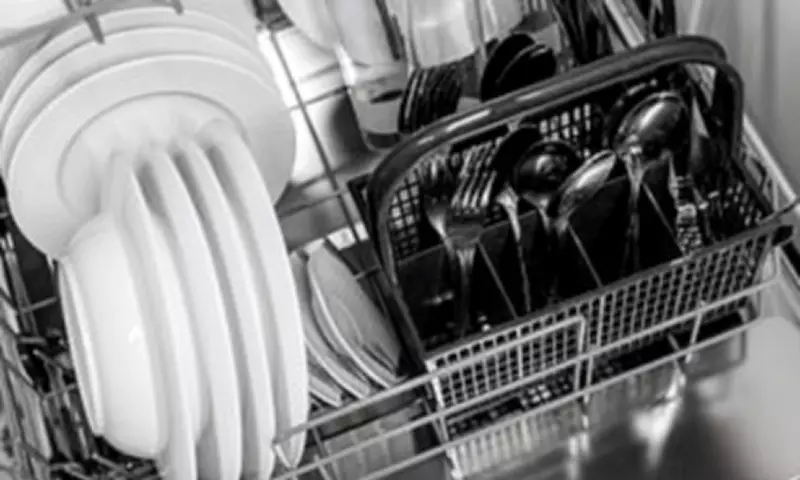
It's a household chore that many people dread, and now experts have revealed that you might have been loading your dishwasher incorrectly all along. According to specialists from AO, there are common misconceptions about how to pack dishes and crockery for optimal cleaning.
The Importance of Proper Spacing
Contrary to popular belief, jamming your dishwasher full does not make it work more effectively. In fact, it can lead to poor results. Gwil Snook, a dishwasher expert at AO, explained that dishwashers require space between items to allow water to circulate properly.
'Dishwashers need space in between dishes and crockery in order to circulate water, so you're not saving any money by squeezing everything into your machine,' Mr Snook said. 'In fact, you're probably more likely to have to run cycles again or wash dishes by hand if you do this, as they'll come out dirty.'

He recommends leaving a small gap between stacked items, approximately the size of a 5p coin or your pinky finger. This ensures water can flow freely, leading to better cleaning outcomes.
The Pre-Rinsing Myth
New findings indicate that a quarter of Brits believe pre-rinsing dirty dishes before loading them improves results. However, this habit is outdated and counterproductive. Modern dishwashers and detergents are designed to interact with food residue.
'It actually works against you,' Mr Snook noted. 'Modern dishwashers and detergents are actually designed to interact with food residue and dirty dishes. They work by relying on enzymes that break down grease and particles during the cycle. So, if you rinse everything off beforehand, those enzymes have nothing to latch onto, which can reduce cleaning performance.'
Pre-rinsing not only wastes water and time but also undermines the efficiency of your appliance. Data from AO shows a divide in households, with women more likely to pre-rinse than men, and Londoners being the biggest offenders, with a third making this mistake.
Optimal Loading Strategies
Mr Snook also provided guidance on how to arrange items in the dishwasher for best results:
- Reserve the top rack for mugs.
- Place glasses, bowls, and heavier items like pots in the bottom rack.
- Ensure spray arms have enough room to rotate freely.
- Select the appropriate program based on the cleaning needs.
Additionally, experts from Which? have addressed the debate over cutlery placement. While some argue for facing items up to enhance cleaning and drying, manufacturers agree that cutlery should face down for safety and effectiveness.
Items to Avoid in the Dishwasher
To prevent damage, certain items should never be placed in the dishwasher:
- Kitchen knives
- Anything wooden
- Non-stick cookware
- Some baking trays
- Crystal or milk glasses
- Copper, aluminium, or cast-iron cookware
- Insulated coffee mugs or water bottles
- Pressure cooker lids
'Our findings highlight how entrenched, and often unnecessary, dishwasher habits remain in UK households,' Mr Snook concluded. 'But with a few small tweaks, Brits can make sure they're getting the most out of their dishwashers, saving them time, money and perhaps even household tension along the way.'