Eleven months into Donald Trump's second term, the economic landscape for American consumers is painted in starkly contrasting colours, nowhere more vividly than in their weekly food shops. A recent visit to Atlanta, Georgia, revealed a nation grappling with the cost of living, where experiences range from reliance on charity to indulgence in luxury caviar.
The Strain on Safety Nets and Shrinking Budgets
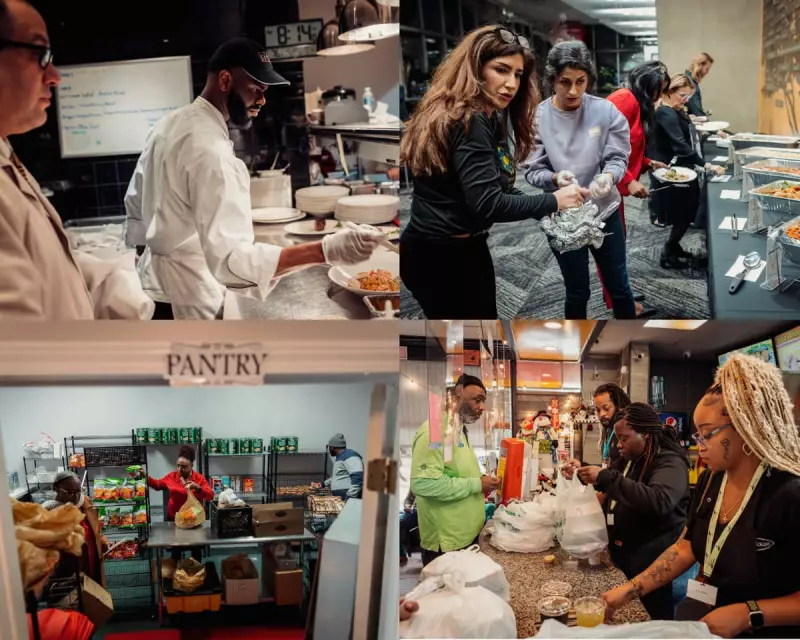
For many, the reality is one of relentless pressure. Sabrina Carter, who lives alone, hasn't visited a proper restaurant in at least a year. With food stamp assistance of just $24 a month that "runs out real quick," a splurge for her means cereal or a granola bar. Her search for help led her to the Area in Need Missionary House food pantry in Riverdale.
She was joined by Erica Barker, who lost her job with a county contractor a year ago and was visiting a pantry for the first time. Supporting a daughter and grandson without benefits, she spends $200-$300 a week, often relying on noodles. "You never know what a person is going through," said Stephanie Jordan, the non-profit's executive director, emphasising the importance of respect for those seeking help.

The demand at Jordan's pantry has skyrocketed. They now serve over 500 people a month, up from roughly 280 last year. The surge began when Supplemental Nutrition Assistance Program (SNAP) benefits were paused during a federal government shutdown, and demand has not receded. With unit costs up 30%, the charity is spending more than ever on food, even borrowing from its housing support budget. "We didn't know that this was coming," Jordan admitted.
Navigating a New Reality: Hustle, Hopes, and Higher Bills
Others are navigating fresh starts and tightened belts. Yolanda Thomas, recently relocated from New York after losing her home, spends $400-$500 monthly on food for herself and her husband. While cheaper than her old town, she now lacks insurance and urgently needs a job. Meanwhile, entrepreneur Carl Hilton has felt the pinch, noting a simple breakfast of bacon, eggs, and grits now costs around $20, compared to $6 or $7 before. He spends well over $500 a month on food, though he refuses to compromise on exploring Atlanta's vibrant food scene with his partner.
The food industry itself is a battleground of rising costs and ambition. Nizakat Noori, a 29-year-old Afghan refugee and mother of four, caters through the Refugee Women's Network's Chef's Club. She dreams of opening a family restaurant. However, the cost of her authentic ingredients has jumped by about 30%. Sending money to family in Afghanistan, she faces a difficult choice: "I don't want to change my seasonings... But I have to work. I have to sell my food."
Some businesses are finding a formula that works. Fork in the Road, a neighbourhood restaurant in Tucker built in a former Wendy's, thrives on word of mouth, customer service, and value. General Manager Justin Blake Johnson says they've raised prices only marginally, about a dollar on a couple of items a year ago, keeping an average plate at $13. Their parking lot fills with county trucks and professionals alike, all seeking what Johnson calls "food for your soul."
The High End: Caution, Caviar, and Consistent Spending
Even at the top of the market, trends are shifting. At The Capital Grille, the high-end Buckhead steakhouse, assistant general manager Sara Soendergaard observes that residential guests are dining out less. The restaurant has implemented three price increases this year due to rising costs for premium beef, with more expected. "People are a lot more cautious about where they spend their money," she noted, adding that staff must help customers "see the value in that $300" steak.
Yet, corporate accounts and holiday parties keep private rooms booked. And for some, spending continues unabated. Drone pilot Rosby Cobb spends about $600 a week on takeaways and restaurants, citing $14 eggs in his midtown neighbourhood. In the world of luxury imports, Andre Melchionda of Arrivato Imports notes the trendy "caviar bump"—small, affordable tastes of luxury on martinis or tater tots.

Melchionda's business supplying wagyu, truffles, and caviar to Michelin-starred venues is growing, though 15% tariffs on European imports have forced some price increases. He observes a clear divide: "The middle-upper class is still doing it, maybe a little bit less frequently. But the upper 1, 2, 3%: they're still going out... for amazing dinners."
The picture that emerges from Atlanta is one of a deeply fractured food economy. For every story of a caviar-fuelled business dinner, there is a corresponding tale of a pantry struggling to meet unprecedented demand. In Trump's America, the experience of putting food on the table depends entirely on which table you sit at.