Children's Craft Sand Withdrawn from UK Retailers Following Asbestos Detection
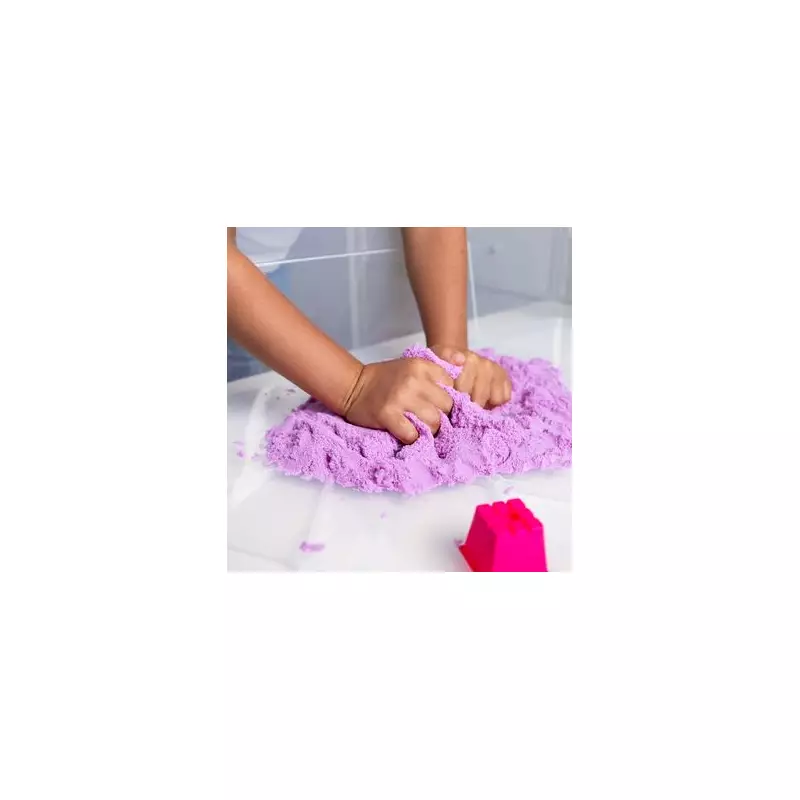
Play sand intended for children's crafts has been urgently withdrawn from sale across the United Kingdom after alarming tests revealed the presence of asbestos fibres. The discovery was made by a vigilant parent who, after seeing similar reports from Australia, purchased a set from Hobbycraft and submitted samples to an accredited laboratory for analysis.
Parental Vigilance Uncovers Hazardous Material
The concerned parent, whose child had previously played with the product at a party, stated: "The bottles of coloured sand looked extremely similar to ones I had seen on a news report of play sand recalled in Australia. I was concerned enough to buy a set at Hobbycraft and send it to an accredited lab for testing." Laboratory results confirmed that three out of the five colours in the Hobbycraft Giant Box of Craft kit tested positive for fibrous tremolite asbestos, a known carcinogenic substance.
Immediate Retail Action and Ongoing Investigation
Following the test results, Hobbycraft has taken precautionary measures by voluntarily removing the product from its shelves. However, the company has not yet issued a formal product recall to customers. A spokesperson for Hobbycraft explained: "As a precaution, we have voluntarily removed the product from sale while we carry out independent testing. We will update customers as soon as we are in a position to do so."

This incident echoes similar actions taken in Australia and New Zealand two months prior, where identical products were pulled from shops and led to the temporary closure of schools and nurseries for deep cleaning procedures. The UK products in question were manufactured in China, where regulations permit labelling as 'asbestos-free' if the material contains less than 5% asbestos.
Government Response and Parental Concerns
A government source informed The Guardian that officials are actively investigating the matter, emphasising: "Parents are right to be concerned by this. Officials are investigating, but there's no good reason why Hobbycraft shouldn't recall this themselves, given the evidence." The parent who initiated the testing expressed growing distress, stating: "I am getting increasingly upset thinking that kids are being exposed unnecessarily."
Understanding the Asbestos Hazard
Asbestos comprises six naturally occurring minerals composed of microscopic, needle-like fibres. Historically celebrated as a "miracle mineral" for its strength, heat resistance, and non-conductive properties, it is now recognised as one of the most significant occupational health hazards in history. The primary danger lies not in the mineral itself, but in its fibres, which become hazardous when materials containing asbestos are disturbed.
When asbestos-containing products are broken, sanded, or deteriorate, they release a dust of tiny, invisible fibres that can remain airborne for days and are virtually indestructible. Once inhaled, these fibres penetrate deep into the lungs. Due to their chemical resistance, the human body cannot break them down or expel them easily. Exposure does not cause immediate illness; instead, there is a latency period of 10 to 40 years before symptoms manifest.
Major diseases associated with asbestos exposure include:
- Mesothelioma: A rare, aggressive, and almost always fatal cancer affecting the lining of the lungs or abdomen, almost exclusively caused by asbestos.
- Asbestosis: A serious, permanent scarring of lung tissue that progressively impairs breathing.
- Lung Cancer: Directly linked to asbestos fibre inhalation.
While the risk to children playing with minimal amounts of asbestos is considered relatively low, any unnecessary exposure to this hazardous material remains a significant public health concern, prompting urgent scrutiny and action from retailers, regulators, and consumers alike.