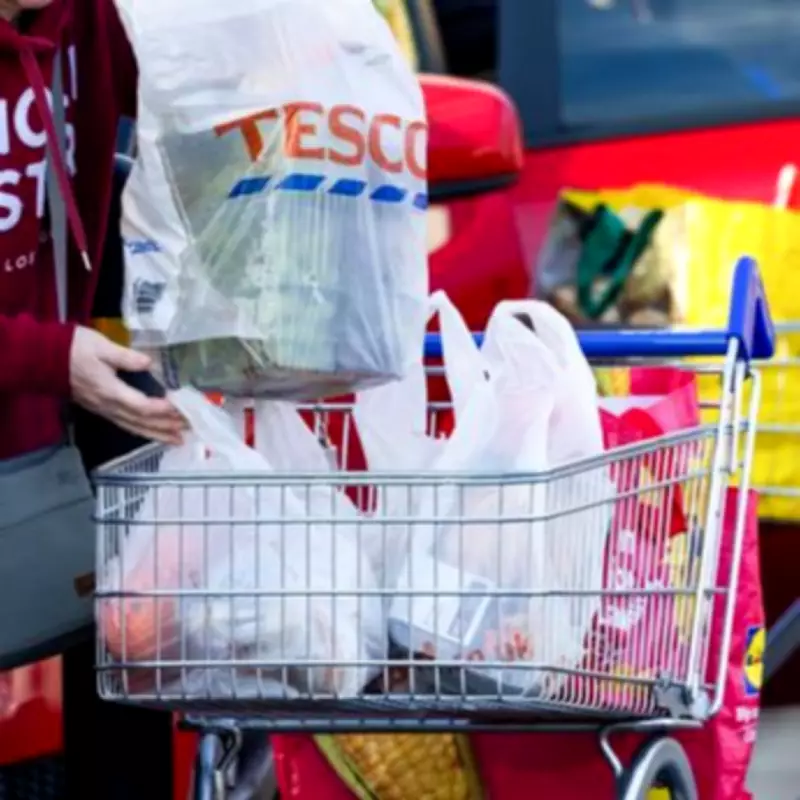
Many British shoppers maintain a collection of carrier bags with the best intentions of reusing them, only to forget them at home when heading to the supermarket. This common oversight forces consumers to repeatedly pay the carrier bag charge at checkout, incrementally increasing their grocery bills over time.
The Rising Cost of Forgetting Your Bags
The carrier bag tax, first implemented in England back in October 2015, has now been in place for over a decade. Initially set at just 5p per bag, the minimum charge has since doubled to 10p as of 2021. However, retailers are permitted to set their own prices, with some stores now charging as much as 40p for a single plastic carrier bag.
How Small Charges Accumulate Into Significant Expenses
Iwan Carrington, a professional organiser featured on Stacey Solomon's BBC programme Sort Your Life Out, recently highlighted on Instagram how these small payments can lead to substantial annual waste. Carrington explained that purchasing just four new carrier bags each week at 40p apiece results in a weekly expenditure of £1.60.

Over the course of a full year, this seemingly minor habit adds a staggering £83.20 to a household's shopping budget solely for bags they likely already possess at home. For many families, this represents unnecessary spending that could be easily avoided with a simple organisational strategy.
The Simple Folding Technique That Ensures You Never Forget
In his social media demonstration, Carrington showcased an efficient folding method that transforms bulky carrier bags into compact, portable packages. "Carrier bags in the shops are getting so expensive, it can be 40p a time, so I always fold mine up and take one with me," he advised viewers.
The technique involves three straightforward steps:
- Lay the bag flat and fold it from bottom to top into three equal sections, creating a neat rectangle
- Fold this rectangle into a square, then into a triangle shape
- Tuck the handles securely into place to maintain the compact form
This folded bag can then be easily slipped into a coat or jacket pocket, ensuring it's always readily available when needed at the shops.
Public Reaction to the Space-Saving Solution
Shoppers responded enthusiastically to Carrington's practical suggestion. One commenter described the method as "genius," while another noted it was "such a space saver." A third individual admitted, "I spend so much on carrier bags - love this!" highlighting the widespread relevance of the issue.
Alternative strategies also emerged in the discussion, with one person sharing their routine of keeping bags in their car boot: "My bags are always in the boot of my car. Once I have taken the shopping and packed it away, the bags are in the boot again!"
The Environmental Rationale Behind the Bag Tax
The carrier bag charge was originally introduced with environmental objectives at its core. Supermarket plastic bags in the UK are typically manufactured from polyethylene (PE), a petroleum-based product from the fossil fuel industry.
Even recycled plastic bags can require more than two decades to decompose fully, often persisting in landfills for much longer periods. The government implemented the tax specifically to reduce national dependence on single-use carrier bags and decrease associated litter by encouraging consumers to reuse their shopping bags consistently.
Carrington's folding technique not only delivers financial benefits to households but also supports these broader environmental goals by making reusable bags more convenient and less likely to be forgotten during shopping trips.