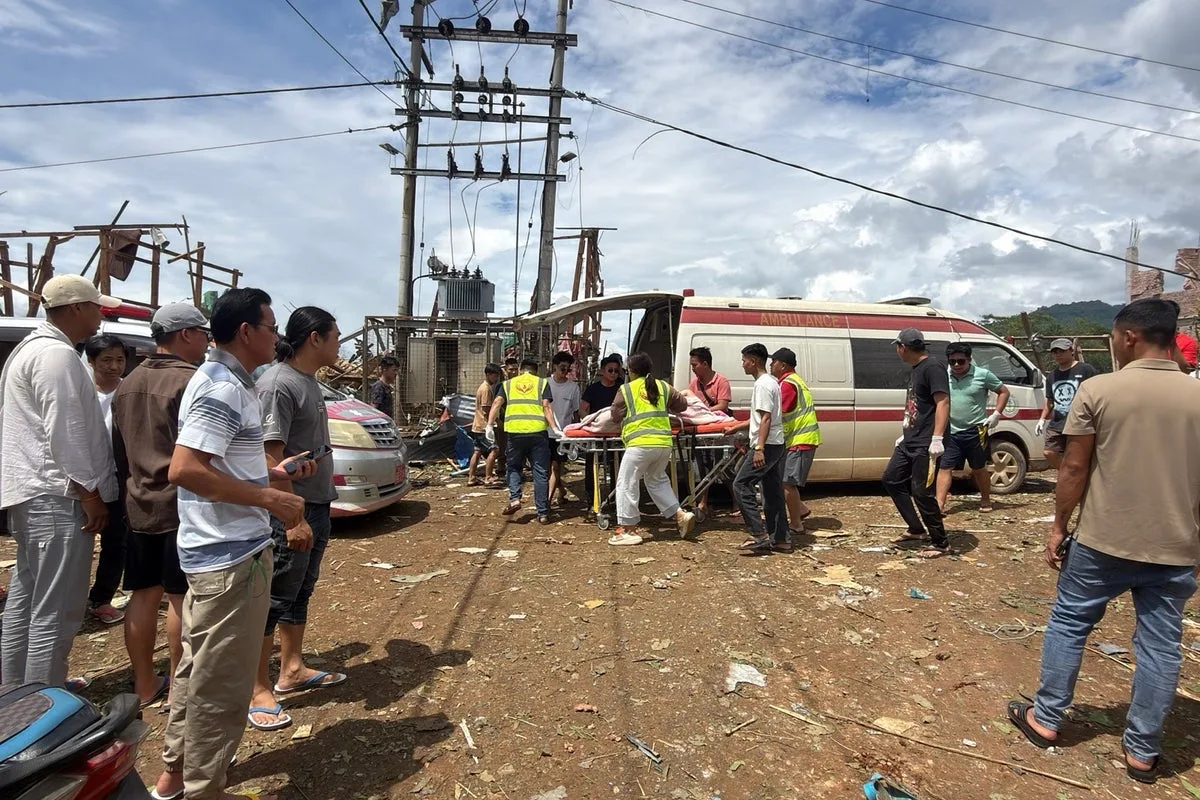
Rescue teams in northeastern Myanmar are continuing to search for bodies after a massive explosion at a mining explosives storage site killed at least 43 people, according to the ethnic rebel group that controls the area. The blast occurred on Sunday in Kaungtup village, Namhkam township, Shan state, near the Chinese border.
The Ta’ang National Liberation Army (TNLA) said in a statement on Monday evening that the death toll had reached 43, including seven children, with 112 people injured, 37 of them critically. The force of the explosion dismembered many victims, complicating the count. Previous estimates had ranged from 38 to 45 fatalities.
The TNLA stated that the explosion involved gelignite, a type of explosive commonly used in local mining and stone quarrying. Improper storage can make gelignite highly unstable over time. Residents of the 200-household village said they were never informed that explosives were being kept there. An investigation into the cause is underway.
The incident has highlighted Myanmar's largely unregulated mining industry, which is a major global supplier of rare earth elements, copper, tin, and gems, primarily to China. Local residents reported that mines producing raw materials for silicon metal are located about 15 kilometres southwest of Namhkam, operated jointly by the TNLA and Chinese businessmen. The claim could not be independently verified.
China's Foreign Ministry expressed deep condolences and confirmed that a Chinese national injured in the blast is receiving medical treatment. Beijing has pledged assistance in handling the aftermath. The TNLA, part of the Three Brotherhood Alliance, seized control of the Namhkam area in late 2023 during an offensive against the military government, which took power in a 2021 coup.