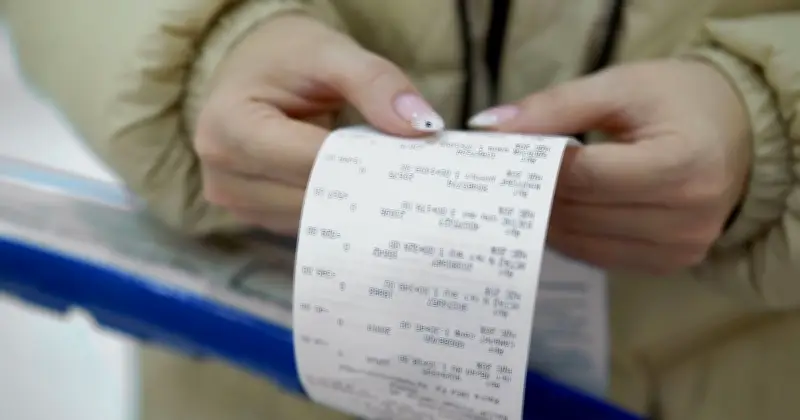
Russian households are increasingly swapping chocolate for cheaper biscuits as mounting economic pressures from the war in Ukraine hit budgets. The shift was revealed by Russia's biggest retailer, X5 Group, whose president Yekaterina Lobacheva said shoppers were changing their spending habits amid a squeeze on incomes.
She told the press in April: "We recently noticed that cookie consumption has risen — almost two and a half times. It's something sweet, a small indulgence, but cheaper than chocolate and other confectionery."
Rising Prices and Official Growth
According to research by the BBC, between 2024 and 2026, the price of chocolate in Pyaterochka, convenience stores part of X5 Group, has risen by 125%.
The shift comes despite official figures showing Russia's economy is still growing more than four years after Vladimir Putin launched his full-scale invasion of Ukraine. Russia's GDP grew by 1.3% year-on-year in the second quarter of 2026, while the economy expanded by 0.6% during the first half of the year.
Two-Tier Economy and Warning Signs
But analysts warn that the headline figures mask growing problems beneath the surface. While Russia's war economy has been propped up by huge military spending, economists say ordinary households are increasingly feeling the effects of inflation and slower growth outside defence industries.
Alex Kolyandr, director for Europe at consulting firm Eurasia Group, described Russia as a two-tier economy. "If you are lucky and you're employed by a tank production company, then everything's good. Otherwise, you are probably facing problems," he told CNBC.
Charles Lichfield, director of economic foresight and analysis at the Atlantic Council's GeoEconomics Center, said Russia's budget deficit and inflation were key warning signs. He said: "They are on course to double the deficit they had in 2025 and that was already double what they had in 2024."
Energy Revenues and Outlook
Russia's energy income has also fallen sharply. Oil and gas revenues in the first half of 2026 were just 64% of the level seen two years earlier, amid Ukrainian drone strikes on refineries and tighter Western sanctions.
Despite the growing pressure, analysts do not believe economic difficulties alone will force Putin to end the war. Elina Ribakova, senior fellow at the Peterson Institute for International Economics, said: "It has to get much more dire."
For ordinary Russians, however, the impact may already be visible in everyday choices at the supermarket — with a packet of biscuits replacing a bar of chocolate becoming a symbol of a wartime economy under strain.