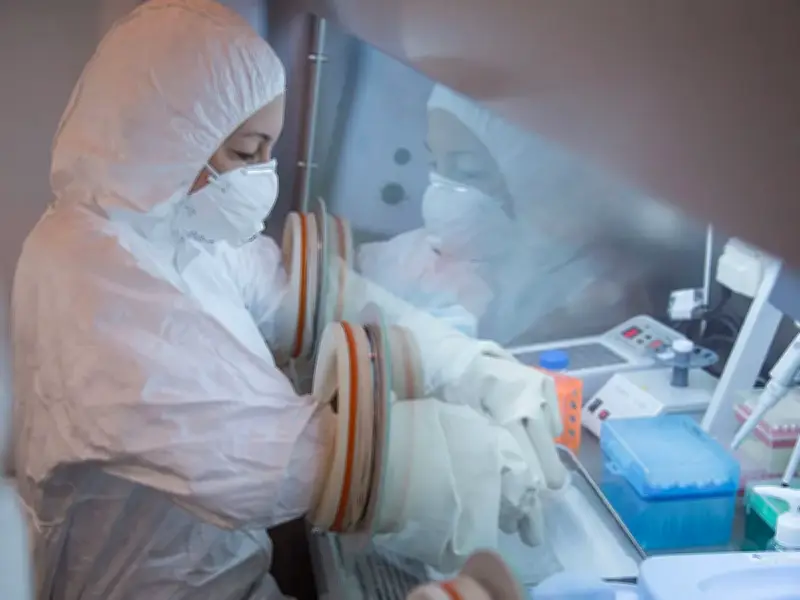
Russian officials have insisted the plague situation in Siberia is “stable” after the death of a laboratory technician sparked global alarm and extraordinary quarantine measures. Darya Shipilova, 28, a lab worker at the Irkutsk Anti-Plague Research Institute, died on October 2 from severe pneumonia, according to the Kremlin.
Global Panic Over Broken Vial Rumours
Her death triggered widespread panic, with independent outlets and local reports claiming she had accidentally dropped and smashed a test tube containing live Yersinia pestis, the bacterium that causes plague, while collecting samples. Because she rapidly developed acute respiratory symptoms, fears grew that it could be pneumonic plague, the deadliest airborne form that can spread between people via droplets.
However, the Governor of the Irkutsk Region, Igor Ivanovich Kobzev, attempted to calm the storm in a lengthy Telegram statement posted on Monday (October 5), saying official tests found no link to any lab pathogens. Despite this, theories of a cover-up ordered from the top levels of Russia's government have continued to swell online.
Official Tests Show No Pathogens
“I see all your questions and comments regarding the current sanitary-epidemiological situation in the region,” he wrote. “I would like to clarify the state of affairs once again.” Kobzev said Russia’s health watchdog, Rospotrebnadzor, had concluded its investigation.
“Specialists conducted extensive laboratory tests; the results indicate that no microorganisms linked to the young woman's professional work were found in her biological samples,” Kobzev added. He further stated the official cause of death was “pneumonia of undetermined etiology”, meaning doctors could not identify the exact origin.
Quarantine Measures and International Concern
Despite that reassurance, the response on the ground was anything but low-key. Around 200 close contacts were reportedly placed under strict medical isolation or quarantine, parts of Shelekhov District Hospital were cordoned off, masks were mandated at a local aluminium plant, and staff at the anti-plague institute were effectively locked down inside the facility.
Kobzev insisted there had been no further cases linked to the institute. “Importantly, no new cases of employees from the anti-plague institute seeking medical attention have been reported in the days since,” he wrote. “The sanitary-epidemiological situation in Irkutsk and the Shelekhov District is currently stable.”
International concern flared as well, with reports that the World Health Organisation pushed Moscow for transparency amid claims a second employee had fallen ill. US President Donald Trump and Secretary of State Marco Rubio said they were monitoring developments “closely”, while neighbouring Mongolia tightened surveillance at its border.