
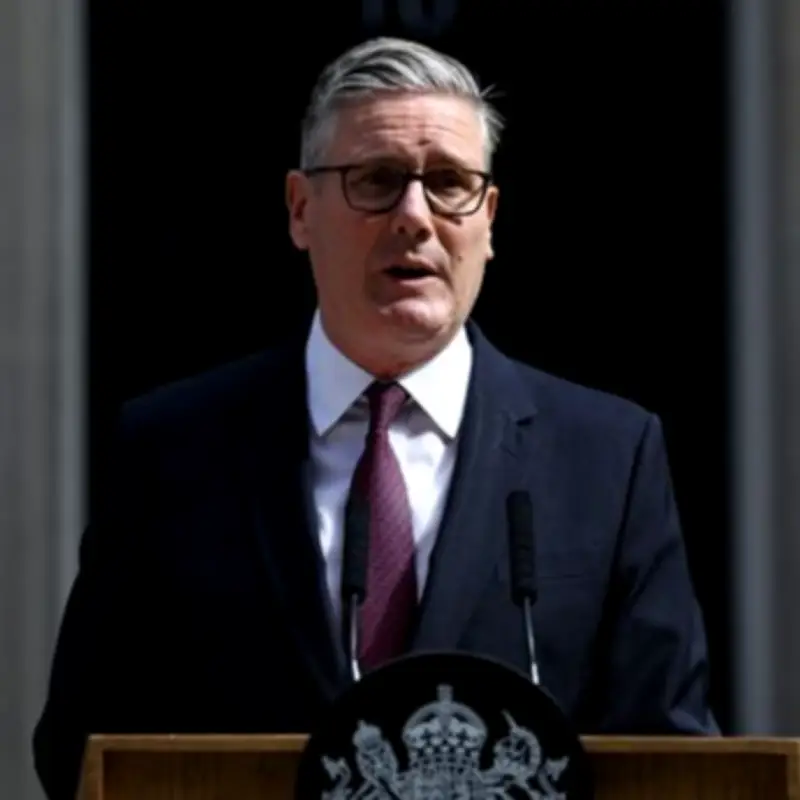
Keir Starmer has announced his resignation as Prime Minister in a tearful Downing Street address, stating he is stepping down to protect the "country he loves." The confirmation ends a turbulent premiership that began with high hopes less than two years ago.
Starmer's Rise and Fall
Sir Keir, the former Director of Public Prosecutions, entered No. 10 in July 2024 following a historic Labour landslide that ended 14 years of Conservative rule. He promised economic stability, improved public services, and restored trust in politics, initially enjoying a massive parliamentary majority.
However, the honeymoon faded amid disastrous polling and internal party strife. After humiliating local election defeats and by-election losses, Labour MPs openly revolted, questioning his leadership credentials.
The Resignation Speech
Choking back tears, Starmer admitted defeat, saying he was putting country before personal survival. In his full speech, he reflected on his achievements, including a stronger economy, faster wage growth, falling NHS waiting lists, and reduced small boat crossings. He acknowledged that his party now questions whether he is best placed to lead into the next general election.
"I have heard the answer of my parliamentary party to that question, and I accept that answer with good grace," he said. "Every decision I've taken has been about putting the country I love first."
Transition Plan
Starmer confirmed he has informed King Charles III of his decision. He will ask the Labour Party's National Executive Committee to set a leadership contest timetable, with nominations opening on July 9 and concluding by the summer recess. He will remain Prime Minister until a successor is chosen, likely before Parliament returns in September.
He pledged full support to his successor, stating they will inherit a stronger and fairer Britain than the one he inherited two years ago.




