

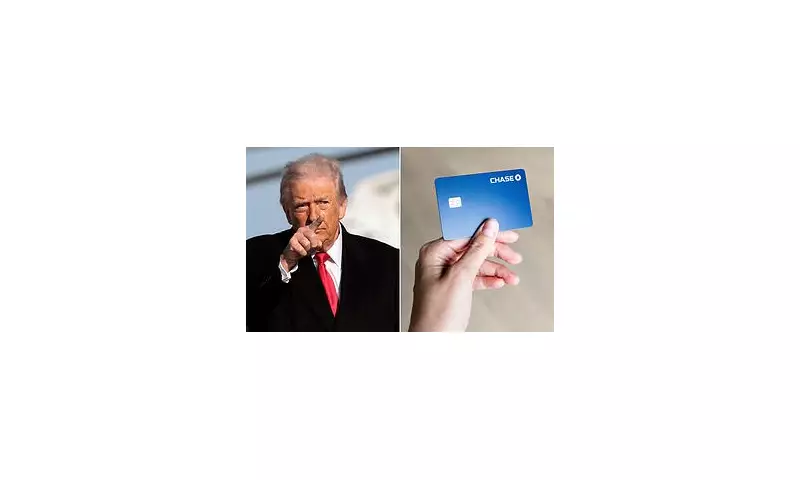
America's largest bank has issued a stark warning that plans by former President Donald Trump to cap credit card interest rates could lead to a severe reduction in the availability of credit for consumers.
The Warning from Wall Street
Jeremy Barnum, the chief financial officer of JPMorgan Chase, stated that a proposed government mandate to limit rates to 10 percent would force banks to radically alter their business models. Barnum cautioned that the likely outcome would not be cheaper credit, but a significant contraction in its supply, a move he described as "bad for everyone." He made these remarks during a call with journalists following the bank's fourth-quarter earnings report.
When questioned on whether financial institutions would legally challenge such a proposal, Barnum indicated that "everything's on the table," including potential litigation. He argued that such regulatory action would have the opposite of its intended effect, harming the very consumers it aims to protect.

How a Rate Cap Would Reshape the Market
The current landscape for borrowers is starkly different from the proposed cap. According to data from Bankrate.com, the average credit card interest rate stands at 19.7 percent, nearly double the level reportedly sought by Trump. Banks contend that the high rates are necessary to offset risks inherent in unsecured lending.
Credit cards are profitable because interest on unpaid balances helps to cover losses from fraud, customer defaults, and the cost of lucrative rewards programmes. If lenders cannot charge enough interest to mitigate these risks, they would be forced to reconsider their strategies. This could lead to:
- Fewer credit card approvals overall.
- Lower credit limits for new and existing customers.
- Banks withdrawing from issuing cards entirely to higher-risk segments, such as those with poorer credit histories.
The consequences would extend beyond individual borrowers. A sharp reduction in access to credit could dampen consumer spending, a major engine of the US economy, as many Americans rely on cards to manage cash flow between pay cheques.
Uncertain Future and Fierce Competition
The path for Trump's proposal remains unclear. The United States currently has no federal law limiting credit card rates. A bill introduced last year by Senators Josh Hawley and Bernie Sanders, which aimed to cap annual percentage rates (APRs) at 10 percent for five years, has stalled in Congress. Barnum declined to state directly whether JPMorgan would comply with any such mandate, which could theoretically take effect from January 20 if approved.
This warning emerges amidst an intense battle for premium customers in the credit card sector. JPMorgan Chase is locked in fierce competition with American Express, with both institutions aggressively enhancing perks while simultaneously raising annual fees.
In June, Chase refreshed its premium Sapphire Reserve card, adding travel benefits and boosting reward points, while increasing its annual fee to $795. Not to be outdone, American Express overhauled its Platinum Card in September, lifting the annual fee from $695 to $895. The revamped card offers new credits for restaurants, hotels, and retailers like Lululemon, alongside enhanced travel rewards and lounge access. To attract new customers, Amex has offered sign-up bonuses of up to 175,000 points for those who spend $8,000 within the first six months.






