
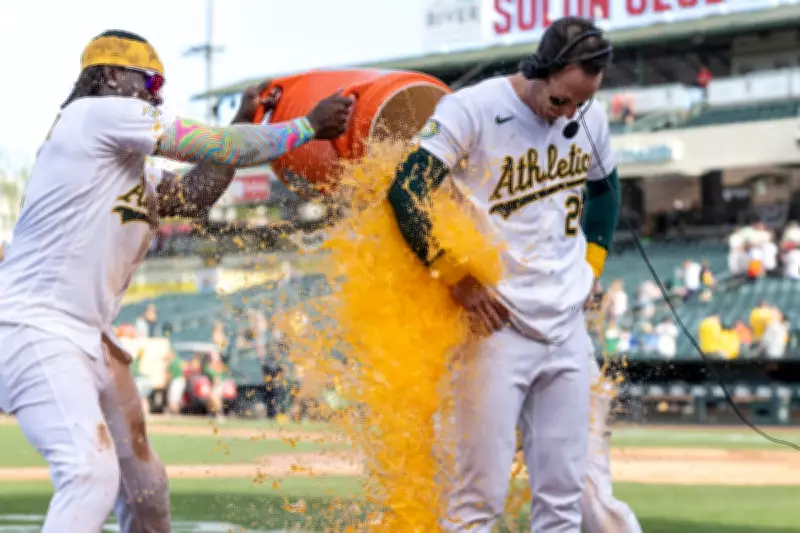
Sixty years after pioneering the sports drink category, Gatorade is embarking on a significant strategic shift, moving away from its primary focus on athletes to target a broader consumer base. The iconic brand, owned by PepsiCo, announced on Thursday that it aims to appeal to non-athletes seeking hydration solutions for various daily activities, such as long flights, casual walks, or recovering from hangovers.
Expanding Beyond Athletic Performance
This rebranding effort reflects a growing trend among U.S. consumers who are increasingly interested in beverages with perceived health benefits. New packaging will emphasize the specific functions of Gatorade's drinks and powders, along with the scientific research supporting them. According to Jack Doggett, a food and drink analyst at Mintel, approximately 60% of sports drink purchasers are not athletes but are drawn to functional ingredients like electrolytes for hydration and carbohydrates for energy.
"People are using these drinks more for wellness and daily maintenance," Doggett noted. "While younger consumers often drive wellness trends, older generations are also turning to these beverages for hydration purposes."
Market Dynamics and Competition
The sports drink market is experiencing robust growth, with unit sales of drink mixes, including powders from brands like Liquid I.V., Skratch Labs, and Gatorade, surging nearly 20% in the year ending March 22, as reported by Circana. In contrast, bottled water sales remained stagnant during the same period. This growth has attracted numerous new entrants, with Mike Del Pozzo, president of U.S. beverages at PepsiCo, revealing that 150 new brands have entered the hydration space in recent years.
"That puts a lot of risk on the category and pressure from a credibility perspective," Del Pozzo explained. "Some newcomers are leveraging the science we developed. We realized we should be more overt in discussing our scientific advancements and why we believe Gatorade is future-forward."
Innovative Product Launches
As part of its rebranding, Gatorade will introduce clearer labeling to highlight products that claim to hydrate better or faster than water. A new offering, Gatorade Longer Lasting, set to launch next year, combines glycerin and electrolytes to promote prolonged hydration compared to water alone. This move aligns with strategies employed by competitors; for instance, Coca-Cola's Powerade updated its packaging in 2023 to emphasize increased electrolytes and later introduced Power Water, a zero-sugar, electrolyte-enhanced drink targeting non-athletes.
Other brands have similarly pivoted. Liquid I.V., founded as a sports drink mix in 2012 and acquired by Unilever in 2020, has repositioned itself as a wellness and hydration brand. LMNT also catered to non-athletes last fall by releasing a smaller, 12-ounce version of its sparkling electrolyte drink.
Consumer Behavior and Health Considerations
Sean Harapko, a beverage sector leader at Ernst & Young Americas, observed that with an abundance of beverage choices, companies must clearly define their products and articulate their unique value propositions. "Americans are striving to lead healthier lives, but they gather information from diverse sources and define wellness on their own terms," he said.
Gatorade's origins trace back to 1965 when Dr. Robert Cade, a physician at the University of Florida, developed the drink to address electrolyte loss in football players. Over the decades, the brand evolved under ownership by Quaker Oats and later PepsiCo, which acquired it in 2000. While Gatorade will continue to serve athletes with products like Gatorade Thirst Quencher, which contains 48 grams of sugar and 18% of the recommended daily carbohydrates, lower-sugar options are gaining traction.
Del Pozzo highlighted that Gatorade Lower Sugar, introduced last month with 75% less sugar, has become one of the company's top sellers. "I think there were people who said, 'I didn't exercise or I'm not in the heat.' The reality is, everybody is sweating and dehydrated from the moment they wake up, and many just don't realize it," he remarked.
Expert Perspectives on Hydration Needs
However, Travis Masterson, an assistant professor at Pennsylvania State University's College of Health and Human Development, offered a cautious perspective. He pointed out that average non-athletes typically obtain sufficient sodium from their diets. "Gatorade 100% has a place, but is it necessary for everybody? Do you need to hydrate faster or longer? The average person doesn't need all the extra stuff," Masterson stated, emphasizing that thirst signals are generally adequate for most individuals, whereas athletes may require additional reminders due to physical stress.
This rebranding initiative underscores Gatorade's adaptation to shifting consumer preferences, positioning the brand not just as a staple for athletes but as a versatile hydration solution for everyday wellness enthusiasts.




