
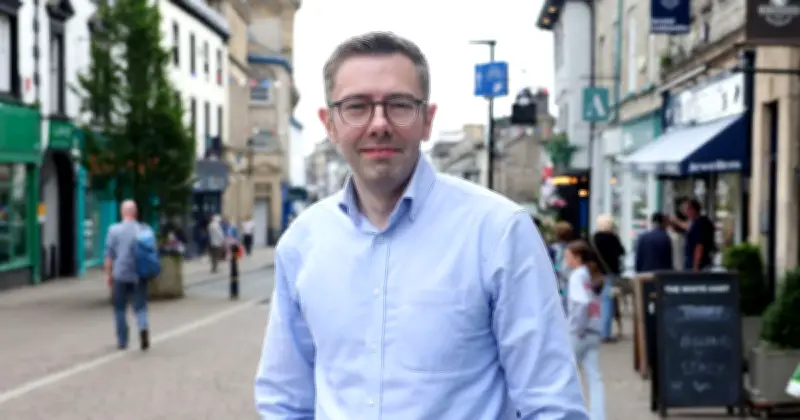
Andrew Papworth argues that UK high streets are facing a slow death, but two straightforward policy changes—free parking and reduced business rates—could transform them almost instantly. He has visited dozens of town and city centres over the past year, observing the same problems recurring: high parking charges, soaring rents, and empty units. In Lowestoft, an out-of-town retail park has cannibalised the town centre, a pattern repeated in Great Yarmouth just 10 miles away.
Heartbreaking Decline of Historic Towns
Papworth describes it as heartbreaking to see places with rich histories—like Lowestoft, once a fishing powerhouse, and King's Lynn, a hub for wool, salt, and grain exports—become shadows of their former selves. He highlights the plight of traders like Simon Johnson, owner of Nancy's Vintage Teashop in Newmarket, one of the UK's richest towns. Johnson told Papworth: “I had a front-of-house manager, I had a chef, all now gone – just to keep afloat, with the added pressure of business rates, electricity and gas bills, food prices. Predominantly, I’m trying to do everything – marketing, front of house, payroll – just to stay afloat.” Johnson called VAT the “biggest killer for our business” and said, “I’m tied into a lease, which means I have to keep going, really. In three to five years’ time, I probably won’t be here.”
Free Parking: A Proven Solution
Papworth points to parking charges as a major deterrent. In Cambridge, it costs £26.80 to park for five hours in the Grand Arcade, and £29.70 at weekends. This drives shoppers to retail parks like Ipswich's Martlesham Heath, where parking is free and shops are adjacent. By contrast, Ely, a small city 17 miles away, has reversed years of decline by offering free parking. “Pretty much every shopper I spoke to said free parking was the reason they chose Ely over other nearby places,” Papworth notes. Cambridgeshire Mayor Paul Bristow has introduced free parking after 3pm in Peterborough, explaining: “Being Mayor is about growth. It’s about kind of regenerating our local economy, and one of the easiest things I can do is to remove barriers to get people into our city centre. That’s what free parking will do.”
Business Rates: A Crushing Burden
The second fix is reducing business rates. Papworth cites Lavenham Butchers in Suffolk, owned by Jen and Greg Strolenberg. Jen, 46, said: “It’s tough. I don’t think we’ve worked as hard as we have now in all of the 12 years.” They have not replaced staff to cover higher costs, including business rates, energy bills, food inflation, and a National Insurance hike for employers. Papworth notes that Labour has slashed the permanent rate for smaller retail, hospitality, and leisure venues, but abolished a 40% relief that had been 75% before, causing many bills to rise. Andy Burnham’s proposal to cut business rates funded by a tax on large warehouses is welcome, but many remain sceptical.
The Cost of Inaction
Papworth acknowledges that free parking and lower rates mean less government revenue for the NHS, roads, and schools. But he warns: “At the moment, we’re actively choosing to balance the books by destroying town centres and businesses’ livelihoods. Just look at Thetford, in Norfolk, where the town’s remaining shops are struggling to trade because so many have abandoned the town centre. If we don’t change the status quo, the blunt and ugly truth is that many town and city centres won’t be able to pay taxes anyway, because they won’t exist. For that, we will all suffer.”




