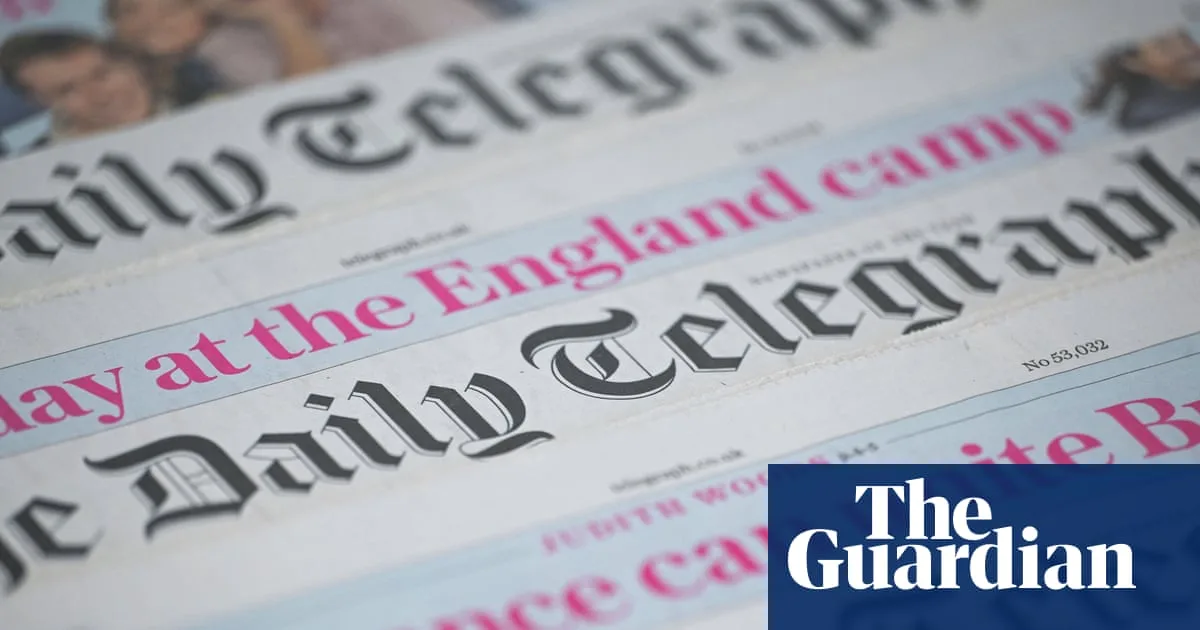
Lord Rothermere, the proprietor of the Daily Mail, has rekindled his two-decade-long ambition to create a formidable conservative media powerhouse with a renewed bid for the Telegraph titles. This strategic move could significantly reshape Britain's media landscape and political influence.
A Twenty-Year Ambition Reawakened
The seeds of this acquisition were first sown in the summer of 2004, when Jonathan Harold Esmond Vere Harmsworth, the 4th Viscount Rothermere, initially attempted to purchase the Daily Telegraph and Sunday Telegraph. That effort failed, reportedly to the delight of rival media mogul Rupert Murdoch, who recognised the threat of a consolidated right-wing newspaper group rivaling his own empire's political leverage.
Unlike most executives who operate on five-year plans, the Rothermere family is accustomed to thinking in generational terms. Now, twenty years later, the 57-year-old hereditary peer sees another opportunity as the Telegraph titles were again put up for sale in 2023. After two previous prospective owners faced internal revolts over their suitability, Rothermere has made his move.
Alex DeGroote, a media analyst with experience working closely with Daily Mail and General Trust (DMGT), notes: "This is a 20-year plus target acquisition. He doesn't want the Mail as the only newspaper asset he leaves for his son Vere."
Navigating Financial and Regulatory Hurdles
Significant obstacles remain before DMGT can secure the Telegraph titles. The proposed deal faces scrutiny over competition and media plurality concerns, alongside questions about how Rothermere will finance the £500 million valuation insisted upon by current controller RedBird IMI.
Most media analysts believe a more realistic price tag would be around £350 million, suggesting Rothermere is willing to pay a substantial premium to achieve his long-held ambition. The company has stated there will be "no foreign state investment or capital" in the deal, a strategic move to avoid investigation under new laws limiting foreign state ownership.
Rothermere's decision to take DMGT private in 2021 has simplified the pursuit. As he stated shortly after that decision: "I don't have to justify myself to anybody."
Family Legacy and Editorial Philosophy
For the Rothermeres, media acquisitions represent a family affair spanning more than a century. A portrait of Alfred Harmsworth, his great-great-uncle who founded the Daily Mail in 1896, dominates Rothermere's office. His earliest memories include visiting hot-metal newspaper presses with his father, and he was included in conversations about the difficult launch of the Mail on Sunday in 1982.
Despite his conservative media empire, Rothermere maintains a hands-off editorial approach. Paul Dacre, the uncompromising former Mail editor who now serves as editor-in-chief at DMG Media, confirmed this philosophy: "It's a sacred principle for them that editors are given total editorial autonomy, with the brutally clear understanding that they are dismissed if they produce poor papers."
Dacre revealed that this approach sometimes comes at a personal cost for Rothermere, whose own gentler, more pro-European conservatism often contrasts with the Mail's pugnacious views: "Columnists, news stories, diary items and the paper's sometimes controversial editorial position would not infrequently cause him embarrassment with his friends and social circle. He never once complained."
Political Implications and Industry Transformation
With British politics seemingly sliding to the right, combining the Mail and Telegraph raises significant political concerns. Both publications have increased coverage of Nigel Farage's Reform UK party, with many liberal politicians noting the Mail's abrasive style has become even starker in recent times.
Anna Sabine, the Liberal Democrat culture spokesperson, expressed concern: "Concentrating so much agenda-setting power in the hands of so few would set a deeply concerning precedent." Even former Conservative cabinet minister David Davis has voiced opposition to the deal.
However, Dacre argues that regulatory perspectives have evolved: "Go back five or 10 years and a Mail/Telegraph deal would have been unlikely to go through. But deals that historically would not have got through are being done."
Rothermere's team will likely tell regulators that the combined group would compete not with other newspapers, but with digital giants like Meta and Google. The Labour government's pressure on regulators to act in a more "pro-growth" manner may also work in DMGT's favour.
As the media landscape continues its digital transformation, Rothermere's potential acquisition represents more than just business expansion—it signifies the latest chapter in a generations-long family saga dedicated to British journalism, with his 31-year-old son Vere already being groomed to eventually take control of the expanding empire.




