
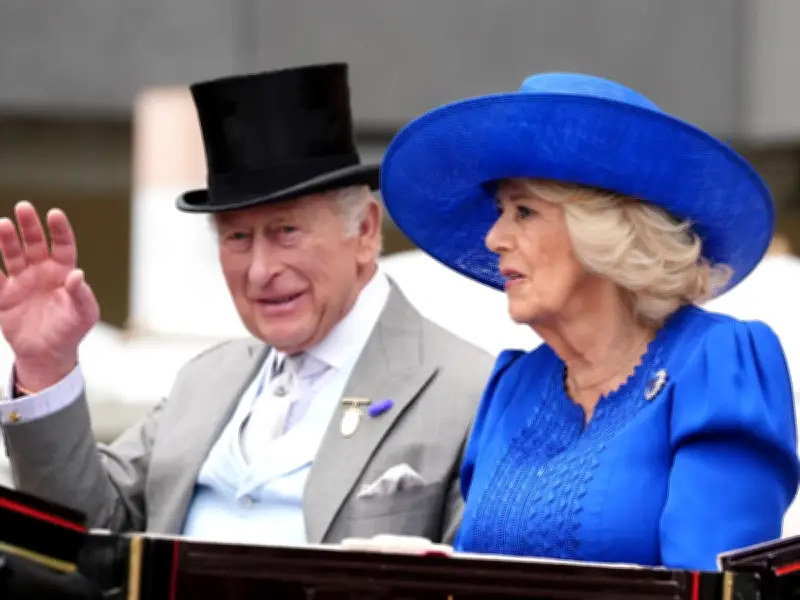
King Charles will become the first British monarch to publish his full tax returns, revealing the total amount of tax he pays on income from personal wealth, investments, and certain capital gains. Buckingham Palace described the move as unprecedented, aimed at demonstrating the monarchy's commitment to "modernise and evolve" under the King's reign.
Historic Transparency Move
The King previously published his tax returns as Prince of Wales when he oversaw the Duchy of Cornwall. However, upon ascending the throne and passing the Duchy to Prince William, he controversially discontinued the practice. Now, as sovereign, Charles has chosen to resume publication, a decision a palace spokesperson said "has come at the express wish of the King himself, as part of the adaptations carried across since accession."
The full tax details for the 2024-25 financial year will be released, including income from the Duchy of Lancaster, investments, trading profits, and funds generated by his estates and savings. The Duchy of Lancaster, a private portfolio of land, investments, and properties, provided the King with an annual income of £26.8 million in 2024-25. The 2025-26 tax details will follow next year after audit completion, though the information will be presented as a lump sum without individual breakdowns.
Pressure on Prince William
The King's decision is expected to intensify scrutiny on Prince William, who as Prince of Wales has chosen not to publish his tax returns. William inherited the Duchy of Cornwall, a billion-pound estate including The Oval cricket ground and Dartmoor Prison, which provides him with an independent income. He received nearly £23 million from the Duchy in the last financial year and voluntarily pays the highest rate of income tax after official costs, but the amount is not disclosed.
Journalist David Dimbleby, in his BBC series "What is the Monarchy For?", labeled William "secretive" for refusing to follow his father's example. Dimbleby noted that the combined income from the Duchies of Cornwall and Lancaster provides King Charles and Prince William with £50 million annually, yet they pay very little tax on that income. He remarked: "The royals have a lifestyle to match the richest plutocrats, and their wealth is only set to rise. At the moment, William seems to be a bit secretive about his wealth. Unlike his father, he’s refusing to publish his tax returns."
Norman Baker, former Privy Counsellor and author of Royal Mint, National Debt, called the King's decision "a welcome small step" toward transparency. He added: "It appears to be a continuation of Charles's own practice. He declared how much tax he was paying when he was Prince of Wales, so this places the spotlight on Prince William. He needs to explain why, when he became Prince of Wales, he discontinued that practice, and purposely chose not to declare how much tax he was paying. As a future heir, it certainly puts pressure on him to do a U-turn on that controversial decision."
Broader Financial Reforms
The tax disclosure accompanies a new report on royal finances, to be published online next week, which aims to explain "fully, fairly and factually in one place how royal finances operate," according to royal sources. The palace stated: "Our aim is to explain all elements of Royal finances in a way that further enhances clarity and accessibility, while also placing it in its historical and constitutional context."
For centuries, the government has provided financial support to the monarch, formalized since 2012-13 as the Sovereign Grant under the Sovereign Grant Act 2011. The grant consolidates previous funding sources like the Civil List and covers expenses for official duties, including maintenance of occupied royal palaces, royal travel, and staff salaries. Last year, the Sovereign Grant stood at £86.3 million, comprising £51.8 million for core elements and £34.5 million for the Buckingham Palace renovation programme.
King Charles voluntarily pays the top UK income tax rate of 45% on his Duchy of Lancaster income, which was approximately £27.4 million in 2023-24. The palace emphasized that the annual Sovereign Grant Report is subject to government oversight and scrutiny by Parliament, the media, and the public, and that the new measures are part of ongoing efforts to modernize and evolve.




