
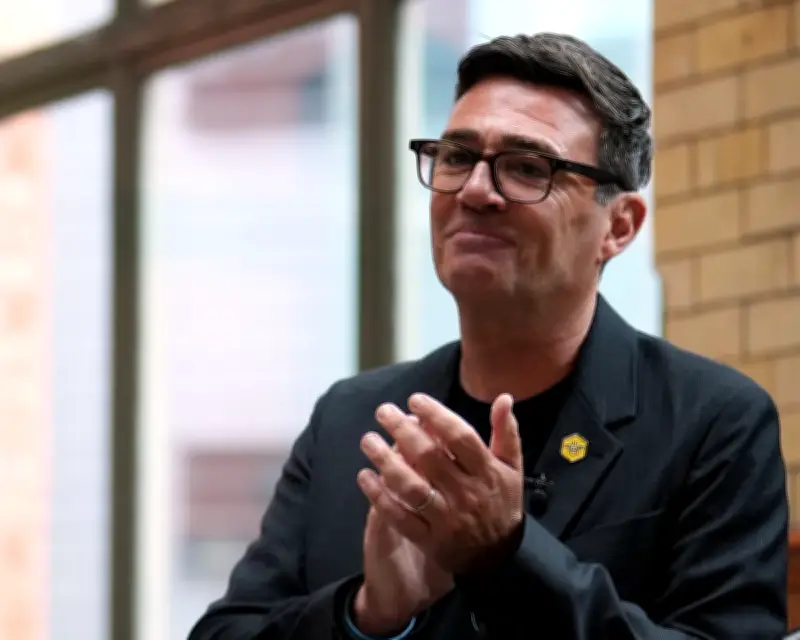
Andy Burnham will inherit an economy that is stable but not transformed, according to Jonathan Portes, professor of economics and public policy at King's College London. Writing in an opinion piece, Portes argues that while Keir Starmer and Rachel Reeves restored fiscal credibility after Conservative misrule, they failed to change the trajectory of an economy characterised by weak productivity growth, falling relative living standards, deteriorating public services, excessive centralisation, and a damaging loss of openness.
Stability Is Not a Growth Strategy
Portes contends that the central contradiction of the Starmer-Reeves approach was treating stability as if it were a growth strategy and fiscal credibility as if it were a fiscal strategy. "A government can be responsible and still be too cautious; indeed, in the present circumstances, excessive caution is itself irresponsible if it prevents the investment and reform without which productivity, and hence fiscal sustainability, will not improve," he writes.
Burnham, who understands that growth happens in places, must make devolution fiscal and institutional, not just rhetorical. The Treasury model of devolution—responsibility without power and resources—is merely blame-shifting, Portes argues.
Tax Reform Is Part of a Growth Strategy
Portes calls for honesty about tax. Britain needs a system that raises revenue for a civilised state while doing less economic damage and distributing the burden more fairly. "At present we tax work too heavily, property irrationally and wealth inconsistently. Council tax is indefensible; business rates are a tax on productive activity in the wrong places; the treatment of high incomes, capital gains, inheritance and pension tax reliefs is a mixture of historical accident and political cowardice," he states. Reform in these areas is not a distraction but part of a growth strategy.
Brexit and Immigration Require Candour
On Europe, Portes says realism is not silence. Brexit has made the country poorer and less open, creating trade frictions, reducing the UK's attractiveness as an investment platform, and damaging sectors from manufacturing to higher education. Incremental improvements are not enough; a much closer relationship with the single market is an economic necessity.
Universities, one of the few world-class sectors, suffer from "malign neglect" in funding and international student policy. Immigration policy must be relatively open, liberal, and flexible to maximise comparative advantages and fund public services. "Arbitrary targets and ritual denunciations are not a substitute for a functioning system," Portes warns.
Burnham's Task: Use Credibility, Not Abdicate It
Portes concludes that Starmer and Reeves's legacy is stabilisation without a strategy. Burnham's task is not to abandon credibility but to use it; not to abdicate fiscal responsibility but to define it properly; not to choose between growth, fairness, and openness but to explain they are inseparable. "A closed country will be poorer. A country that underinvests will not grow. A state that refuses to reform tax will ration ambition. And a Labour government afraid to say these things will discover once again that caution, too, has costs," he writes.




