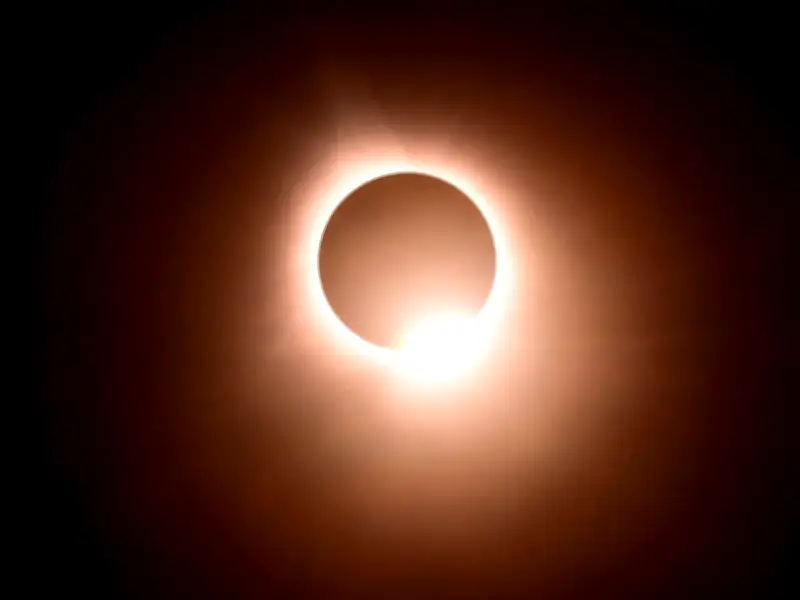
The first solar eclipse since 1998 will take place on Wednesday, but not everyone in the UK will get a perfect view. The Met Office has released cloud cover maps showing where the eclipse will be most visible.
Cloudy regions and clear skies
According to the Met Office, large portions of the nation will be shrouded in cloud when the Moon passes in front of the Sun. The eclipse will be the final occurrence of this phenomenon until 2081.
Most of the cloud cover from 6pm will be concentrated around Ireland, Scotland and the North West, particularly Cumbria. Meanwhile, the maps reveal the South East and substantial areas of the South West will remain clear of cloud coverage between 6pm and 8pm.
Visibility forecasts
The Met Office forecasts that Plymouth and its surrounding areas will be able to witness 94.66 per cent coverage from the eclipse, with the event reaching its peak around 7.16pm. Extensive parts of Bristol, Gloucestershire and Wales will observe a 93 per cent coverage.
Inverness, Edinburgh and Newcastle are set to be among the least well-served locations, with the Moon obscuring around 90 percent of the Sun. Although parts of the North West are also forecast to experience 91 percent coverage, the Met Office anticipates that the region will be blanketed by cloud on Wednesday.
Lancaster, Barrow-in-Furness and Penrith are amongst the areas expected to see cloud cover at approximately 7pm on Wednesday, while parts of Wales, including Welshpool, will also be contending with overcast skies.
Enjoying the eclipse despite clouds
There is encouraging news for those in areas facing a cloudy Wednesday evening. The eclipse can still be appreciated even if your local area is shrouded in cloud, as it will get dark and the atmosphere will change dramatically.
Patricia Reiff, a professor of physics and astronomy at Rice University, who has witnessed 20 eclipses, previously told Time Magazine: "If you are under the clouds, it's still going to get dark."
"If clouds are present, the eclipse will still be evident and it should still be incredible to experience, with a dramatic change in the atmosphere when the daylight darkens to night. The temperature noticeably drops, and with it, birds and other typically vocal wildlife become quiet, changing to their nighttime behaviour. It's intriguingly eerie and a unique event to witness."
Best time to see the eclipse
The optimal time for viewing the eclipse varies depending upon your location within the UK. Across the UK, the event will begin at approximately 6.08pm, with maximum coverage occurring between 7.05pm and 7.16pm, and the spectacle drawing to a close between 8pm and 8.10pm.
According to the Royal Greenwich Museum, Edinburgh and Glasgow will be the first cities in the country to witness the phenomenon.