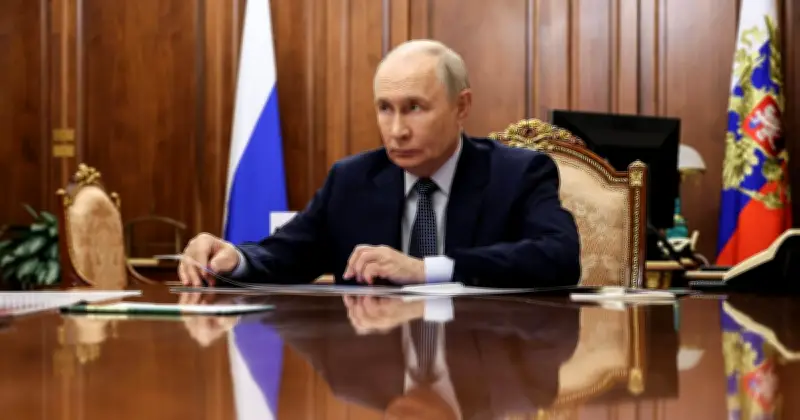
Russia is becoming increasingly reckless, according to Nato and the European Commission, following a suspected unsuccessful assault on a German airport. References to "World War Three" are once again appearing in highly regarded publications as Russia displays overt aggression towards Western nations while continuing its now four-year conflict in Ukraine.
Meanwhile, Iran's top negotiator warned this weekend of "a faster, heavier, and more painful response" to US attacks as hostilities between the two sides escalate. Iran said Americans must understand "before it is too late" that the "rules of the game have changed". He was speaking amid renewed fighting between Iran and the US a day after Washington said it struck Iranian oil tankers in response to Tehran attacking American warships in the region's waters.
What is the conscription age in the UK?
The UK government states explicitly: "There is no conscription or requirement for military service in the United Kingdom; the British armed forces are a professional volunteer force." Indeed, compulsory service has only been implemented during two distinct periods in and since the 20th century: from 1916 to 1920 and from 1939 to 1960.

Conscription was brought into effect in Britain during the First World War in January 1916 and legally enforced upon all unmarried men between 18 and 41 who didn't qualify for exemption. It was discontinued in 1920. Mandatory military service was subsequently reinstated in May 1939, ahead of the Second World War, and applied to all unmarried men between 20 and 21. Those deemed medically unsuitable were exempted, alongside others in essential industries and occupations.
Following the Second World War, despite widespread demobilisation, the British government "determined that there was still an urgent need to maintain high levels of military manpower in the parts of the world where Britain had a strong presence, including Palestine, Suez and India" and "concluded that meeting these requirements could only be met effectively by continuing national service in peacetime". Consequently, from 1949, all physically fit males aged between 18 and 30 were obliged to serve in the armed forces for 18 months, followed by a further four years in reserve. This obligation came to an end in 1960.
While successive governments have dismissed any notion of reintroducing national service since that time, the Covid-19 pandemic and the shifting security landscape across Europe over the past decade have breathed new life into the debate. However, in 2024, defence minister Dr Andrew Murrison once again ruled it out, stating: "Since 1963, it has been the policy of successive Governments that the best way of providing for the defence of our country is by maintaining professional Armed Forces which are staffed by volunteers. The demanding nature of defence today is such that we require highly trained, professional men and women in our Regular and Reserve Armed Forces, fully committed to giving their best in defending our country and its allies."
What is the age of conscription in Europe?
While the UK may not operate conscription, a number of European nations do. These include: Denmark (age 18), Norway (age 18), Sweden (age 18), Finland (age 18), Croatia (age 19), Austria (age 18), Turkey (age 20), Greece (age 19), Estonia (age 18), Latvia (age 18), and Lithuania (age 18).
While the ages shown in brackets represent the minimum conscription threshold, regulations vary considerably between nations. Turkey, for instance — which boasts the second largest military force in NATO after the USA — requires men aged between 20 and 41 to complete between six and 12 months of military service. Norway, meanwhile, conscripts both men and women, typically for 12 months.
Why are people talking about World War Three?
Whether warranted or not, the phrase "World War Three" has been frequently invoked since Russia's invasion of Ukraine in 2022, gaining even greater currency when conflict erupted between the USA and Iran. While many argue the term is needlessly provocative and unjustified, others take a different view.

New York Times columnist Bret Stephens penned a piece last week entitled "Has World War Three already started?" His reasoning centred on the fact that "the spheres of conflict have multiplied and are merging", citing Russia's aggression towards nations beyond Ukraine, the US conflict with Iran, and the ongoing war between Israel and Hamas and Hezbollah. He further explored how hostile nations have forged alliances, notably Russia, China and North Korea.
Additionally, an article in The i Paper examined "how Cold War 2 could turn into World War 3" while assessing Russia's escalating attacks, reporting that "fears of an uncontained escalation spiral are rising" as a consequence.
Who has Russia attacked?
Most notably, Russia has been engaged in full-scale warfare with Ukraine since 2022 (having previously annexed Crimea in 2014). Russian assaults on Ukraine escalated last month. This weekend, US President Donald Trump's top negotiators, Steve Witkoff and Jared Kushner, met Russian President Vladimir Putin in Moscow in an effort to end the war in Ukraine. Putin said the current situation "is not so easy".
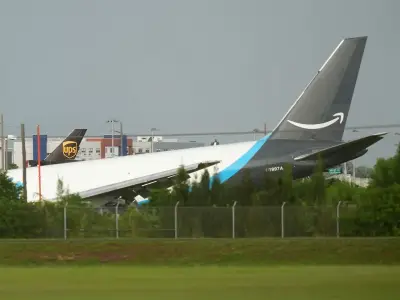
Yet Moscow also appears to have broadened its focus across Europe more generally. It stands accused of targeting a Ukrainian cargo aircraft at Leipzig airport in Germany with an explosive-laden drone on August 4. The European Commission described this as "a new escalation on European Union soil directly attributed to Russia".
There have also been incidents of suspected sabotage across Germany in recent days, including attacks on electricity substations. A Bulgarian defence company stated "human error is excluded" following a major fire at its warehouse, reportedly referencing previous explosions which were examined for Russian connections. An explosion at an Estonian facility was under investigation for Russian links, while Poland is also examining several incidents. Prime Minister Donald Tusk has referenced a "continuation of Russia's escalatory activities".
When journalists recently asked whether Moscow might target military installations in the UK in retaliation for British weapons supplies to Ukraine, Russian president Vladimir Putin responded: "That's a secret. A military secret." In June, Royal Marine Commandos boarded a Russian "shadow fleet" oil tanker in the English Channel.